
TRENDING
Aarhus end 40-year title drought with Danish league triumph
4 minutes reading View : 38

Sports - 18 May 2026
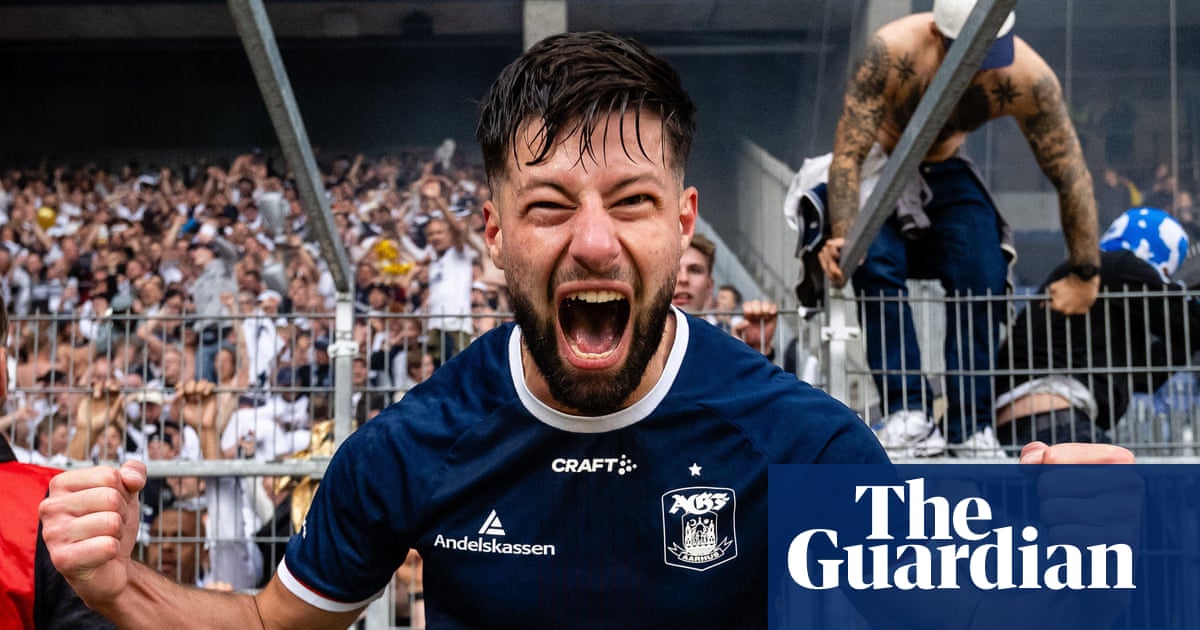
On the penultimate weekend of the season, Aarhus Gymnastikforening (AGF) fans were already celebrating as their buses arrived at Brøndby Stadion. Midtjylland, AGF’s title rivals, had just been held to a goalless draw at Nordsjælland, meaning a win against Brøndby would secure AGF’s first Danish league title since 1986. The atmosphere was electric before kick-off, with fans displaying a huge tifo reading: “Let’s write history together.” Henrik Dalsgaard, the former Brentford and Midtjylland defender, scored from a corner after three minutes, sparking a raucous celebration that swept away 40 years of frustration.
“It was one of the greatest days of my life and I think a lot of other AGF fans would say that too,” said Jakob Emil Beikes, chair of AGF’s fanclub. “When we were celebrating it was just everything, all the feelings coming through. I still can’t believe it, actually. It’s insane.”
Midfielder Kevin Yakob sealed the victory with a goal, and after the final whistle, fans, players and staff jumped in unison in an otherwise empty stadium. The long drive home was filled with songs, laughter, tears, the Champions League anthem — AGF will enter in the second qualifying round — and popping champagne corks. Back in Aarhus, the party continued late into the night. Beikes said: “I think it’s one of the greatest champions’ celebrations in perhaps all the years.”
Festivities carried on all week, with much of the city turning out to honor the team. After finishing sixth last season, 23 points behind serial champions FC Copenhagen, few expected AGF to challenge for the title. Under manager Jakob Poulsen, a former Denmark international who succeeded Uwe Rösler last summer, the team shifted from a solid, pragmatic approach to a fluid style emphasizing midfield control and dangerous wide play. Top scorers Tobias Bech and Kristian Arnstad are wingers, while South Africa international Gift Links, playing at left wing-back, provided constant attacking threat and assists. AGF also boasts the league’s tightest defense, marshalled by Dalsgaard, a trusted lieutenant of Thomas Frank at Brentford.
These players are now heroes in a city that has remained devoted through good and bad. AGF won five league titles up to 1986, making them one of Denmark’s most decorated clubs, but their only success in the next four decades was the Danish Cup in 1996, when they were also league runners-up. The club was relegated three times this century — in 2006, 2010 and 2014 — but bounced back each time. Supporting AGF over the past 40 years has been an emotional odyssey with cherished highs and intense lows.
Many attribute the club’s resurgence to the 2014 appointment of Jacob Nielsen as chief executive. In 2024, board chair Lars Fournais called Nielsen “the most important signing I have made in my time at AGF.” Smart recruitment and off-field strategy allowed progress, with agonizing cup final losses in 2016 and 2024 showing the team was ready to compete for honors again. Third-place league finishes in 2020 and 2023 paved the way for this season’s triumph.
After winning the league away, AGF lifted the trophy on home turf Sunday, thrashing Viborg 6-2 in the final game. With Aarhus Stadion undergoing reconstruction, the club used the smaller Vejlby Stadion this season, playing a title-winning campaign in lower-league surroundings. “We will have fond memories, definitely,” Beikes said of their temporary home.
AGF’s title win reflects the competitiveness of Scandinavian domestic football, fitting a trend of unheralded teams breaking the status quo. Mjällby won Sweden’s league last season for the first time, and Viking ended a 34-year wait for Norway’s title. Though many expect Denmark’s heavyweights, Midtjylland and Copenhagen, to rebound next season, AGF has shown its ability to punch above its weight. “I think this is a great foundation to become an even bigger club perhaps,” Beikes said. “I don’t think that we will make it to the Champions League league phase [next season], but we just have to do a good job and do our best. That’s what I expect.”
📝 This article was rewritten with AI assistance based on content from The Guardian.
Related posts


Latest Post




