
TRENDING
DRC’s New Ebola Outbreak Tests Lessons From Previous Epidemic
5 minutes reading View : 17

World - 19 May 2026
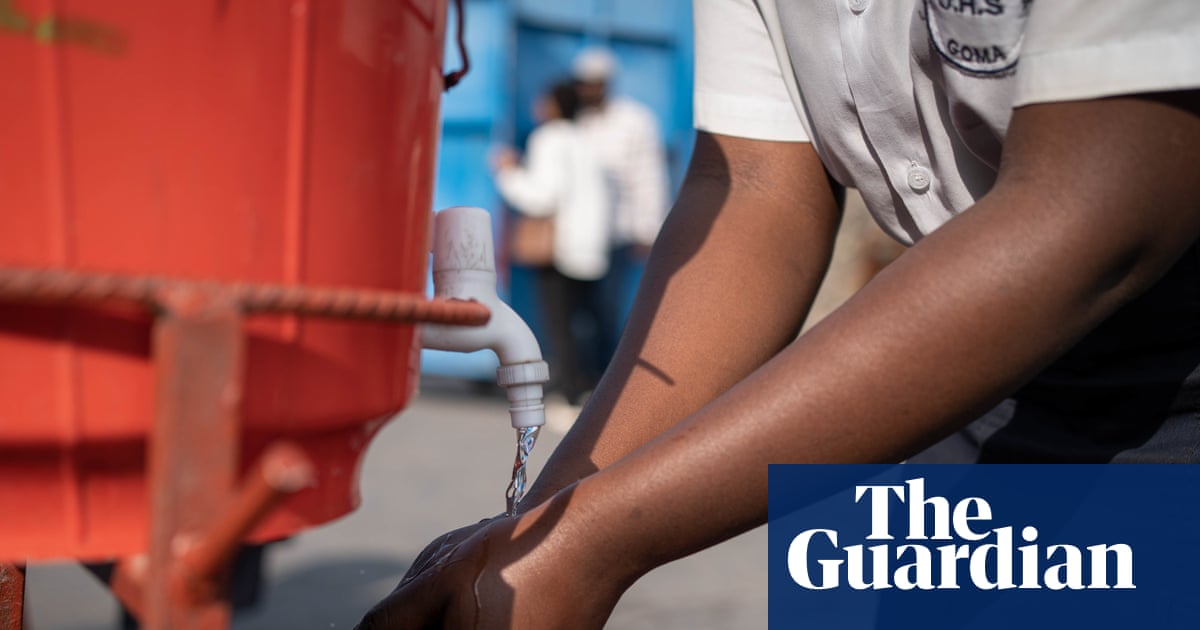
At the epicenter of an Ebola outbreak, the pervasive smell of chlorine becomes familiar. Hospital and government facility surfaces are sprayed with it, and hands are washed in a 0.05% solution that can kill the virus in 60 seconds.
Infrared thermometers are used at airports and border crossings; any fever prevents passage. Contact-tracing teams travel extensively through the countryside.
From 2018 to 2020, Butembo in the Democratic Republic of the Congo’s North Kivu province was the site of the country’s largest Ebola outbreak. The crisis was complicated not only by the virus but also by social, political and economic tensions in a conflict-ridden area.
As global health officials confront a serious new Ebola outbreak in the DRC that has alarmed the World Health Organization with its speed and scale, the question arises: what lessons have been learned from previous outbreaks?
Unlike Covid-19, Ebola is not a highly efficient virus. It is not airborne and requires direct contact with bodily fluids, including blood and vomit, for transmission. This makes it particularly dangerous for healthcare workers, who need full-body protective equipment and rigorous disinfection procedures.
Social practices such as physical contact with the dead and dying in poor rural communities accelerated the spread in eastern Kivu and Ituri province.
A second critical factor that hindered the response six years ago was historical political tension between the central government in Kinshasa and the Nande ethnic group in eastern Kivu during an insurgency. The outbreak was exploited by cynical actors during elections, who either denied Ebola’s existence or claimed it was brought in by outsiders.
This led to armed attacks, some lethal, on health workers and Ebola clinics, including one in Butembo while The Guardian was visiting.
While a new vaccination program was available during the 2018-2020 outbreak, no vaccine exists for the current strain in Ituri, which is caused by the Bundibugyo variant of Ebola. This is the least well-known of the three forms of the disease and has caused only two previous outbreaks, in 2007 and 2012, with a fatality rate of about 30%.
Another concern in the current outbreak is that cases may have been missed early on, potentially enabling unrecognized transmission.
A key difference from previous major outbreaks in West and Central Africa is the speed with which the WHO has declared a public health emergency of international concern (PHEIC) this time.
In 2018, the WHO faced widespread criticism for delaying four months before declaring a PHEIC, defined as “an extraordinary event that may constitute a public health risk to other countries through international spread of disease and may require an international coordinated response.”
In the current outbreak, a PHEIC was declared within 48 hours. WHO Director-General Tedros Adhanom Ghebreyesus said his concern was so great that he decided to act without an emergency committee meeting.
Despite that, Daniela Manno, a clinical epidemiologist at the London School of Hygiene and Tropical Medicine, warned that the current Ituri outbreak shares some complicating elements of the 2018-2020 outbreak.
“First, the number of suspected cases reported before confirmation suggests transmission may have been ongoing for several weeks before the outbreak was formally recognised,” she said.
“Second, the outbreak is occurring in a region affected by insecurity, population displacement and high population mobility, all of which can complicate surveillance, contact tracing and delivery of healthcare.”
“A previous Ebola outbreak affecting North Kivu and Ituri provinces between 2018 and 2020 lasted for nearly two years, with insecurity and community mistrust repeatedly disrupting contact tracing, vaccination and response activities.”
“In addition, the outbreak is now thought to be caused by Bundibugyo virus, a rare Ebola-causing virus for which there are currently no licensed vaccines or therapeutics specifically approved. There are also no vaccines in late-stage clinical development that could be readily deployed during the outbreak.”
“However, it is important to emphasise that the DRC has extensive experience responding to Ebola outbreaks, and outbreak response capacity is significantly stronger today than it was a decade ago.”
Anne Cori, an associate professor in infectious disease modelling at Imperial College London, said the spread of the disease across an international border likely influenced the quick declaration of an international public health emergency.
“A PHEIC is an official declaration made by the WHO under the international health regulations, recognising the international nature of a public health threat. It aims to help mobilise attention and resources, and coordinate response efforts at international level.”
“The last PHEIC for an Ebola outbreak was declared in July 2019 during the 2018 to 2020 Ebola epidemic in the North Kivu province of the DRC. At the time, the PHEIC was declared a year into the outbreak after it reached the urban area of Goma, threatening to spread internationally to nearby Rwanda.”
“The current epidemic already comprises confirmed cases across both the DRC and Uganda, which likely influenced the declaration of a PHEIC as its focus is really the international nature of the threat.”
Peter Beaumont reported from Butembo for The Guardian in 2019, visiting Ebola treatment centres and vaccination efforts.
📝 This article was rewritten with AI assistance based on content from The Guardian.
Related posts




Latest Post