TRENDING
Bayer Uerdingen’s 1985 Cup Upset Over Bayern Munich and Subsequent Decline
6 minutes reading View : 13

Sports - 22 May 2026
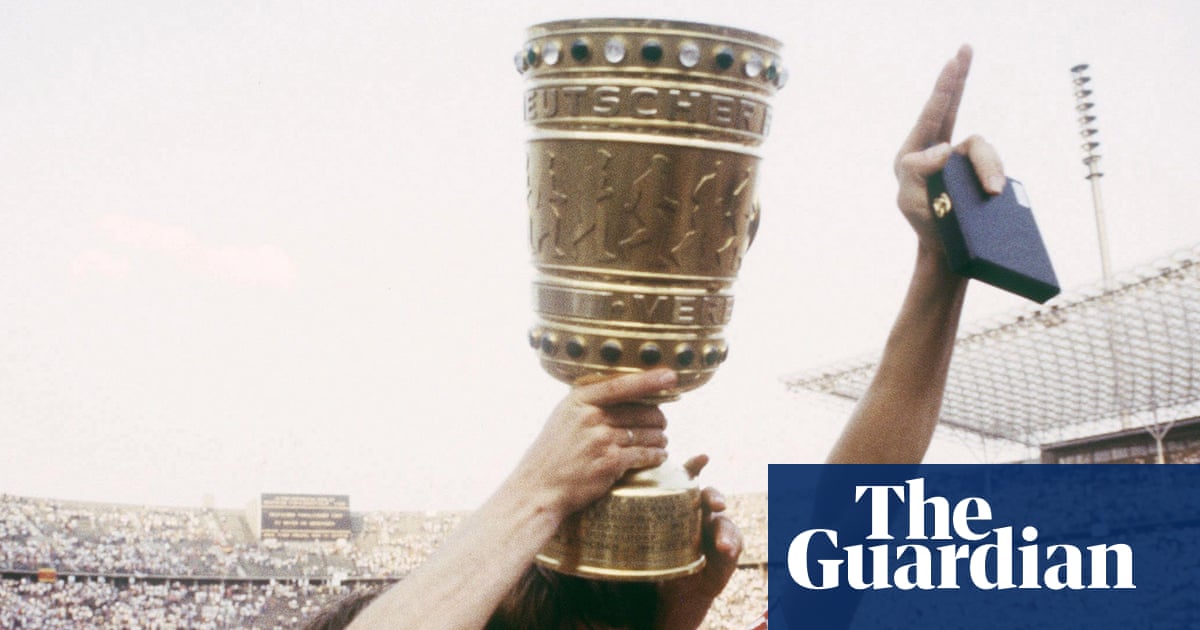
When Matthias Herget, flanked by Horst Feilzer and Norbert Brinkmann, lifted the DFB-Pokal trophy on a sun-dappled evening at Berlin’s Olympic Stadium four decades ago, a unique moment passed in the stolid world of German football. It was a cup shock, the kind of giant-killing that is fairly routine in English football but barely translates elsewhere.
Looking back now, it remains a seismic inversion of the natural order in a nation more accustomed to an honor roll dominated by a handful of major clubs. Bayer 05 Uerdingen had just beaten holders Bayern Munich 2-1 to win the 1985 German Cup final. As Goethe wrote: “Nothing is worth more than this day.”
Incredibly, Uerdingen wrenched the large bronze-and-gemstone trophy from the southern aristocrats’ grasp at the Olympiastadion in then-West Berlin before German reunification. It was the first time the DFB-Pokal final had been staged in the former German capital, and the script did not go to plan.
Since 1953, the climax of the competition had been a moveable feast, staged all over West Germany in neutral venues from Düsseldorf to Kassel to Stuttgart to Hannover and places in between. But that year, at long last, the grand old stadium that hosted the 1936 Olympic Games had been spruced up and once more held 72,000 spectators, with the rest of the nation tuning in.
The magnitude of Uerdingen’s upset must be gauged against the supremacy of Bayern Munich. By 1985 the Bavarians had won the German Cup seven times since its first iteration in 1953, as well as the European Cup hat-trick of 1974, 1975 and 1976 that placed them among the first rank of continental football powerhouses. This season they are again in the final and face Stuttgart on Sunday evening.
By contrast, Uerdingen are the club of Krefeld, an unassuming German city of around 300,000 people on the north Rhine, a place perennially eclipsed by its showy neighbor Düsseldorf. They were a modest club that had hitherto won little of note, but with the backing of German chemicals giant Bayer AG, Uerdingen along with near neighbors at fellow works-backed Bayer 04 Leverkusen were prospering.
Under the canny leadership of head coach Kalli Feldkamp and ambitious chairman Arno Eschler, Uerdingen, who had only been promoted to the Bundesliga a couple of years earlier, were unheralded underdogs never expected to bite. This despite taking Bayern to a replay in their previous DFB-Pokal meeting in 1984, a year Bayern went on to beat Borussia Mönchengladbach on penalties in the final.
The team in white that afternoon of May 26, 1985, were devoid of household names. Horst Feilzer and Wolfgang Schäfer were the goalscorers. Playmaking in midfield were the Funkel brothers, Friedhelm and Wolfgang. Udo Lattek’s celebrated Bayern, meanwhile, had Dieter Hoeness, who scored Bayern’s only goal, a young Lothar Matthäus and Klaus Augenthaler in their ranks.
Bayern grabbed an early lead in the eighth minute through Hoeness. But Uerdingen came back in a flash, equalizing a minute later through Feilzer. The winner arrived in the second half as Schäfer scored the decisive goal in the 66th minute, and implausibly, Uerdingen held on for a historic victory.
There was delirium among fans of the Blue and Reds, a parade of sorts along the Ku’damm back to the team hotel, where even normally reserved Berliners flocked onto pavements to cheer the winners. The players’ wives greeted them with more bottles of champagne. Celebrations at the bar on the 14th floor of the Hotel Intercontinental raged late into the night. There was a banquet and speeches. Bleary-eyed the following morning, Chairman Eschler mused: “Ich hoffe dass dies keine einmalige Sache ist [I hope this is not a one-off].”
There was indeed more to follow for Uerdingen. They blazed a trail to the European Cup-Winners’ Cup semifinal in 1986. Their tumultuous quarterfinal against East Germany’s Dynamo Dresden became embedded in the club’s lore as the “Miracle of the Grotenburg” after an improbable second-leg comeback at their home ground. That tie was watched by 18 million television viewers, with German broadcaster ZDF airing that match instead of Bayern’s game against Anderlecht in the European Cup. They finished third in the Bundesliga the season after their cup win.
But their Icarus moment passed soon enough, and the club’s fortunes declined when Bayer AG withdrew financial support in 1995, opting instead to invest its football budget in Leverkusen alone. They were renamed KFC Uerdingen but tumbled down the German leagues, endured insolvencies along the way and now play in the fifth-tier Oberliga.
KFC remain a proud and well-supported side. Last November, they celebrated the club’s 120th anniversary. Their open concrete bowl of a stadium, the Grotenburg, stands adjacent to Krefeld Zoo. On match days, fans down alt beer and consume hot currywurst to the background noise of elephants and big cats, after picking their way past the emptying stalls of the morning’s regular Trödelmarkt flea market.
There is progress on the pitch, too. Under coach Julian Stöhr, Krefeld were finishing the season strongly, pressing for promotion, until a 6-1 drubbing by Schonnebeck dented their prospects. After a lively 1-1 draw against Kleve, they sit third in the Oberliga Niederrhein table with two matches remaining.
Insolvency proceedings against the club were lifted at the end of April, to their understandable relief, and mark “a crucial milestone for our club,” according to Chairman Norbert Philipp, who took over in March. He understands only too well the club has struggled to find backers, but remains optimistic about the future, telling the Westdeutsche Zeitung: “There’s a lot of bad blood in the past, and yet we’ve still managed to attract more than 60 sponsors. The club’s appeal is so strong that there are still people who support it.”
Football is littered with tales of clubs that have flared brilliantly but all too briefly. In Krefeld they know this only too well. They are beginning to understand the cruel footballing fates in Leicester, too.
The English city boasted Premier League champions a decade ago, but Leicester City have sunk into League One after a calamitous season in the Championship. Coincidentally, Leicester has since 1969 been twinned with the small city on the Rhine that once celebrated Bayer Uerdingen’s monumental giant-killing.
📝 This article was rewritten with AI assistance based on content from The Guardian.
Related posts




Latest Post