
TRENDING
Trump announces 5,000 additional US troops to Poland amid NATO uncertainty
5 minutes reading View : 26

World - 23 May 2026
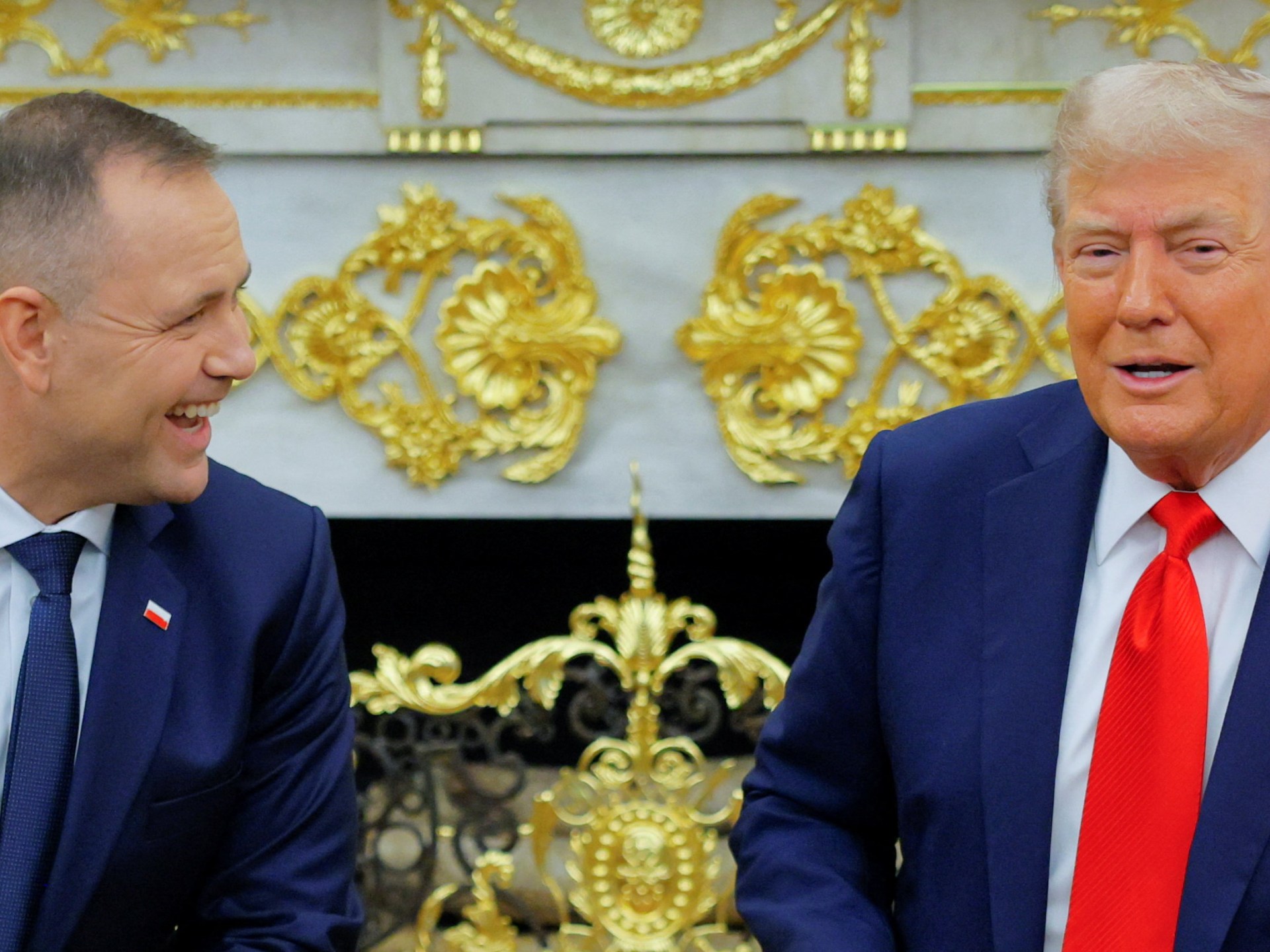
President Donald Trump announced Thursday that the United States will send an additional 5,000 troops to Poland, a surprise move that deepens uncertainty about Washington’s military posture in Europe.
In a post on his Truth Social platform, Trump linked the decision directly to his relationship with Poland’s right-wing President Karol Nawrocki.
“Based on the successful Election of the now President of Poland, Karol Nawrocki, who I was proud to Endorse, and our relationship with him, I am pleased to announce that the United States will be sending an additional 5,000 Troops to Poland,” Trump wrote.
The announcement comes just days after the Pentagon cancelled the deployment of about 4,000 troops to Poland as part of a wider reduction of US forces in Europe.
The abrupt reversal has fueled questions about what exactly Trump ordered and whether the deployment is driven by military strategy in Europe or by the president’s increasingly transactional approach to alliances.
While Trump described the move as a new deployment, reports from US media suggest the announcement may actually amount to a reversal of an earlier Pentagon decision.
Last week, the Pentagon abruptly halted the deployment of the 2nd Armored Brigade Combat Team of the 1st Cavalry Division, a Texas-based unit of more than 4,000 troops preparing to rotate into Poland and Eastern Europe.
According to The Wall Street Journal, Trump later questioned Defense Secretary Pete Hegseth about why the deployment was cancelled, telling him the US should not “treat Poland poorly” given its close ties to Washington.
Several reports said some parts of the brigade, known as the “Black Jack Brigade,” had already begun moving equipment and personnel when the deployment was stopped.
The Pentagon has not confirmed whether Trump’s newly announced 5,000 troops are the same soldiers whose deployment was cancelled earlier this month, or whether they will be redeployed from elsewhere in Europe, such as from Germany.
The White House and Pentagon have released few other details about this latest deployment.
Poland currently hosts about 10,000 US troops, largely on a rotational basis, according to the Polish government. Since Russia’s full-scale invasion of Ukraine, the country has become one of Washington’s most important military partners on NATO’s eastern edge and a key hub for Western military aid to Kyiv.
In 2020, Poland and the US signed the Enhanced Defense Cooperation Agreement, expanding military cooperation and helping to formalize a longer-term American military presence in the country.
Nawrocki welcomed Trump’s announcement, calling the Polish-American alliance “a vital pillar of security for every Polish home and for all of Europe.”
“Good alliances are those based on cooperation, mutual respect, and a commitment to our shared security,” he wrote on social media.
Polish Foreign Minister Radek Sikorski also welcomed the news, saying the deployment would ensure that “the presence of American troops in Poland will be maintained more or less at previous levels.”
German Foreign Minister Johann Wadephul also welcomed the move.
“It serves not only for Poland’s security, but for the security of the whole alliance and so also for us,” he told reporters. “So, this is absolutely in our interest.”
The announcement marks a sharp reversal from recent signals that the Trump administration was preparing to reduce the US military’s footprint in Europe.
Earlier this month, Washington announced plans to withdraw 5,000 troops from Germany after a public row between Trump and German Chancellor Friedrich Merz over the US-Israeli war on Iran. Trump later suggested the cuts could go even further.
At the same time, Trump has repeatedly accused European NATO allies of failing to spend enough on defense and not doing enough to support US policy in the Middle East.
Analysts say the decision over Poland also reflects Trump’s increasingly transactional approach to alliances, punishing governments he sees as hostile or unhelpful while rewarding leaders and countries more closely aligned with his brand of right-wing politics.
Germany and Spain have both faced criticism from Trump administration officials in recent weeks over their positions on Iran and defense spending, while Poland’s nationalist government has cultivated close ties with Trump and the wider MAGA movement.
Before meeting NATO counterparts in Sweden, Secretary of State Marco Rubio said: “Like any alliance, it has to be good for everyone who’s involved. There has to be a clear understanding of what the expectations are.”
“The president’s views, frankly disappointment, at some of our NATO allies and their response to our operations in the Middle East – they’re well documented – that will have to be addressed,” Rubio added. “That won’t be solved or addressed today.”
Poland, by contrast, has emerged as one of NATO’s highest defense spenders, allocating about 4.5 percent of its gross domestic product to defense. It has also remained one of Ukraine’s strongest backers and has consistently pushed for a larger US military presence on its territory.
The deployment therefore appears both strategic and political, reinforcing NATO’s eastern flank while rewarding one of Trump’s closest allies in Europe at a time when he is openly questioning relationships with other partners on the continent.
But the confusion surrounding the announcement has also highlighted a broader uncertainty hanging over Washington’s Europe policy, with allies still trying to determine whether the administration is reducing its commitment to NATO overall or simply reshaping it around governments Trump sees as more loyal.
📝 This article was rewritten with AI assistance based on content from Al Jazeera English.
Related posts


21 May 2026



Latest Post