
TRENDING
Bath Exhibition Highlights Printmaking Skills of Impressionist Masters
3 minutes reading View : 36

World - 18 May 2026
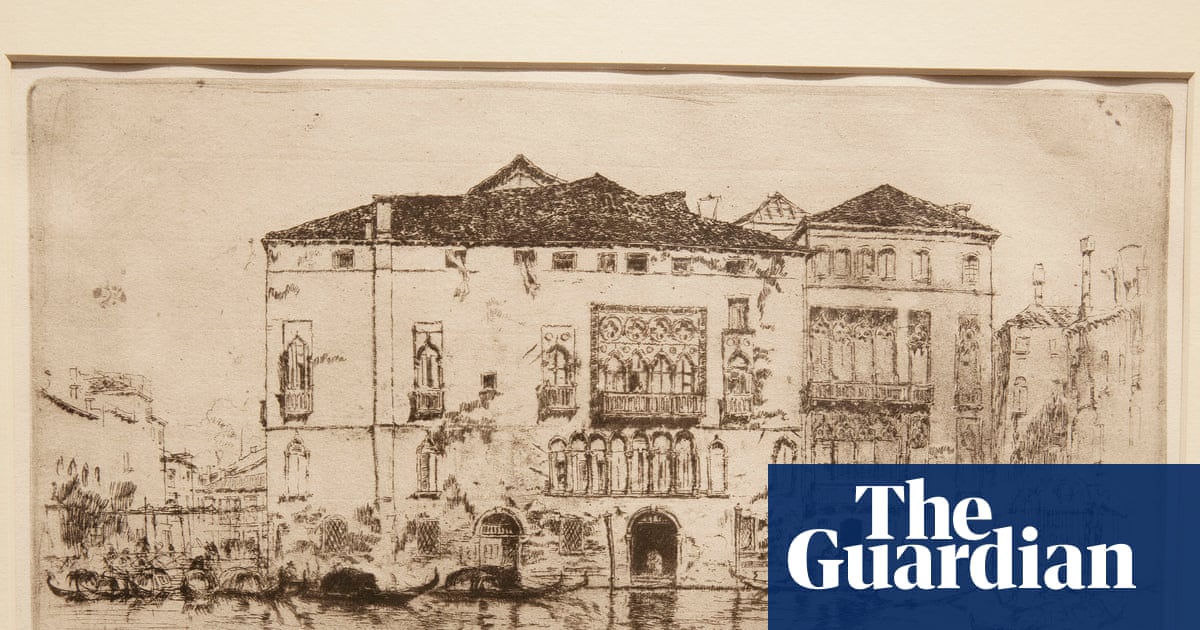
An exhibition opening in the English West Country shifts focus from the vibrant oil paintings of artists like Édouard Manet, Vincent van Gogh and Paul Gauguin to their subtle printmaking skills.
More than 50 prints created primarily by impressionists, post-impressionists and cubists will be displayed at the Holburne Museum in Bath.
The show, titled Beyond Impressionism, aims to highlight how artists known mainly for their paintings also helped revive printmaking, which had fallen out of fashion by the mid-19th century.
Chris Stephens, the museum’s director, said: “We’re beyond excited to be bringing such a range of major artists here. The paintings of the impressionists are so familiar but we seem to forget that the same generation of artists, and their successors, radically changed printmaking. We wanted to acknowledge this great moment in the late 19th and early 20th century.”
Stephens conceived the exhibition after seeing Gauguin woodcuts at the Frieze Masters international art fair in London. “I was stuck by their sense of immediacy,” he said.
While Rembrandt in the 17th century and later Goya were celebrated printmakers, Stephens noted that by the 19th century the process had become more associated with commercial reproductions of famous works.
“Many of the leading painters of the 19th century returned to the medium of printmaking, elevating its status as a form of artistic expression in its own right,” he said.
The publicity image for the exhibition is Manet’s 1872 lithograph of fellow artist Berthe Morisot. Manet was a key member of the Société des Aquafortistes, founded in Paris in 1862 to promote etching as a medium on par with painting and drawing.
Stephens said the inherently collaborative nature of printmaking fostered the exchange of ideas among artists of the day, who also drew inspiration from Japanese printmakers.
Many of the pieces in the exhibition, created from the 1850s through the 1930s, come from public collections, including the Courtauld Gallery in London and the Ashmolean in Oxford, while some are borrowed from private collections and rarely seen by the public.
Stephens expressed particular admiration for etchings by James McNeill Whistler depicting scenes of the Thames in London and of Venice.
He said: “It’s interesting to see how he uses the kind of soft shading that you can make in an etching. That sort of has the same effect as the blue, moody, misty effect he got in his paintings.”
Visitors can view Van Gogh’s Gardener By an Apple Tree, a scene he observed and sketched while visiting a retirement home.
The exhibition explores how advances in lithographic printing enabled the production of large, colorful prints such as those by Henri de Toulouse-Lautrec that promoted Parisian nightlife.
Also featured are several works by Pablo Picasso, including a print of The Frugal Meal and some of his minotaur etchings from the 1930s. The exhibition explains how Picasso fully embraced the medium, pushed its boundaries and cemented the standing of prints.
Stephens said: “It is wonderful to be able to demonstrate the revival of etching from Whistler’s Venetian nocturnes to Picasso’s minotaurs alongside Gauguin’s rare woodblock prints and lithographs by Toulouse-Lautrec.”
Beyond Impressionism: Printmaking from Manet to Picasso runs from 23 May to 13 September.
A second printmaking exhibition opens in Bath on 22 May: The Transience of Light at the Victoria Art Gallery showcases the work of landscape artist and master printmaker Norman Ackroyd.
📝 This article was rewritten with AI assistance based on content from The Guardian.
Related posts



Latest Post