
TRENDING
Bev Priestman: From FIFA ban to A-League finals with Wellington Phoenix
4 minutes reading View : 12

Sports - 18 May 2026
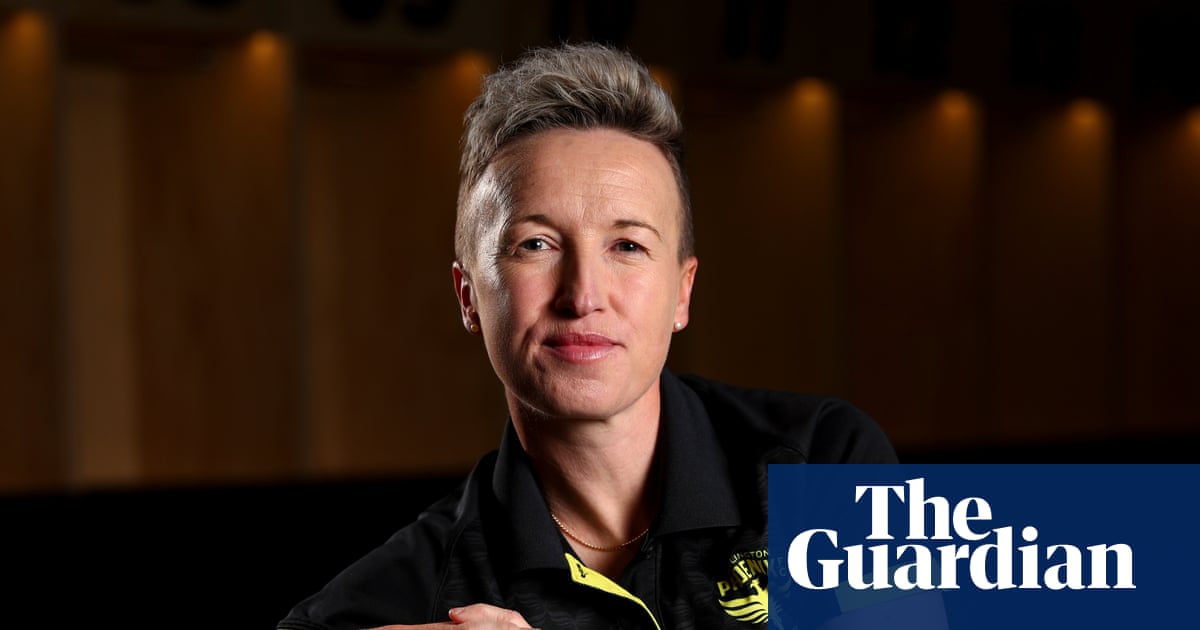
Football does not easily accommodate time off for birthdays, especially when preparing for a first A-League women’s finals campaign as Bev Priestman was last week with Wellington Phoenix. Yet compared to a year ago, when she was serving a one-year FIFA ban following the spying scandal that engulfed Canada’s women’s team at the Paris Olympics, being among her team proved a gift in itself.
“It was my 40th birthday [last week],” Priestman said. “And it’s those moments I think to a year ago, and how I felt. And then how I felt in the club [this year], around my staff, around the team. I do this job because I love people. I love the game, obviously, but it’s working with people, getting your energy with people, and trying to inspire people and help them find a better version of themselves. What happened in Paris, and off the back of that, and the media runaway stories that you know necessarily aren’t accurate. You just become very isolated, very, very quickly, in a job where it is about being part of a team. That isolation hits you really hard, as well as things playing out in the public domain. The biggest joy I’ve had this year is just again, getting back on the pitch, working with people who want to be better. I’ve loved that.”
For a fresh start off the beaten track, Wellington offers an ideal destination.
Located half a day’s flight from anywhere outside Australia – and requiring a 10-hour flight to reach Perth Glory – the Phoenix are New Zealand’s only professional women’s football team, competing in the Australian top division.
The Phoenix were introduced during the buildup to the 2023 Women’s World Cup, co-hosted by Australia and New Zealand. They had never reached the postseason playoffs in their four campaigns before 2025-26, with a best finish of eighth in 2023-24. They were regarded as lovable losers, generating little animosity but rarely challenging the status quo.
But this season, Priestman built on that foundation to create perhaps the A-League’s most well-oiled machine, fielding the highest-scoring attack and stingiest defense while leading in most underlying metrics.
Under her guidance, players such as Brooke Nunn and Grace Jale enjoyed breakout campaigns, and 17-year-old Pia Vlok established herself as a future star.
That performance was not enough to break Melbourne City’s dynastic hold on the A-League, but it earned the Phoenix a second-place finish and a bye in the first playoff round. To reach their first grand final, they must overturn a 2-1 deficit against Brisbane Roar in Sunday’s second leg of the semi-final. Temporary seating at Porirua Park will host an expected crowd of 5,000 for the biggest game in the team’s history. The community has taken notice.
“For the last three months, wherever I go in the city, people seem to know who I am, who the team is, and how we did on the weekend,” Priestman said. “That’s very different to when I arrived in Wellington. It’s really turned into a women’s football community. There’s a buzz about the city. But I think also being the only New Zealand team to compete in the A-League, it’s wider than just Wellington. We’ve got a lot of Football Ferns [New Zealand internationals]. I think there’s a real buzz and energy.”
The fact that Priestman is now stopped by well-wishers on the street contrasts sharply with her earlier statement that she “didn’t feel safe” after the spying scandal. New Zealand had always felt like home; her wife, Emma Humphries, was born in Wellington and had served as the Phoenix’s academy director before the senior women’s role opened.
“That’s nice. Not to be talked about, maybe for the controversial side of it, and just getting back to what I love and what I know I can be good at, that’s really nice,” she reflected. “And I think it’s the reason you do want to take people with you, to see a bigger opportunity in what you’re doing. And I hope the people at the club, as well, now really do see what women’s football can do.”
For questions or comments about this newsletter, email moving.goalposts@theguardian.com.
This is an extract from Moving the Goalposts, a free email about women’s football. To receive the full edition, visit the provided page and follow the instructions. The newsletter is delivered every Tuesday and Thursday.
📝 This article was rewritten with AI assistance based on content from The Guardian.
Related posts






Latest Post