
TRENDING
Billionaire Trump Donor Could Profit From Thames Water Rescue Deal
5 minutes reading View : 35

World - 20 May 2026
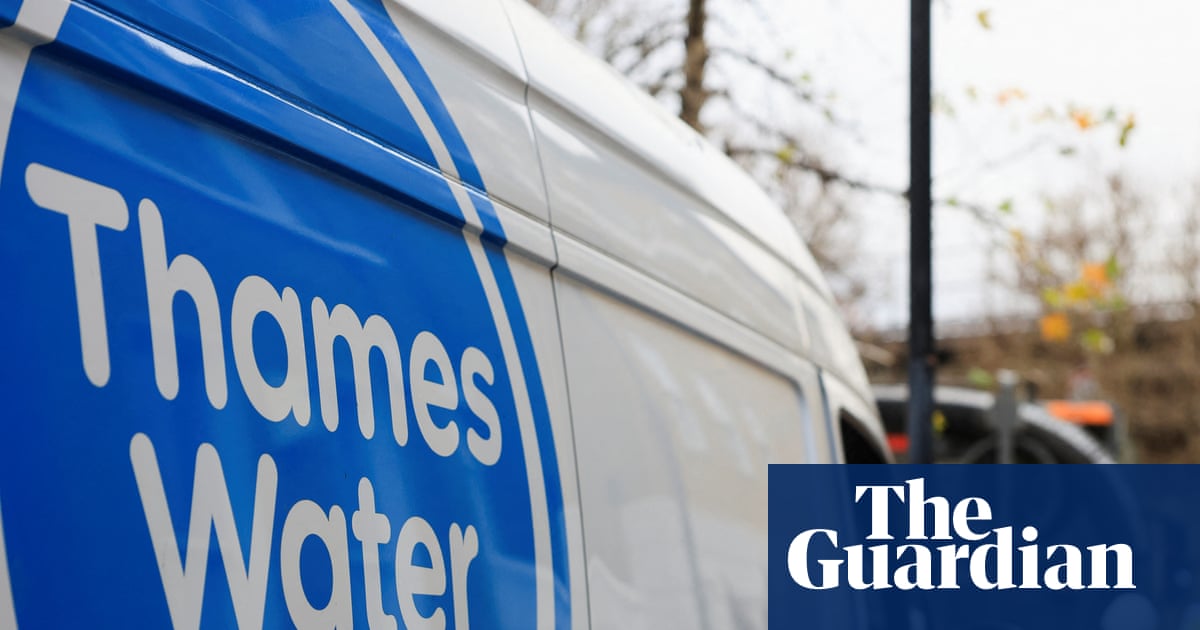
A billionaire donor to Donald Trump stands to profit millions from a government-backed rescue deal for Thames Water.
Thames Water, the UK’s largest water utility, along with government ministers and creditors, remains deadlocked over a rescue plan to prevent its collapse. The company accumulated £17.6 billion in debt since privatization.
Elliott Investment Management, a prominent creditor, is part of a consortium including Silverpoint Capital, BlackRock, and M&G. The hedge fund group, operating as London & Valley Water, seeks to take control of Thames through a multi-billion-pound restructuring.
Paul Singer, Elliott’s founder and co-CEO and a colorful figure in finance, once ordered the seizure of an Argentine naval vessel after the country defaulted on its debt. The firm has been accused of exacerbating Argentina’s bond crisis through aggressive debt collection.
The Thames bid has a family dimension, with sources indicating that Gordon Singer, Paul Singer’s son and head of Elliott’s London office, is the point person. In 2024, Gordon Singer attempted to donate nearly £2,000 to Robert Jenrick’s unsuccessful Conservative leadership campaign; the Electoral Commission returned the donation as “impermissible,” reportedly due to an outdated address.
Singer, 81, contributed $5 million to Make America Great Again Inc., Trump’s super PAC, and tens of millions more in 2024 to back Trump’s allies, including $37 million to support Republican congressional candidates.
Cat Hobbs, from the campaign group We Own It, said: “Trump wants control over NHS drug prices, and his mega donor Singer wants control over our water. ‘Absolutely not’ should be the answer of any government that considers itself patriotic.”
Elliott was part of a consortium that won a bid for Citgo, the U.S.-based subsidiary of Venezuela’s state oil company, for $8.8 billion two months before Trump arrested Venezuelan President Nicolás Maduro.
The sale was ordered by a Delaware court and occurred at a “massive discount,” with the Venezuelan government valuing the company at $18 billion. Further profits are expected as U.S. firms will control the oil output, likely avoiding sanctions.
If the Thames deal proceeds, Singer, described by Bloomberg as “the most feared investor in the world,” would be among those controlling water for 16 million people in London and the Thames Valley. He typically achieves strong returns, averaging 14% annually.
Consistent with Elliott’s approach, creditors have made aggressive demands, including a four-year waiver of fines potentially worth up to £1 billion. They also seek leniency on environmental targets related to pollution, leakage, and other performance metrics imposed a year ago.
Creditors are already set to profit from the debt: they provided Thames a £3 billion loan with an annual interest rate of up to 9.75%, to be repaid through customer bills.
Critics argue the deal could enable Thames to continue polluting without consequence.
The deal faces uncertainty due to Labour leadership dynamics, with Andy Burnham, who could become prime minister if he wins the Makerfield by-election next month, advocating for returning water to public ownership.
Lena Swedlow, deputy director of the centre-left campaign group Compass, which has close ties to Burnham, said: “These people do not have any interest or business running a water company. They are not utility providers, they are vulture capitalists. They should be allowed nowhere near resources that are important for our health, our planet and our national security.”
Clive Lewis, Labour MP for Norwich South and a prominent supporter of water renationalization, said handing Thames to Singer and Elliott would be like “throwing red meat to the wolves.”
“The fact that he is known as a vulture capitalist should tell you everything about how inappropriate this deal is … these kinds of people are there to suck the life blood out of our utilities and public services, and this deal should not be rushed through.”
Ofwat, the regulator, has faced heavy criticism for allowing private equity and international hedge funds to take over English water companies after 2010, prioritizing short-term profit over infrastructure upgrades and environmental protection.
Seven of ten privatized water and sewerage companies are now controlled by private equity, and over 70% of English water companies are foreign-owned.
Singer’s typical strategy involves targeting underperforming public companies, overhauling their boards, aggressively cutting costs, and forcing restructuring or a sale.
Government sources describe negotiations as intense. Ministers fear a Liz Truss-style bond market crisis if the deal fails and Thames enters special administration. Chancellor Rachel Reeves is reportedly alarmed and has strongly opposed such an outcome.
A spokesperson for London & Valley Water said: “Experienced turnaround investors have worked constructively and in good faith with regulators and officials to design an ambitious, long-term turnaround plan which holds Thames Water to account and delivers a step-change for customers and the environment.”
A government spokesperson said: “The government will always act in the national interest on these issues. The company remains financially stable, but we stand ready for all eventualities, including applying for a special administration regime if that were to become necessary.”
Elliott Investment Management declined to comment.
📝 This article was rewritten with AI assistance based on content from The Guardian.
Related posts




Latest Post




