
TRENDING
Brazil World Cup squad evokes 1994 pragmatism under Ancelotti
5 minutes reading View : 14

Politics - 20 May 2026
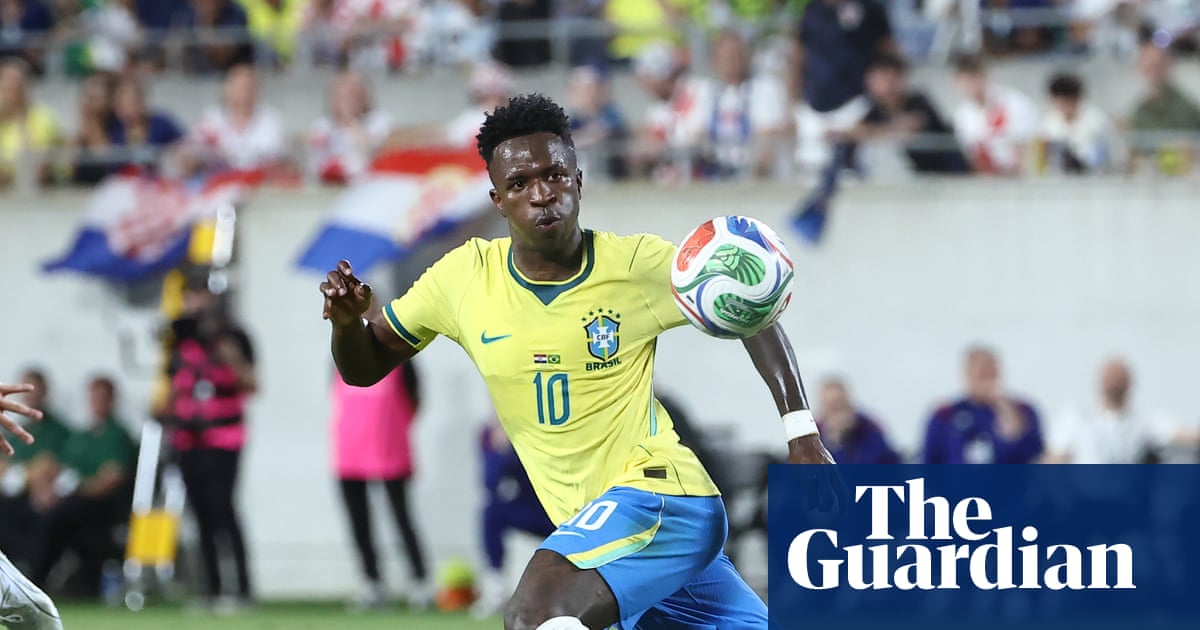
Brazil’s 26-man World Cup squad, announced Monday by manager Carlo Ancelotti, blends attacking flair with defensive pragmatism, drawing comparisons to the 1994 team that won the tournament without a superstar figurehead.
In Brazil’s attacking heyday, the team never struggled to find a winning complement in defense. Individual brilliance only works if others nearby do the hard work; for every Ronaldinho, there is a Roque Júnior.
The current generation does not lack entertainers. Of Ancelotti’s squad, nine players are listed as attackers, a high number for most squads, leaving nine defenders to sweat their responsibilities whenever possession changes hands.
A byproduct of expanding World Cup squads from 23 to 26 players is that it is easier to include specialists who might have lost out to more versatile alternatives. That is the path Neymar has taken to his fourth World Cup, similar to Colombia’s James Rodríguez: a generational figure who can inspire his side even in short bursts. Just as surprising is the inclusion of Endrick, who struggled to become part of Ancelotti’s plans at Real Madrid.
Endrick’s form on loan at Lyon this season was unmissable, though, and the 19-year-old, once hyped as Brazil’s best prospect since Neymar, will try to rectify a poor start to his international career.
“It may not be the perfect group, but it is a focused, concentrated, humble, selfless group,” Ancelotti said after naming his squad. “My idea is focused on the collective, not the individual.”
A year removed from his second stint at Real Madrid, Ancelotti has had just 10 games to assess his player pool as he prepares for his first World Cup as a manager. The tournament is not altogether new to him: he was a member of Italy’s 1990 squad and an assistant on Arrigo Sacchi’s staff when they reached the 1994 final.
The winner of that game, of course, was Brazil. While Romario, another generational forward, shone in that tournament, the real magic came from Carlos Alberto Parreira’s embrace of pragmatism. He recognized a scarcity of showmen to carry the attack, so he built a structure that proved difficult for opponents to overwhelm — a proper 4-4-2 with Dunga and Mauro Silva forming a stout double-pivot as creativity came down the flanks.
History has held the 1994 version up as a reminder that Brazil can win without a Pelé, Ronaldo, or Ronaldinho as a figurehead — perhaps at the expense of Romario’s legacy.
It is easy to imagine Ancelotti unfurling a trademark raise of his eyebrow when surveying his pool over the past year. This Brazilian group is lacking in crucial areas, especially at full-back. They will likely have plenty of work to do covering for the healthy contingent of attackers in the final third, and finding a stout base could help relive the utilitarian magic of 1994. Alisson is one of the world’s best goalkeepers, but he may need to claim plenty of crosses if his full-backs are drawn out of position.
Thankfully, center-back no longer looks like a liability for Brazil. Marquinhos and Gabriel are leading defenders for Arsenal and Paris St-Germain, this season’s Champions League finalists. Bremer has rebounded along with the rest of Juventus, while Roger Ibañez has stuck around the national team since leaving Roma for Al-Ahli in 2023. Ancelotti also selected the Flamengo partnership of Danilo and Léo Pereira, the latter a 30-year-old with just two caps. They went all 90 minutes in Flamengo’s famous 3-1 win over Chelsea at last summer’s Club World Cup; they are a well-rehearsed tandem who could come in handy as rotation is needed.
It is tempting to think the midfield is thin, with just five options in the squad. Casemiro, who played under Ancelotti at Real Madrid, has had a remarkable rebound from a poor 2024-25 season, while Bruno Guimaraes arrives after another excellent campaign with an otherwise floundering Newcastle. Danilo Santos is a vital figure for Botafogo, and the other midfielders — Fabinho and Lucas Paquetá — bring ample experience.
And yes, there are plenty of entertainers. Vinícius Júnior will hope to finally put forth a signature tournament showing for Brazil. There is competition at center-forward, especially given João Pedro’s shock omission despite his Chelsea form, with Igor Thiago the man in form, and Endrick and Matheus Cunha as alternatives. The wingers will make opposing full-backs sweat: Bournemouth’s Rayan is among the world’s most tantalizing teenagers, and Raphinha, Gabriel Martinelli, and Luiz Henrique offer their own on-ball brilliance.
Brazil struggled as it seldom has before in qualifying. It finished fifth among South America’s six automatic qualifiers, losing a surprising six matches. It had lost five matches combined in qualifiers for the 2006, 2010, 2014, 2018, and 2022 World Cups. Then again, the last time Brazil lost six times in a qualifying campaign was for the 2002 World Cup, and it went on to win the tournament.
There is an eerie symmetry between that cycle and this one. In both qualifying campaigns, Argentina and Ecuador finished first and second, while Brazil narrowly edged Paraguay on goal difference. Ancelotti seems aware that 1994 may be a more fitting parallel for his task this summer.
“I have the knowledge and the confidence that this team can compete with the best in the world,” Ancelotti said. “Can we win the World Cup and reach the final? Yes, we can make it to the final. But I don’t know if that is enough — the best thing is to get there and win the final.”
The full squad includes goalkeepers Alisson (Liverpool), Ederson (Fenerbahce), and Weverton (Gremio); defenders Alex Sandro, Danilo, Léo Pereira (all Flamengo), Bremer (Juventus), Roger Ibañez (Al-Ahli), Wesley (Roma), Marquinhos (PSG), Gabriel (Arsenal), and Douglas Santos (Zenit St. Petersburg); midfielders Bruno Guimaraes (Newcastle), Casemiro (Manchester United), Danilo Santos (Botafogo), Fabinho (Al-Ittihad), and Lucas Paquetá (Flamengo); and forwards Endrick (Lyon), Gabriel Martinelli (Arsenal), Igor Thiago (Brentford), Matheus Cunha (Manchester United), Raphinha (Barcelona), Vinícius Júnior (Real Madrid), Luiz Henrique (Zenit), Neymar (Santos), and Rayan (Bournemouth).
📝 This article was rewritten with AI assistance based on content from The Guardian.
Related posts





Latest Post