
TRENDING
Chinese Oil Tankers Leave Hormuz as Trump, Vance Cite Iran Deal Progress
3 minutes reading View : 87

World - 20 May 2026
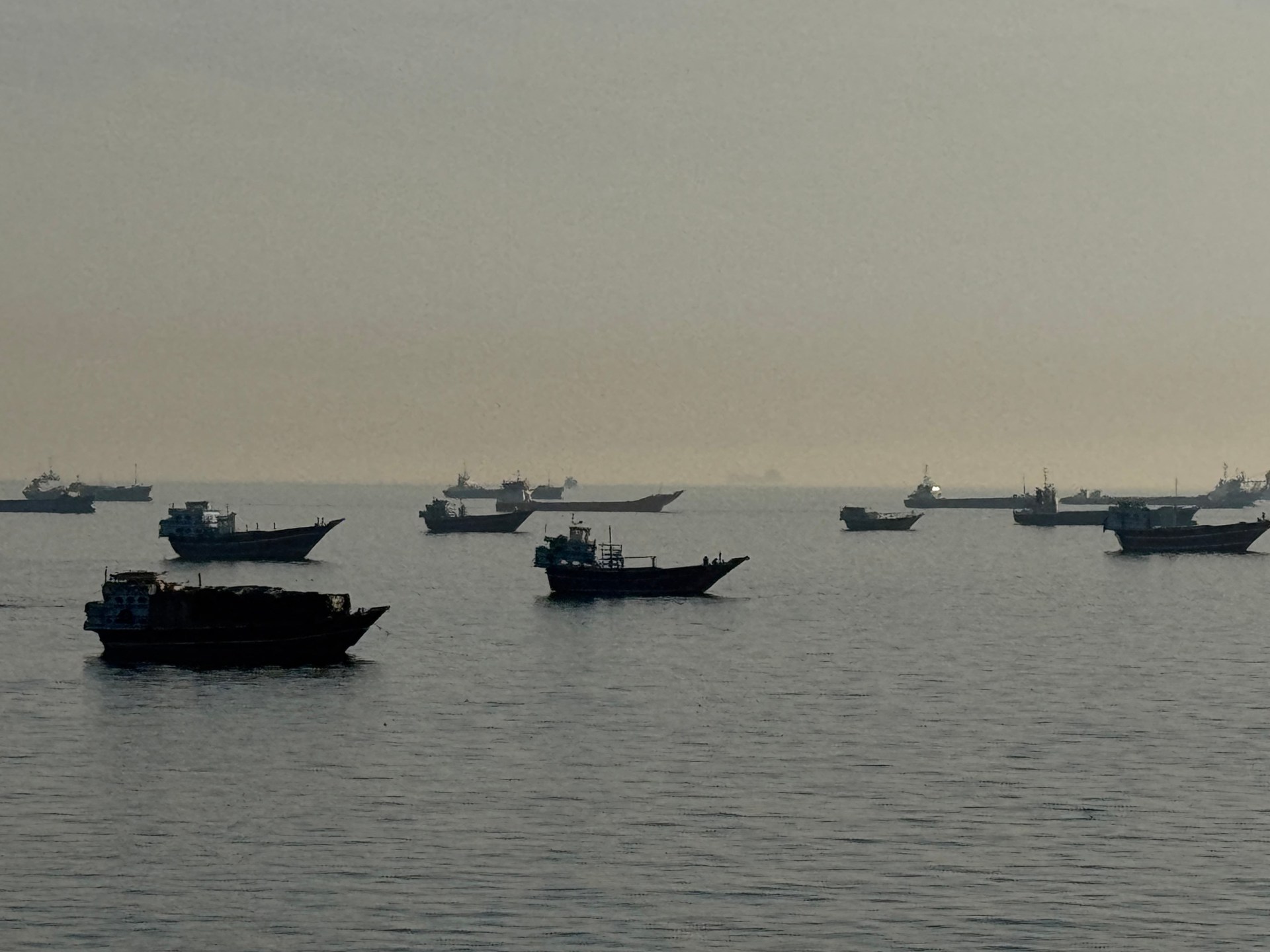
Two Chinese oil tankers departed the Strait of Hormuz on Wednesday after waiting in the Persian Gulf for over two months, as President Donald Trump and Vice President JD Vance claimed a deal to end the U.S.-Israeli war on Iran is imminent.
Shipping data from LSEG and Kpler showed the two supertankers — the Chinese-flagged Yuan Gui Yang and Hong Kong-flagged Ocean Lily — navigated out of the waterway, carrying approximately 4 million barrels of crude oil.
South Korean Foreign Minister Cho Hyun told a parliamentary hearing in Seoul that a South Korean crude tanker was also transiting the strait on Wednesday.
The Yuan Gui Yang loaded 2 million barrels of Iraqi Basrah crude on Feb. 27, a day before the U.S.-Israeli war on Iran began, while the Ocean Lily loaded 1 million barrels each of Qatari al-Shaheen and Iraqi Basrah crude between late February and early March, according to the data.
The tankers’ exit came as Trump told U.S. lawmakers the war on Iran will end “very quickly” and “hopefully … in a very nice manner.”
Vice President JD Vance said at a White House news briefing that Tehran-Washington negotiations are “in a pretty good spot here.”
“There’s a lot of back-and-forth, a lot of good progress is being made, but we’re just going to keep on working at it,” Vance said.
Trump had earlier threatened renewed military action against Iran, giving the country “two to three days” to reach a deal and claiming he had been an hour away from ordering an attack before postponing it.
The president has repeatedly signaled a deal is near and threatened heavy military action against Iran if it does not comply with U.S. demands.
Oil prices briefly eased amid the positive comments from the White House, but experts warned prices are likely to remain elevated even if Washington and Tehran reach a deal.
Brent crude, the international benchmark, fell as low as $110.16 a barrel.
“Prices are likely to still exhibit some upside potential even if a deal is concluded, given that supply will likely not return to pre-war levels immediately,” Emril Jamil, a senior oil research analyst at LSEG, told Reuters.
The economic and political fallout from the U.S. blockade on the Strait of Hormuz has reverberated worldwide, with Brent crude hitting its highest price since June 2022 last month.
The United Nations cut its global growth forecast for this year to 2.5 percent from an estimated 3 percent last year, citing higher energy costs and weaker trade.
The UN warned in its latest World Economic Situation and Prospects Report that low-income families in developing countries bear the heaviest burden “as higher food and energy prices take up a larger share of their spending and rising costs outpace wages.”
📝 This article was rewritten with AI assistance based on content from Al Jazeera English.
Related posts





Latest Post




