
TRENDING
Escaped tiger killed in Germany after attack; keeper seriously injured
5 minutes reading View : 23

World - 22 May 2026
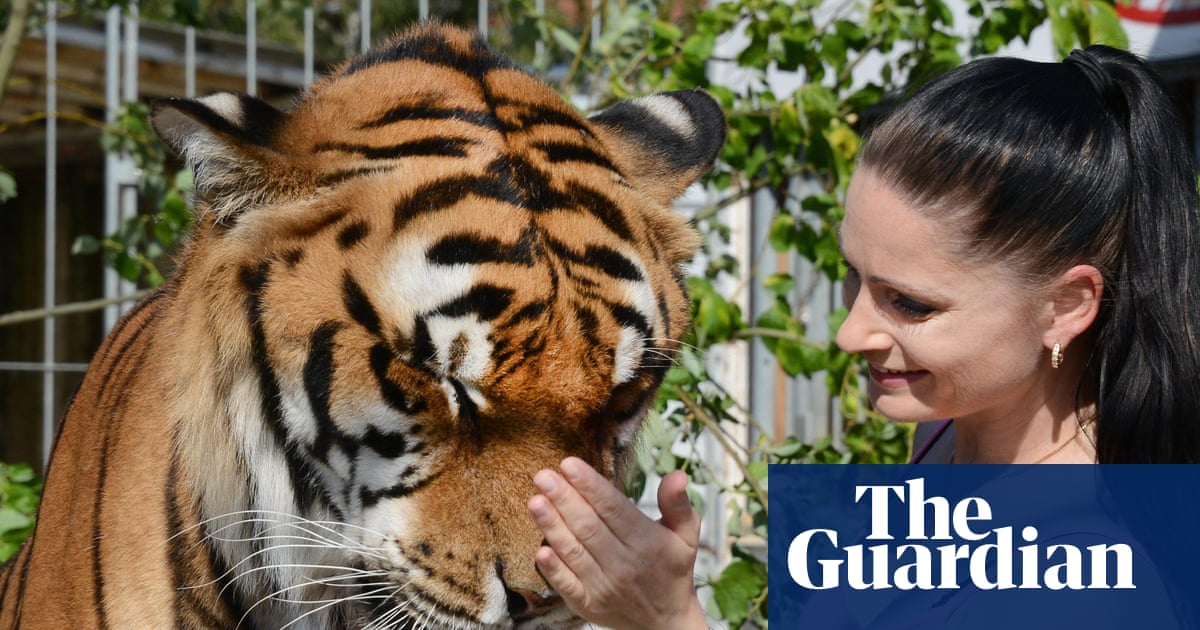
A tiger that escaped from a private enclosure in eastern Germany was shot and killed by police after attacking a 72-year-old keeper, sparking panic in a small town near Leipzig.
The incident occurred Sunday afternoon in Schkeuditz, where the big cat, named Sandokan, attacked the keeper and fled the enclosure belonging to former circus tamer Carmen Zander, who styles herself Germany’s “Tiger Queen.”
Officers alerted by panicked neighbors tracked the animal to a nearby allotment complex and killed it about 30 minutes after it escaped “to prevent danger to those present,” police said.
Witnesses said officers climbed onto a car roof and fired three shots at the tiger, which was lying just meters from a small fence bordering the gardens.
“Our paradise was shattered,” Silvia Kaempf, 68, who has a shed in the neighboring allotment association, told local media.
The keeper, who police said had been in the tiger enclosure “with permission,” remains hospitalized with severe scratches and bites and is unable to answer investigators’ questions, authorities reported.
A police spokesperson said officers did not have a veterinarian or stun gun available at the time of the escape, leaving lethal force as the only option to restore public safety. Prosecutors said no inquiry is planned against the officers who killed the animal.
However, the regional public prosecutor’s office has opened an investigation into suspected negligent bodily harm against Zander, 52, over possible breaches of safety protocols.
Thomas Druskat, mayor of the Dölzig district where Zander lives with the tigers, called for immediate removal of the enclosure. “It’s unthinkable what might have happened if other people had been injured,” he told the newspaper Leipziger Volkszeitung.
Zander, who was not present during the attack, worked for 15 years as a circus tiger tamer but stopped touring about three years ago. She expressed shock over the incident and avowed her love for her tigers.
“It’s actually every animal trainer’s worst nightmare,” she told public broadcaster MDR, referring to the attack and its consequences, adding that she was also worried about her injured colleague.
Zander’s website, still active this week advertising “wonderful” and “unforgettable” tiger-petting events for the public, features short biographies of each of her animals. Three tigers besides Sandokan were listed as having died in recent years.
Sandokan was described as a nine-year-old, 280-kilogram “majestic” Bengal-Siberian mix but was “a scaredy-cat” that could “quickly become overwhelmed and insecure” and “be triggered more quickly and unexpectedly” than the other animals.
“That’s why I need to be extremely sensitive and empathetic when training him, so that he feels secure with me,” Zander wrote, saying with the right treatment Sandokan reverted to being “a lovely, cuddly chap again.”
The website said Zander had won multiple prizes at the Monte Carlo circus festival and featured a picture of her with Princess Stéphanie of Monaco.
Zander has previously faced scrutiny over the living conditions at the enclosure in an industrial zone of Schkeuditz, where she has kept tigers since 2016. The district administration office said eight tigers live at the facility.
A spokesperson for the office told Spiegel magazine that it had been “working for some time to improve the conditions in which the tigers are kept.”
Recently, Zander had been asked to “comply with the regulations in such a way that all animals have access to the required indoor and outdoor space, or to reduce the number of animals to fit the space currently available.”
The spokesperson said it is not yet clear what will happen with the remaining animals as “no findings have yet been released regarding the investigation into the cause of the incident.”
The German Animal Protection Association called for stronger legal protections governing the keeping of wild animals, including a ban in some cases.
The animal rights group Peta, which has long criticized Zander, said veterinary authorities “share responsibility for this tragic incident” by failing to act against the facility sooner and demanded that the remaining animals be confiscated.
Yvonne Würz, a Peta adviser on zoos and circuses, criticized how Zander kept the big cats, telling local media: “The tigers are confined to a tiny space in their enclosure, in bare metal cages, and deprived of everything that would constitute a species-appropriate life for a tiger.”
Zander insisted her enclosure offered more hospitable conditions than those usually experienced by tigers in captivity. “The difference compared to a zoo environment is that my animals are always together and I don’t keep them in solitary confinement,” she said.
Zander relies on donations and help from friends to care for the tigers.
She said she dreams of having her own tiger park, partly to raise awareness about the endangered species, and questioned why animal rights activists are not interested in finding a suitable solution for the tigers with her as their keeper.
If the animals were taken away from her, she said, they would be emotionally devastated. “They would become apathetic and refuse to eat. They would call out for me for days on end, withdraw into themselves and die.”
Zander did not respond to a Guardian request for comment.
The incident has reignited debate in Germany over the private keeping of dangerous wild animals, with calls for stricter regulations and enforcement.
📝 This article was rewritten with AI assistance based on content from The Guardian.
Related posts



18 May 2026



Latest Post