
TRENDING
Greens’ Horse Racing Critique Sparks Need for Dialogue, Not Fear
5 minutes reading View : 27

Sports - 18 May 2026
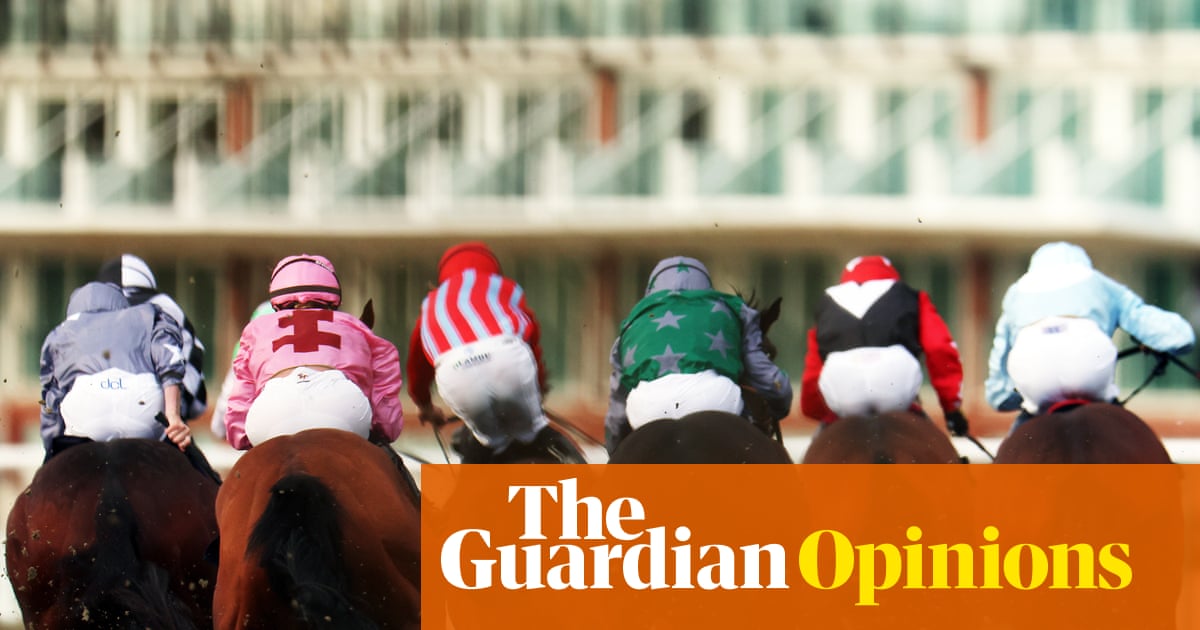
The Green party achieved record results in last week’s local and national elections, prompting Zack Polanski, the party’s leader in England and Wales, to declare that two-party politics is “dead and buried.” Ladbrokes subsequently shortened the odds on the Greens winning the most seats at the next general election to 12-1, with an overall majority priced at 28-1.
While such an outcome remains unlikely, it is far from impossible. The odds on a Green majority are roughly equivalent to those of Moon Chime, winner of the big handicap hurdle at Haydock last Saturday. Regardless of the party’s seat count, the Green voice in the next parliament — within three years or possibly fewer — appears certain to be significantly louder than before.
Given recent public comments from senior Green figures suggesting a strong abolitionist stance toward horse racing, these are interesting times for Britain’s second-largest spectator sport.
As The Sun reported on its front page two weeks ago, Polanski himself proposed eliminating “all animals involved in sport” on X in 2024.
Hannah Spencer, recently elected MP for Gorton and Denton, said last month that a “conversation” about racing is needed, days after two horses died at the Grand National meeting.
“A conversation needs to be had about horse racing,” Spencer said. “We all saw those awful pictures of a horse that had been raced to death to make money for gambling companies. That conversation is coming. Those conversations are shifting. People are telling me they don’t think horse racing is acceptable either.”
Newmarket: 1.22 Al Hudaiba, 1.57 Queen’s Companion, 2.32 Marnier, 3.07 Ballisty, 3.42 Daretobedifferent, 4.18 Sansanetti, 4.53 We’re Goosers, 5.25 Victor Cee.
York: 1.45 Zarathos, 2.20 Botagoz, 2.55 Tony Montana, 3.30 Princesse D’Orange, 4.05 Rahiebb, 4.40 Kinnalargy (nb), 5.15 Weheedd.
Newbury: 2.08 Virtue Patience, 2.40 Celeborn (nap), 3.18 Menhaal, 3.53 Extremely Zain, 4.25 Point Of Law, 5.00 Echo Of Stars, 5.35 Madjid, 6.10 Patrol.
Aintree: 4.35 Road To Wembley, 5.10 Masked Dance, 5.45 Genois, 6.20 Ike Sport, 6.55 Calimystic, 7.30 Spartan Times, 8.05 Guet Apens, 8.40 Wise Maiden.
Hamilton: 5.30 Thornaby Pearl, 6.05 Ricky Punting, 6.40 Gaelic Approach, 7.15 Humble Spark, 7.50 Draupnir, 8.25 Welbury, 9.00 Nakatomi.
The obvious question arises: Who and what will this conversation involve? Will it be limited to Green party members and animal rights campaigners, or will the 80,000 people whose jobs depend on the sport also have a say? What about the fans who purchase nearly 5 million tickets to races annually?
Spencer’s comment reflects the language of animal rights activism, holding that using animals for any human purpose is wrong and that it is impossible to cherish racehorses while also asking them to race — precisely what they were bred and born to do.
The phrase “raced to death” is particularly telling. No one intentionally aims to kill or injure racehorses, but a very small inherent risk exists in asking them to compete, a risk the sport constantly and consciously seeks to minimize.
Racing is not a blood sport. The fatal injury rate on the Flat is one in every 1,000 starts; over jumps, it is five per 1,000. Unlike the millions of mammals killed for meat annually in the UK — an industry that could also be said to use animals for “entertainment” — racehorses are not bred specifically to die.
According to the British Horse Racing Authority, racing contributes £4 billion annually to the economy. While Spencer and some Greens may not appreciate it, the sport brings immense pleasure and social engagement to millions of people each year at race meetings large and small across the country.
Antipathy toward racing in the corridors of power is not new. According to Thomas Blake, the honorable member for Forest of Dean, racing is “an amusement which, though it may be innocent in itself, is the cause of enormous evil in almost every town throughout the country … [and] it is impossible to estimate the distress and misery caused by the speculation and gambling which attend all horse races.”
Blake spoke in June 1878 during the annual adjournment debate the day before the Derby, when MPs debated — and for many years approved — a motion to adjourn until Thursday to allow them, in many cases, to head to Epsom the following afternoon.
His objections stemmed from an antipathy to gambling rather than concern for horse welfare, but they echo the abolitionist tone of Spencer’s view.
York: 1.45 Rock Steady Beat, 2.20 Corolla Point (nap), 2.55 Walsingham, 3.30 Fallen Angel, 4.05 King’s Trail, 4.40 Simplify, 5.15 Arc Ole Ole (nb).
Perth: 1.58 Scriabin, 2.33 Largy Force, 3.08 Easy To Follow, 3.43 Kado Sacree, 4.18 Double Oban, 4.55 Tanking Along, 5.28 Hold The Throw.
Salisbury: 2.08 Mumayaz, 2.40 Cruden, 3.18 American Psycho, 3.53 Wareeth, 4.28 Pierian, 5.03 Kotari, 5.40 Rogue Rebellion.
Fontwell: 5.34 Shutfrontdoor, 6.10 Sun Joy, 6.40 Thickthorn Tom, 7.10 Lady Henrietta, 7.40 Gone In Sixty, 8.10 Dernier Set.
A century and a half later, racing remains strong. Regardless of political shifts over the coming decades, it will likely endure for several hundred more years.
There will always be an onus on racing to emphasize and highlight its welfare efforts, but the sport has no reason to fear a “conversation.”
It would be helpful, however, to have that conversation before the next election if possible, to clearly understand what the Greens will or will not do to racing, allowing fans and professionals to assess their votes accordingly.
📝 This article was rewritten with AI assistance based on content from The Guardian.
Related posts


21 May 2026
Latest Post