
TRENDING
Mars Colony and Grok Risks: Five Unusual Details in SpaceX’s IPO Filing
5 minutes reading View : 47

Science - 22 May 2026
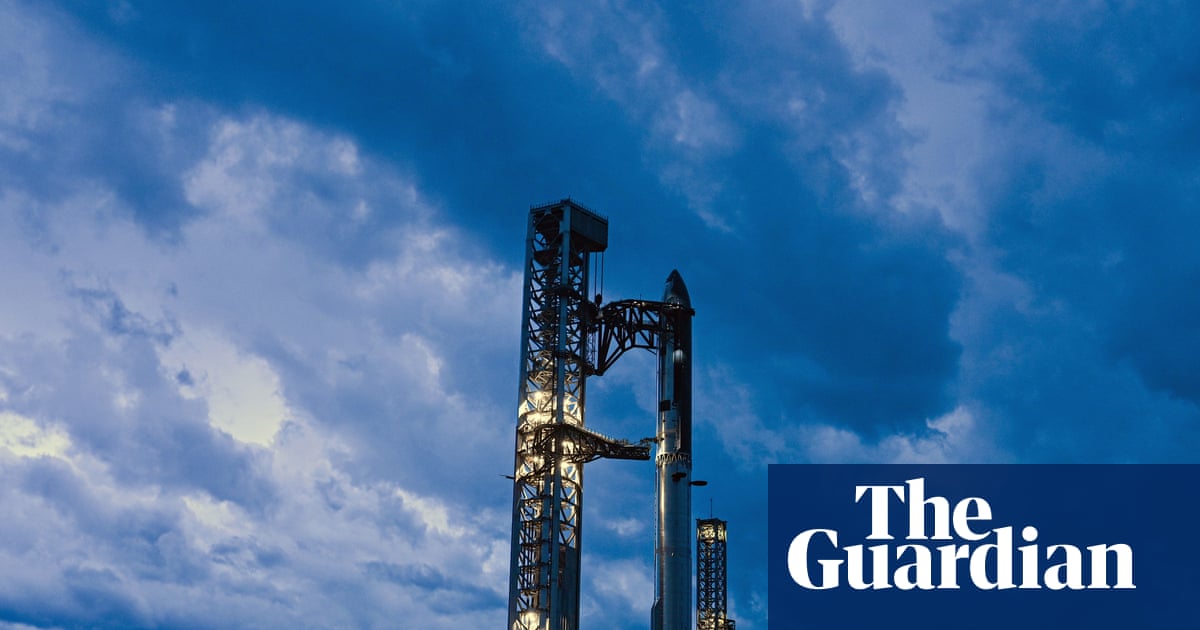
SpaceX publicly released an investor prospectus Wednesday as part of its plan for a $1.75 trillion debut on the US stock market next month, revealing previously undisclosed details about the finances and future plans of Elon Musk’s flagship company.
The filing included new information on operating costs and revenue as well as trademark Muskian sweeping proclamations about the universe and insights into quirks of his tech empire.
Scattered throughout the 300-plus-page prospectus are several disclosures and risk warnings that highlight the eccentricities of Musk’s company and its cosmic ambitions.
Other financial details underscore how interdependent Musk’s various businesses have become and the risks they carry.
As SpaceX barrels toward the largest initial public offering in US stock market history, here is a look at some of the strange details buried within its filing.
SpaceX appears to have done extensive business with Tesla, spending hundreds of millions of dollars with Musk’s electric car company in recent years.
Much of that money – $506 million to Tesla in 2025 and $191 million in 2024 – went to purchasing Tesla’s Megapack battery product, but SpaceX also spent lavishly on Cybertrucks.
The prospectus discloses that in 2025 SpaceX obtained $131 million worth of Cybertrucks at the manufacturer’s suggested retail price, which ranges between about $69,900 and $99,900 depending on options, meaning it acquired at least 1,300 vehicles.
Tesla sold only 20,237 Cybertrucks last year, according to auto industry sales reports, making SpaceX’s purchases a significant portion of overall sales.
Throughout the investor prospectus, SpaceX reiterates that its ultimate goal is to establish colonies on the moon and Mars that will usher in human civilization’s next evolution and expand humanity’s presence in the universe.
“By moving beyond the only home we have ever known, we ensure species-level redundancy and that the light of consciousness will not be tied to a single planet subject to the inevitable hazards of a harsh and vast universe,” the prospectus says. “We do not want humans to have the same fate as dinosaurs.”
At one point, the prospectus includes what appears to be an AI-generated rendering of life on Mars, showing a family looking out at a rocket launch amid a field of geodesic domes and rows of solar panels.
The sci-fi rhetoric bears financial stakes: Musk will receive an award of 1 billion shares in the company if SpaceX achieves “the establishment of a permanent human colony on Mars with at least 1 million inhabitants.”
The interplanetary ambitions also result in warnings to investors. Reaching such unusual business goals as understanding the “true nature of the universe” may prove difficult, the company advises.
“We face a number of challenges relating to our business and growth strategy and, ultimately, the achievement of our mission to make life multiplanetary, understand the true nature of the universe, and extend the light of consciousness to the stars,” the prospectus reads.
The section outlining risks to investors contains an array of legal and regulatory issues referencing investigations, lawsuits, and scandals involving Musk, several related to xAI, Musk’s artificial intelligence company that SpaceX acquired in February.
One passage discloses that xAI’s Grok chatbot, especially its “spicy” and “unhinged” modes, presents a heightened risk of creating harms including “the generation of potentially explicit content and misinformation or deceptive outputs, potential nonconsensual or exploitative imagery, intellectual property infringement, or content that could be viewed as exploitative, harmful, harassing, abusive, or discriminatory.”
The prospectus also states that SpaceX is subject to numerous domestic and international law enforcement investigations and inquiries related to allegations of Grok creating nonconsensual images.
Grok generated more than 3 million sexualized images in just 11 days earlier this year before the company increased restrictions, according to an estimate from the Center for Countering Digital Hate. The bot disclosed that it had generated images of “minors in minimal clothing.” Several people, including minors, have filed lawsuits alleging the company profited off sexual predation and child sexual abuse material.
Musk has long expressed public concern about his personal safety. Through his private foundation and a top lieutenant, Musk has registered security companies in California and Texas to provide him protection.
SpaceX’s filing shows it funneled increasing amounts to Musk’s security firm: $2 million in 2023, $3 million in 2024, and $4 million last year, plus $1 million during the first three months of 2026.
Musk has repeatedly claimed that he frequently faces death threats, especially during his leadership of the “department of government efficiency” effort to gut federal agencies and humanitarian aid.
While outlining risk factors, SpaceX includes large caveats surrounding its products and plans. The company disclosed that massive spending resulted in huge losses: $4.9 billion in 2025 and $4.3 billion in the first quarter of this year alone. “We have a history of net losses and may not achieve profitability in the future,” the prospectus states.
Elsewhere, SpaceX disclaims that to achieve its vision it must continue pouring money into experimental and unproven technologies. “Many of the innovative products and services described elsewhere in this prospectus may ultimately be unsuccessful and may require great expense,” it says.
📝 This article was rewritten with AI assistance based on content from The Guardian.
Related posts





Latest Post