
TRENDING
MLS in Talks with IFAB About Stopped Clock Trial for Matches
4 minutes reading View : 35

Politics - 20 May 2026
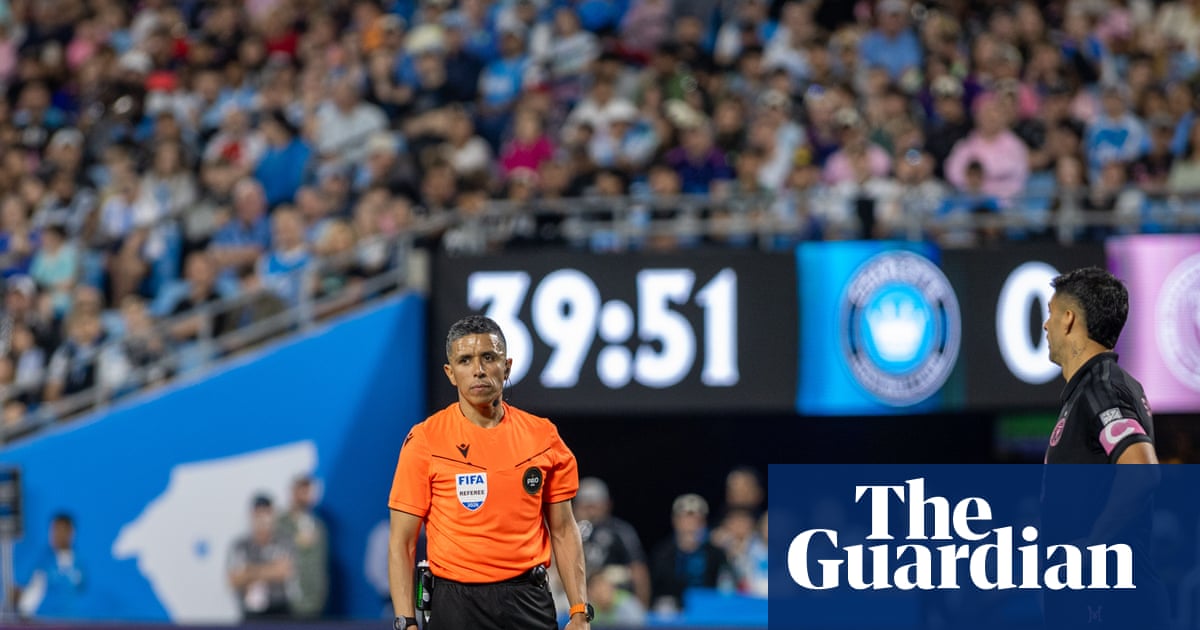
Major League Soccer has held discussions with the International Football Association Board about trialing a stopped clock during matches, a departure from the sport’s traditional continuous timekeeping.
A continuously running clock that does not pause for fouls, set pieces, injuries or other stoppages has been a cornerstone of soccer since its early days. Stopped clocks are common in American sports such as basketball and American football, and were used in MLS from its 1996 launch through the 1999 season. U.S. college soccer also retains that system.
Paul Grafer, MLS vice-president of competition, told The Guardian that reintroducing a stopped clock is “one thing that we often talk about” when discussing the sport’s future.
“When are we going to move away from all of these stopgap procedures and see if we can address gamesmanship and match manipulation by having the referee have a [stopped] clock?” Grafer said. “We’re open to trials around the world, and working with Ifab.”
In a statement, Ali Curtis, MLS executive vice-president of sporting development, confirmed the league has had “preliminary conversations with Ifab around future areas of innovation, including concepts such as a stopped clock, increased transparency around timekeeping, and other measures designed to improve consistency and fan understanding.”
Ifab last debated a stopped clock in 2017, opting instead for more subtle rule changes. Ahead of the 2022 World Cup, the organization introduced measures to combat time-wasting, with referees adding unprecedented amounts of stoppage time at the end of matches.
Sources within Ifab told The Guardian this week that the organization shelved those earlier stopped-clock efforts out of concern that unpredictable match lengths would create issues for broadcasters. Others at Ifab expressed a philosophical concern that the concept of a 90-minute match was sacrosanct.
A source within Ifab said Tuesday that, in their view, MLS would face an uphill battle to implement any significant timekeeping changes. “[Ifab] allows and introduces trials if there is wide interest in a topic,” that source said. “This one has very little support at the moment.”
MLS has become a proving ground for rule changes and technologies that later gained global adoption. This summer’s World Cup will feature new measures to combat time-wasting during injuries and substitutions, measures first pioneered in MLS Next Pro, the league’s developmental division. Those rules were later adopted by MLS before Ifab added them to the laws of the game.
The league was also among the first globally to work with Ifab on implementation and testing of video assistant referee technology, partnering with the lower-division United Soccer League in early 2017. MLS adopted VAR in all matches ahead of the 2018 season.
Any adjustments to timekeeping would likely follow a similar path, Grafer said.
“We’re always in conversation about potential trials and rules so it would be one where we would be formally submitting a proposal and seeking their acceptance,” Grafer said. “Our usual operating procedure is to trial these new rules in Next Pro. It’s the perfect incubator for those types of opportunities. We’d then look at the data and see if it’s good for the game.”
The current conversation about a stopped clock is not new in MLS circles or internationally. When MLS launched in 1996, it not only stopped the clock during pauses but also had the clock count down instead of up, another convention still used in U.S. college soccer.
During planning before the inaugural season, MLS also considered using a 60-minute version of the stopped clock and trialed it in the lower-division United States Interregional Soccer League in 1995.
MLS abandoned the countdown clock after the 1999 season, along with the 35-yard shootout used to decide tied regular-season games. “Our core audience has spoken,” MLS Commissioner Don Garber, then in his first season, told media at the time. “And we have listened.”
Nearly three decades later, elements of the league’s old timekeeping standards are resurfacing.
“These discussions [with Ifab] are exploratory,” Curtis said. “But they reflect a broader commitment across the global game to examine how the sport can continue to modernize while preserving what makes soccer unique.”
📝 This article was rewritten with AI assistance based on content from The Guardian.
Related posts






Latest Post




