TRENDING
Nation’s Decline Fuels Farage Rise Amid Accountability Breakdown
5 minutes reading View : 34

経済 - 20 May 2026

The biggest Brexit donor, stockbroker Peter Hargreaves, contributed 3.2 million pounds to the leave campaign, justifying his enthusiasm by saying, “We will get out there and we will become incredibly successful because we will be insecure again. And insecurity is fantastic.” A television advertisement for Hargreaves Lansdown, the company he co-founded, answers the question “Fantastic for whom?” by presenting itself as a safe haven during disruptive change, citing Brexit as a prime example.
The folk tale of accountability — that those who harm us will face punishment and those who help us will be rewarded — bears little resemblance to reality in business or politics. Instead, those who generate insecurity often profit from it.
In early 1915, newspaper owner Benito Mussolini incited riots to push Italy into World War I, threatening revolution if the government refused, and framing neutrality as a national shame. Italy joined the war in May, disastrously unprepared, and the resulting humiliation and loss — a “mutilated victory” — paved the way for the fascists under Mussolini’s leadership.
In spring 1940, chaotic planning and extreme indecision by Britain’s first lord of the admiralty led to disaster in Norway, where the Allies failed to prevent a Nazi invasion. The failed military campaign forced Prime Minister Neville Chamberlain to resign; he was replaced by the very first lord of the admiralty, Winston Churchill, a decision reached through peculiar means.
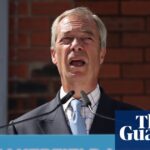
While many share blame for the United Kingdom’s current sense of national decline, few carry more responsibility than Nigel Farage. His role in the decision to leave the European Union mirrors Mussolini’s role in pushing Italy into World War I, promising miracles with a policy that instead delivered misery and retreat.
Has Farage faced electoral punishment? Not at all. Austerity enabled Brexit, as popular fury over decline and loss drove people to kick the system, and Brexit plus austerity fueled the rise of Farage’s Reform UK party.
Further decline and insecurity benefit those who can channel public anger toward scapegoats, such as immigrants, asylum seekers, Muslims, and woke elites. If Farage becomes prime minister in 2029, his Brexit disaster will be a major reason.
As Christopher Achen and Larry Bartels argue in their book “Democracy for Realists,” the harsh truth is that voters possess almost no capacity for attribution. The theory of retrospective voting — that people judge candidates on their records — is a fairytale, as voters consistently punish incumbents for conditions beyond their control.
Achen and Bartels estimate that 2.8 million people voted against Al Gore in the 2000 U.S. election because their states were too dry or too wet, including Florida, where the weather appears to have been decisive in a race that hinged on that state’s count. Given the contrast between Gore’s and George W. Bush’s climate policies, the irony is stark.
Farage will likely shrug off the undeclared 5 million pounds he received from a crypto billionaire just before deciding to stand for election in 2024, and voters will not punish his party for its likely failures in local government.
It is not that voters do not care; they possess a powerful sense of justice, and political cynicism is driven by the idea that “they always get away with it,” even if “they” is poorly defined. But busy lives and constant crisis fatigue mean people lack the mental space to keep track.
One result is that the more crises we face, the less accountable politics becomes. Boris Johnson often appeared to trigger new crises to distract from old ones, and Donald Trump does the same. The more dysfunctional life becomes, the more he can claim to be the nation’s savior.
Our entire political system rests on the idea of accountability, a brilliant theory that bears no relation to reality. Those who believe this fairytale tend to lose elections, while the winning formula is not listing achievements but demonstrating hope, flattering existing voters, and telling a powerful story of transformation.
Incumbent governments should spend big on public services to show life is improving, which is the exact opposite of what the UK government does. Its self-defeating fiscal rules suppress growth and damage perceptions of wellbeing, reinforcing hopelessness and decline.
Labour’s current leadership flatters a political base — but not its own. By appealing to mythical “hero voters” from the right, it alienates its own base, a process reinforced by deliberate “hippy punching” — demonstrating macho, pro-capital credentials by tearing down environmental protections, banning protests, cutting benefits, and performatively attacking immigrants.
The animating force of Prime Minister Keir Starmer’s team is extreme hostility toward the Labour left, a stance brought into government as a national program. Instead of inspiring, it points to Farage’s record and threatens that if voters do not choose Labour, they will get what they deserve.
This approach subscribes to a mythic conception of politics that describes a world other than our own. When Starmer leaves office — and after two wasted years, he must — his replacement should understand how politics actually works.
George Monbiot is a Guardian columnist.
📝 This article was rewritten with AI assistance based on content from The Guardian.
Related posts


Latest Post