
TRENDING
Neanderthals Used Stone Drills for Dental Work 59,000 Years Ago
4 minutes reading View : 48

Science - 18 May 2026
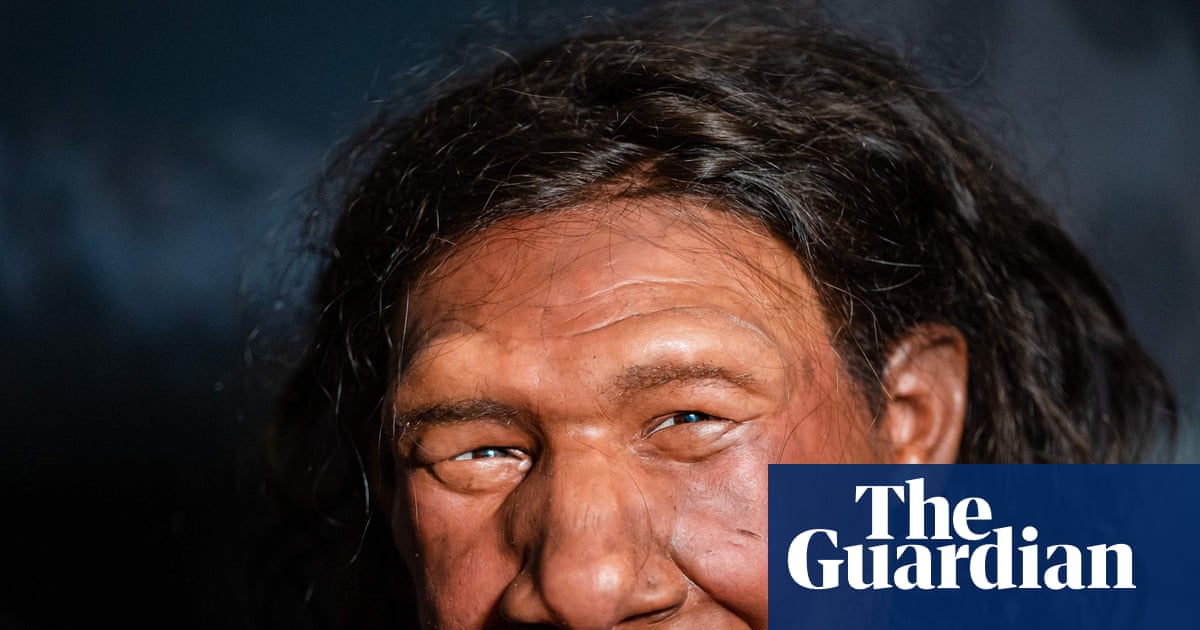
Neanderthals used stone drills to treat cavities almost 60,000 years ago in what archaeologists say is the earliest known evidence of dental treatment.
The single molar, unearthed in a cave in southern Siberia, features a deep hole created with a sharp, thin stone tool while the tooth’s owner was alive.
Although the prospect of Stone Age root canal treatment may be excruciating to contemplate, researchers say the discovery provides insights into Neanderthals’ advanced behaviors and possibly their gritty disposition.
Dr. Kseniya Kolobova, an archaeologist at the Siberian branch of the Russian Academy of Sciences in Novosibirsk, said: “This discovery powerfully reinforces the now well-supported view that Neanderthals were not the brutish, inferior cousins of outdated stereotypes but a sophisticated human population with complex cognitive and cultural capacities. [It] adds an entirely new dimension – invasive medical treatment – to the growing list of advanced Neanderthal behaviours.”
This marks the first time dental drilling has been demonstrated outside of Homo sapiens, and it is the oldest example of such behavior by more than 40,000 years.
A dental professor who reviewed images of the tooth but was not part of the research rated the Neanderthal’s work as “a decent job.”
“If I was marking this for a dental student, I wouldn’t give it an A, but given the circumstances it’s pretty impressive,” said Justin Durham, a professor of orofacial pain at Newcastle University and the British Dental Association’s chief scientific adviser.
The smoothed edges of the drilled cavity and wear patterns inside it suggested the individual survived and continued to chew with the tooth for some time after the procedure.
The tooth, dated to 59,000 years old, was found at Chagyrskaya, where Neanderthal remains and thousands of stone tools have been excavated. The lower molar has a deep hole in the center extending into the pulp cavity, and microscopic X-ray imaging revealed changes in mineralization indicating severe tooth decay.
Researchers conducted experiments on three modern human teeth to show that a hole of the same shape and microscopic groove patterns could be created by manually rotating a narrow, elongated tool made from local jasper between two fingers. Penetrating the dentin using this method took between 35 and 50 minutes of continuous work, according to the study published in the journal PLOS One.
“It would have been excruciating,” said Kolobova.
Durham described the intervention as “the beginnings of a root canal treatment” and said it likely relieved pain in the short term.
“The tooth is a closed box. So the pressure [that builds up during an infection] is what causes the intense, painful, pounding, pulsing toothache that people are familiar with,” he said. “If you put a big hole in the tooth like this Neanderthal dentist did, it would relieve that pressure.”
“We have to use diamond-tipped burrs running at greater than 40,000 revolutions a minute to get through the outer surface of the tooth in modern-day dentistry,” Durham added. “So this is quite a phenomenal achievement, which is why I take my hat off to the Neanderthal who did it. It really does demonstrate high-level thinking and high-level skills as far as I’m concerned.”
The patient appeared to survive for some time, but left unfilled, the tooth would have been vulnerable to chronic infection.
Previous evidence of Neanderthals caring for sick and vulnerable group members includes an adult man with a withered arm and deformities in both legs and a child with Down’s syndrome who survived until at least age six. The latest discovery reveals not only compassion but also impressive self-control by the patient.
“What struck me, and continues to strike me, is what an incredibly strong-willed person this Neanderthal must have been,” said Dr. Lydia Zotkina, an archaeologist at the Russian Academy of Sciences and co-author. “They must have surely understood that although the pain of the procedure was greater than the pain of the inflammation, it was only temporary and had to be endured.”
“Now, every time I go to the dentist, I think about that guy,” she added.
📝 This article was rewritten with AI assistance based on content from The Guardian.
Related posts






Latest Post




