
TRENDING
Political executions surge in Iran amid crackdown on dissent
5 minutes reading View : 44

World - 18 May 2026
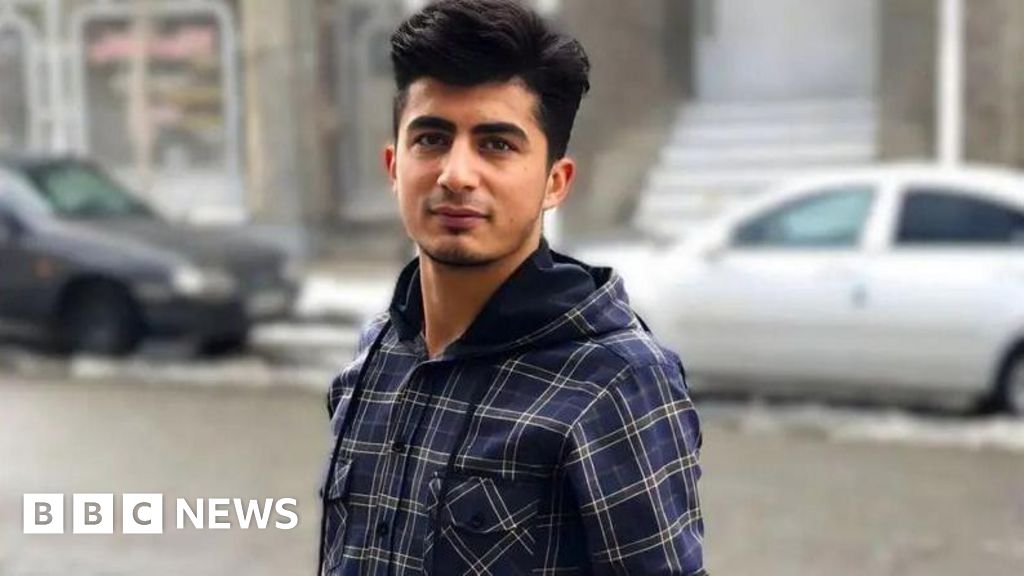
A crackling audio message from Iran’s Oromiyeh Central Prison captures the voice of Mehrab Abdollahzadeh, a death row inmate whose tone remains steady despite his dire circumstances.
Speaking rapidly as if running out of time, Abdollahzadeh delivered a desperate plea in a voice note obtained by the Kurdistan Human Rights Network.
“You are hearing my voice from Oromiyeh Central Prison, and this may be the last time you hear it,” he said.
“From the very first day of my arrest, they forced confessions out of me through torture and threats, confessions that were entirely false. None of the charges against me are true. They know it, and God knows it. I am innocent.”
Iranian authorities arrested Abdollahzadeh in 2022 during nationwide protests sparked by the death in custody of Mahsa Amini, a young woman detained for improperly wearing her veil.
He faced accusations of involvement in the killing of a member of Iran’s Basij militia force.
After 42 months of fear and sleepless nights, authorities executed Abdollahzadeh earlier this month as part of a surge in executions of individuals charged with political and security offenses.
The United Nations has verified at least 32 executions of political prisoners since the U.S. and Israel attacked Iran on Feb. 28, the UN Human Rights Office said.
Amnesty International reported a sharp year-on-year increase, with 45 politically motivated executions taking place across all of 2025.
The UN Human Rights Office warned that Iran is increasingly using the death penalty to silence political dissent.
Several of those executed this year were accused of spying for Israel or the CIA, while others faced allegations of affiliation with an exiled opposition group.
Fourteen of the executed individuals were arrested in connection with an uprising in January that authorities crushed with lethal force, leading to thousands of deaths.
“In Iran, the authorities carry out executions by hanging. They carry them out at dawn,” said Nassim Papayianni of Amnesty International. “People in Iran have been waking up to near-daily announcements of executions.”
“They weaponise the death penalty as a tool of political repression, to instil fear among the population, and essentially crush and stifle any dissent that there might be,” Papayianni added.
While some executions are announced publicly, a spokesperson for the UN Human Rights Office told the BBC that others may be happening in secret.
Last year, Iran carried out 2,159 executions, according to Amnesty International, the highest number since 1989, with the vast majority for drug-related offenses or murder.
The UN fears that the 2025 figure could be even higher.
By intensifying use of the death penalty, the regime is attempting to restore authority after its image was damaged by the January uprising and the war, said Kaveh Kermanshahi of the Kurdistan Human Rights Network.
“At a time when it is confronting multiple internal and external crises, it is attempting, through intensified repression and an increase in executions, to stage a display of power and project the message: ‘I am still here, and I still control the situation,'” Kermanshahi said.
Late last month, state-run television aired a report on the execution of Sasan Azadvar, a 21-year-old karate champion from Isfahan convicted of “moharabeh,” or “waging war against God,” and “effective collaboration with the enemy” for attacking police during January’s protests.
In the report, Azadvar confessed to using a stick to break a police car window and asking for petrol to set it on fire.
He was not accused of any lethal offense, which under international law is the threshold for the death penalty.
Iranian authorities did not respond to the BBC’s request for comment on the increased use of the death penalty, including in Azadvar’s case, or on claims of torture.
On April 30, however, the head of Iran’s judiciary, Gholamhossein Mohseni Ejei, dismissed international criticism of death sentences linked to the January unrest, saying his courts would not be swayed.
Each condemned person has a unique story, but human rights activists point to disturbing patterns, noting that the death sentence is disproportionately used against members of the country’s minorities.
Erfan Shakourzadeh, a 29-year-old master’s student in aerospace engineering, was hanged on May 11 after Iran’s judiciary said he was convicted of sharing classified information with Israeli and U.S. intelligence.
The Norway-based Hengaw human rights organization published a note they say Shakourzadeh wrote before his death: “I was arrested on fabricated espionage charges and, after eight and a half months of torture and solitary confinement, was forced into a false confession. Do not let another innocent life be taken in silence.”
Hengaw expressed deep concern over the speed of trials, sentencing and executions, along with “a complete lack of transparency” in judicial proceedings.
“The Islamic Republic continues its systematic repression of the population by arbitrarily accusing dissidents and critics of being ‘Israeli spies’ without presenting credible evidence or guaranteeing fair trial standards,” Hengaw’s Aywar Shekhi told the BBC, adding that “many lives are at risk.”
In his voice message from prison, Abdollahzadeh described the torment of death row: “A condemned person thinks every single night and day that at any moment, they might be called and taken away to be executed. A condemned person can only find a sliver of peace after 1am at night, perhaps letting go of their racing thoughts to sleep for two or three hours.”
Authorities executed the 29-year-old Kurdish shop owner without prior warning to his relatives or lawyers, and his body has not been returned to his family, according to the Kurdistan Human Rights Network.
📝 This article was rewritten with AI assistance based on content from BBC News.
Related posts




Latest Post