
TRENDING
Rainforests near breaking point from resource demands, report finds
5 minutes reading View : 24

Science - 20 May 2026
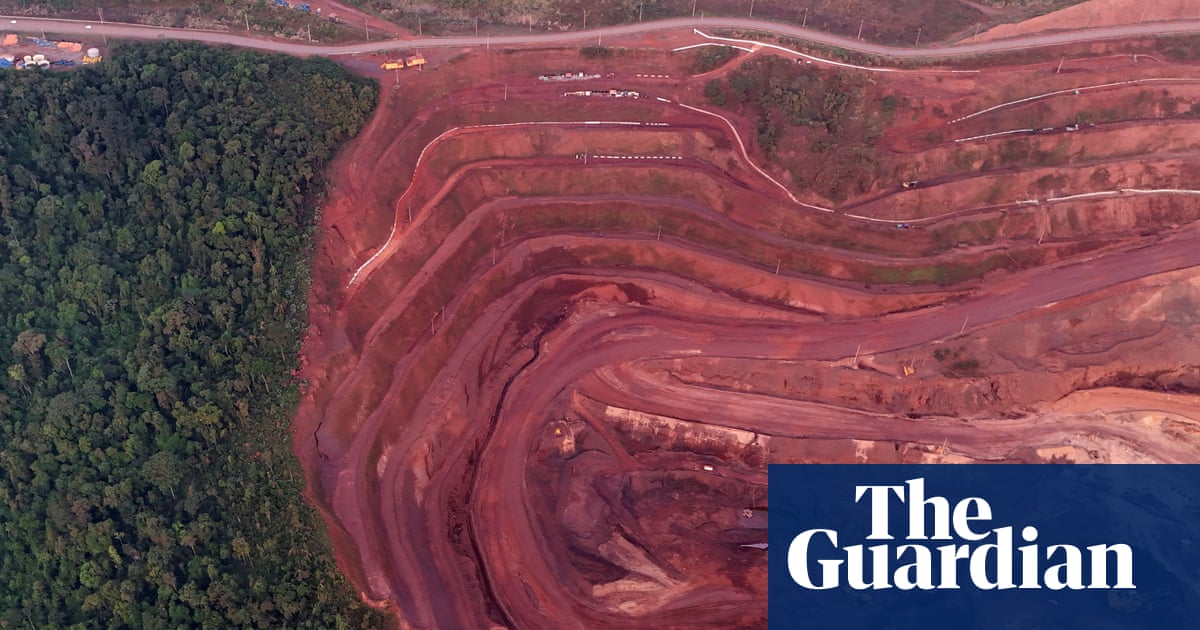
A new report warns that the growing extraction of rainforest resources is pushing the Amazon and similar biomes toward a breaking point.
The analysis from Profundo, commissioned by Rainforest Foundation Norway, finds that fresh demands for critical minerals, biofuels and pulp—used in fast fashion, processed food and packaging—are compounding existing pressures from cattle ranching, monocrops, oil and logging.
Mining, in particular, has a far greater environmental footprint than previously thought due to secondary impacts such as water pollution and construction of roads, settlements and other infrastructure. Between 10% and one-third of the world’s forests are already affected, and this proportion is expected to increase.
The authors say this highlights an urgent need to replace and reduce the use of products from forest regions rather than simply adding new forms of consumption, as is currently the case.
The report tracks commodity trends threatening forests in the Amazon, the Congo basin and Southeast Asia, weakening their capacity to regulate temperature, store carbon, recycle water and provide habitat for wildlife.
Cattle ranching, agriculture and gold mining remain by far the biggest threats, the study finds, and all three are forecast to continue expanding.
While extractive threats from energy, mining and e-commerce are usually examined in isolation, the authors say they must be understood together as a compounding assault on the world’s forests.
“It creates a pressure that the rainforests cannot withstand,” said Ingrid Turgen of the Rainforest Foundation Norway. “Our main message is that this compilation – one on top of the other – is affecting all three rainforest basins (Amazon, Congo and south-east Asia) and if governments don’t do something about it then places like the Amazon face a pretty bleak scenario.”
The 10.2% increase in beef production forecast by the Brazilian government is expected to cause at least 57,000 square kilometers of deforestation by 2034, the report predicts. This could be considerably higher if the current trend of shifting ranching to the Amazon continues. Over the same period, global meat production is expected to increase 13%, driven by population growth.
Open-pit gold mines already cover 1.9 million hectares of the Amazon biome and this is likely to increase due to projected demand for jewelry (43% of gold use), technology (7%) and ingots held by investors and central banks. The report finds a clear correlation between gold prices and gold mining-related deforestation in the Brazilian Amazon. On recent trends, this is projected to cause an extra 375 square kilometers of deforestation by 2028.
Oil, gas and coal are playing an ever bigger role in rainforest destruction, both directly from drilling and indirectly through global heating. The Amazon is one of the fastest-growing fossil fuel frontiers, with exploration and extraction in Brazil, Suriname, Ecuador, Colombia and Peru. Nearly one-fifth of the world’s oil and natural gas reserves identified between 2022 and 2024 were found in the South American rainforest and offshore regions.
Last year, the Democratic Republic of the Congo approved exploration of 52 new oil blocks covering 1.24 million square kilometers in the Cuvette Centrale peatlands, the world’s largest terrestrial carbon sink and a highly biodiverse critical ecosystem.
Additional pressure comes from mining for critical minerals such as lithium, nickel and cobalt used for batteries and other technologies in the transition toward cleaner energy. The study estimates cumulative deforestation linked to the global electric vehicle fleet will be between 1,500 and 4,700 square kilometers by 2050 on current trends.
This is barely 1% of all deforestation expected in that period, but the secondary effects are considerable. The environmental impact of mines can spread across a 50-kilometer radius due to water and land contamination, the report notes. Mines also tend to disproportionately affect Indigenous territories and other areas of relatively intact forest.
“The cumulative impacts of mining on forest areas have likely been significantly underestimated for many years,” said Veera Mo of Rainforest Foundation Norway.
Another source of rising stress is the biofuel sector, which claims to be a sustainable alternative to oil and gas for aviation and shipping, but can lead to forest clearance for soy, tallow, palm and ethanol. The report estimates 52 million hectares of additional cropland will be needed to meet projected 2030 global demand for biofuel. For biofuel-related soy crops alone, it predicts between 31,600 and 35,000 square kilometers of Amazon vegetation will be cleared by 2035.
Oil palm pressures are also growing as processed foods become more popular worldwide. Until now the main impact has been on forests in Southeast Asia, particularly Indonesia. But the report says the Congo basin could become a new frontier for oil palm because markets for processed foods are growing along with urbanization in the Middle East and sub-Saharan Africa.
Other throwaway products marketed as “green” in faraway urban cities can also worsen the health of tropical rainforests. The fast-fashion popularity of the semi-synthetic fiber viscose (rayon) is adding pressure on Indonesia’s forests because one of its core ingredients is wood pulp. Similarly, paper bags often touted as a “green” alternative to plastic carriers are not always sustainably sourced, nor is much of the packaging used for the fast-growing e-commerce sector.
The report sets out possible solutions, including improved transparency in supply chains and stronger enforcement of regulations. Recycling could also help reduce the need for new mine development. Ultimately, a core goal should be to reduce demand in consumer countries.
“A reduction in resource use can’t be avoided. There is no doubt recycling is needed but it will not help enough,” said lead author Barbara Kuepper. “The overall use of resources is just too big.”
“Even in sectors where we hope for a transition, like energy, the impact on forests is worryingly high.”
📝 This article was rewritten with AI assistance based on content from The Guardian.
Related posts


Latest Post