TRENDING
Rubio’s India Visit Aims to Bolster Ties Amid Trade, Energy Disputes
5 minutes reading View : 26

World - 23 May 2026
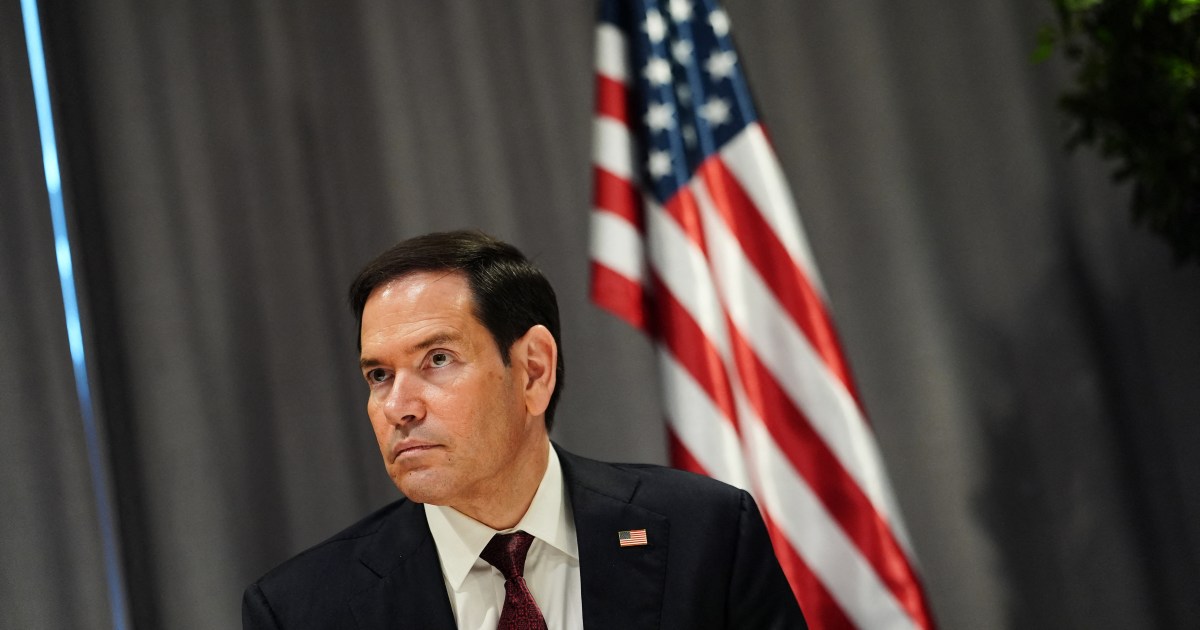
U.S. Secretary of State Marco Rubio will travel to India on Saturday for a three-day visit that includes stops in Kolkata, Agra, Jaipur and New Delhi.
Rubio will discuss energy security, trade and defense cooperation with senior Indian officials, State Department spokesperson Tommy Pigott said Tuesday.
The visit comes at a time when relations between U.S. President Donald Trump and Indian Prime Minister Narendra Modi remain unsettled.
Rubio’s trip raises questions about its purpose and whether he aims to repair ties between the two nations.
Here is an explanation of why Rubio’s visit is significant.
Rubio is visiting India several days before a meeting of foreign ministers from the Quad, an informal security forum comprising the U.S., Japan, Australia and India, scheduled for May 26 in New Delhi.
The Quad, or Quadrilateral Security Dialogue, has been described as “the Asian version of NATO.” It was formed in response to China’s growing influence and has conducted joint military and naval exercises in the Indo-Pacific.
Rubio’s visit also follows the Trump administration’s decision to dismiss U.S. criminal fraud charges against Indian billionaire Gautam Adani. Adani had been accused of bribing Indian officials with up to $265 million to secure contracts and lying to U.S. investors about a solar energy project in India, allegations his company has denied.
The Justice Department dropped the charges after Adani pledged a $10 billion investment in the United States.
In a post on X on Monday, U.S. Treasury Secretary Scott Bessent announced a 30-day extension of a sanctions waiver that allows purchases of Russian seaborne oil. The measure is intended to aid “energy-vulnerable” countries affected by the conflict with Iran, reversing an earlier plan not to extend it.
Bessent said the Treasury was issuing the 30-day general license after a previous waiver expired on May 16. It permits temporary access to Russian oil and petroleum products stranded on tankers without violating U.S. sanctions on Russian oil majors, he said.
The extension has temporarily eased pressure on major Russian oil buyers like India, which has faced U.S. criticism for relying on discounted Russian crude.
Observers said both moves — dismissing charges against Adani and extending the sanctions waiver on Russian oil at sea — appear aimed at improving relations with India.
Rubio’s meeting with Quad leaders will also signal that the U.S. is reaffirming its commitment to the Indo-Pacific region.
Analysts say Rubio’s visit is part of Washington’s effort to repair bilateral ties with New Delhi after tensions between Trump and Modi last year.
“Rubio is going to India in repair mode,” Sadanand Dhume, senior fellow for India, Pakistan and South Asia at the Council on Foreign Relations (CFR), wrote Thursday on the group’s website.
In October, Indian Foreign Secretary Shyam Saran told the news outlet The Wire: “The 25-year upward trajectory of India-US relations has certainly plateaued, if not started declining.”
Several key issues have caused friction between Trump and Modi.
Last year, relations approached a crisis when Trump imposed an additional 25 percent trade tariff on Indian goods, doubling the rate to 50 percent, as punishment for India’s continued Russian oil purchases.
In October, after a meeting with Modi, Trump said India had committed to stop buying Russian oil. In exchange, Trump agreed to reduce U.S. tariffs on Indian goods to 18 percent.
However, since the start of the U.S.-Israel military action against Iran and the subsequent closure of the Strait of Hormuz, India has continued purchasing Russian oil.
Washington now hopes to persuade India to buy oil from the United States and Venezuela instead.
Rubio’s visit follows months of improving U.S.-Pakistan relations, a development that concerns India, Pakistan’s archrival.
In April last year, India and Pakistan were drawn into armed conflict after attackers killed 26 people in Pahalgam, a popular tourist destination in Indian-administered Kashmir. The Resistance Front, a separatist group designated as terrorist by India and the U.S., claimed responsibility. New Delhi alleges the group is linked to Pakistan-based Lashkar-e-Taiba, which seeks to annex Kashmir to Pakistan — a claim Islamabad denies.
After the Pahalgam attack, New Delhi reduced diplomatic ties with Islamabad and suspended the Indus Waters Treaty, which governs the sharing of Indus River water between the two nations.
On May 7, India launched missile strikes on nine targets in Pakistan and Pakistan-administered Kashmir, which Islamabad said killed dozens of civilians. Over the next three days, the two countries fought an intense aerial conflict, using drones and missiles to attack each other’s military installations.
A ceasefire, for which Trump claimed credit, was brokered on May 10. However, tensions remain high. India refused to acknowledge Trump’s role in the ceasefire, while Pakistan nominated him for the Nobel Peace Prize.
“PM Modi told President Trump clearly that during this period, there was no talk at any stage on subjects like India-US trade deal or US mediation between India and Pakistan,” Indian Foreign Secretary Vikram Misri said in June.
During the U.S.-Israel campaign against Iran, Pakistan has acted as a mediator, regularly coordinating with U.S. officials. “Great respect for Pakistan, but I will, because they’ve been terrific. They’ve really tried, and they’ll stay involved,” Trump said in a Fox News interview in April.
In December, the U.S. approved the sale of advanced technology and upgrades for Pakistan’s F-16 fighter jets, valued at approximately $686 million.
📝 This article was rewritten with AI assistance based on content from Al Jazeera English.
Related posts






Latest Post