
TRENDING
Scientists confirm Neolithic humans carved massive pits near Stonehenge
3 minutes reading View : 24

Science - 22 May 2026
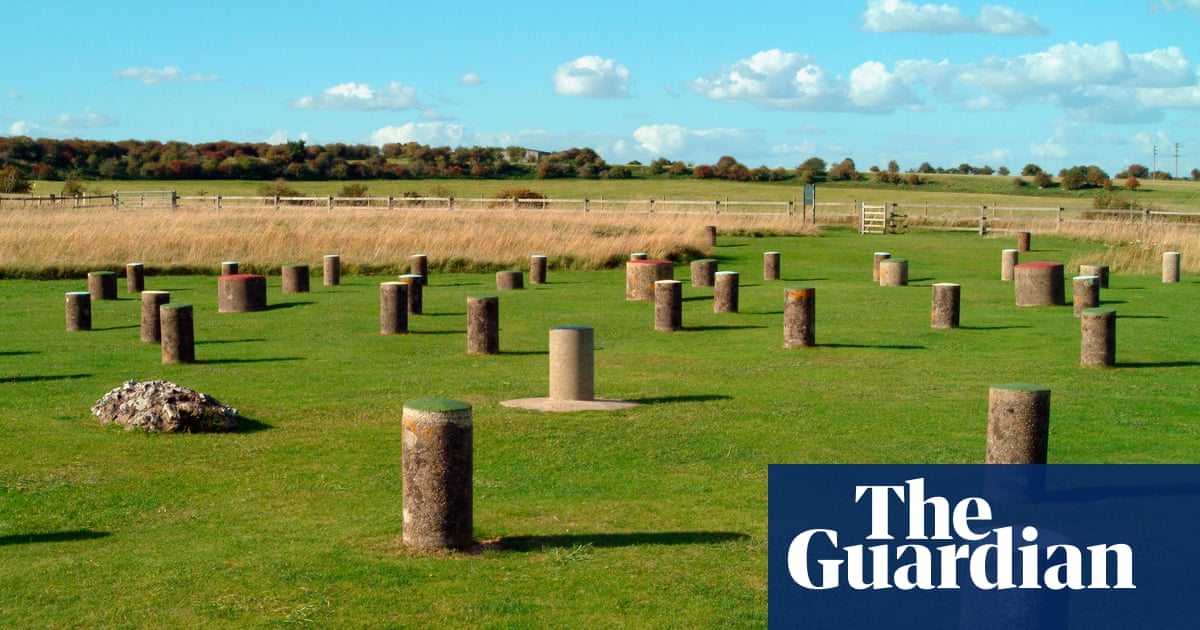
Archaeologists have confirmed that a vast circle of pits near Stonehenge was carved by Neolithic humans, using a novel combination of scientific techniques to settle a long-running debate.
The team believes the makers of the Durrington pit circle were more focused on an underworld than the heavens, which may have inspired Stonehenge’s builders.
The Durrington circle comprises about 20 pits spanning more than a mile, with the Neolithic Durrington Walls and Woodhenge sites at its center.
Some pits measure 10 meters wide and 5 meters deep, requiring significant determination and engineering skills to dig from the chalky landscape.
The pit circle’s apparent existence was first announced in 2020, with some calling it the largest prehistoric structure ever found in Britain.
Its discovery was hailed as possible early evidence of numerical counting, as the circle’s size would have required makers to track their position—the structure is too large to create by sight alone.
However, skepticism emerged, with some experts suggesting the pits could be natural features rather than human-made more than 4,000 years ago.
A paper published in the journal Internet Archaeology, titled “The Perils of Pits,” details subsequent work and concludes the pits were human-made.
Prof Vincent Gaffney, of the School of Archaeological and Forensic Sciences at the University of Bradford, who leads the analysis, said the new research shows the pits form an “extraordinary structure.”
Gaffney said they used a combination of methods never before applied in this way. “The exceptional size of the pits demanded a novel strategy to explore them without the need for a major, and very expensive, excavation,” he said.
“As no single technology can answer all the questions; multiple types of geophysics equipment was used to establish the size and shape of the pits.”
Electrical resistance tomography assessed depth, while radar and magnetometry determined shapes. But this did not prove human origin, so sediment cores were extracted and analyzed using optically stimulated luminescence to date soil from its last sunlight exposure, and “sedDNA” to recover animal and plant DNA.
The researchers found repeating patterns in soil from different parts of the site that they believe prove human involvement. “They can’t be occurring naturally. It just can’t happen,” Gaffney said. “We think we’ve nailed it.”
The team believes the pits were dug in the late Neolithic period. The exact purpose may never be known, but Gaffney speculated it could be linked to a belief in an underworld.
He said: “Now that we’re confident that the pits are a structure, we’ve got a massive monument inscribing the cosmology of the people at the time on to the land in a way we haven’t seen before. If it’s going to happen anywhere in Britain, it’s going to happen at Stonehenge.”
📝 This article was rewritten with AI assistance based on content from The Guardian.
Related posts





Latest Post