TRENDING
Trump: China to buy 200 Boeing jets, far below trade war expectations
4 minutes reading View : 47

Economy - 18 May 2026
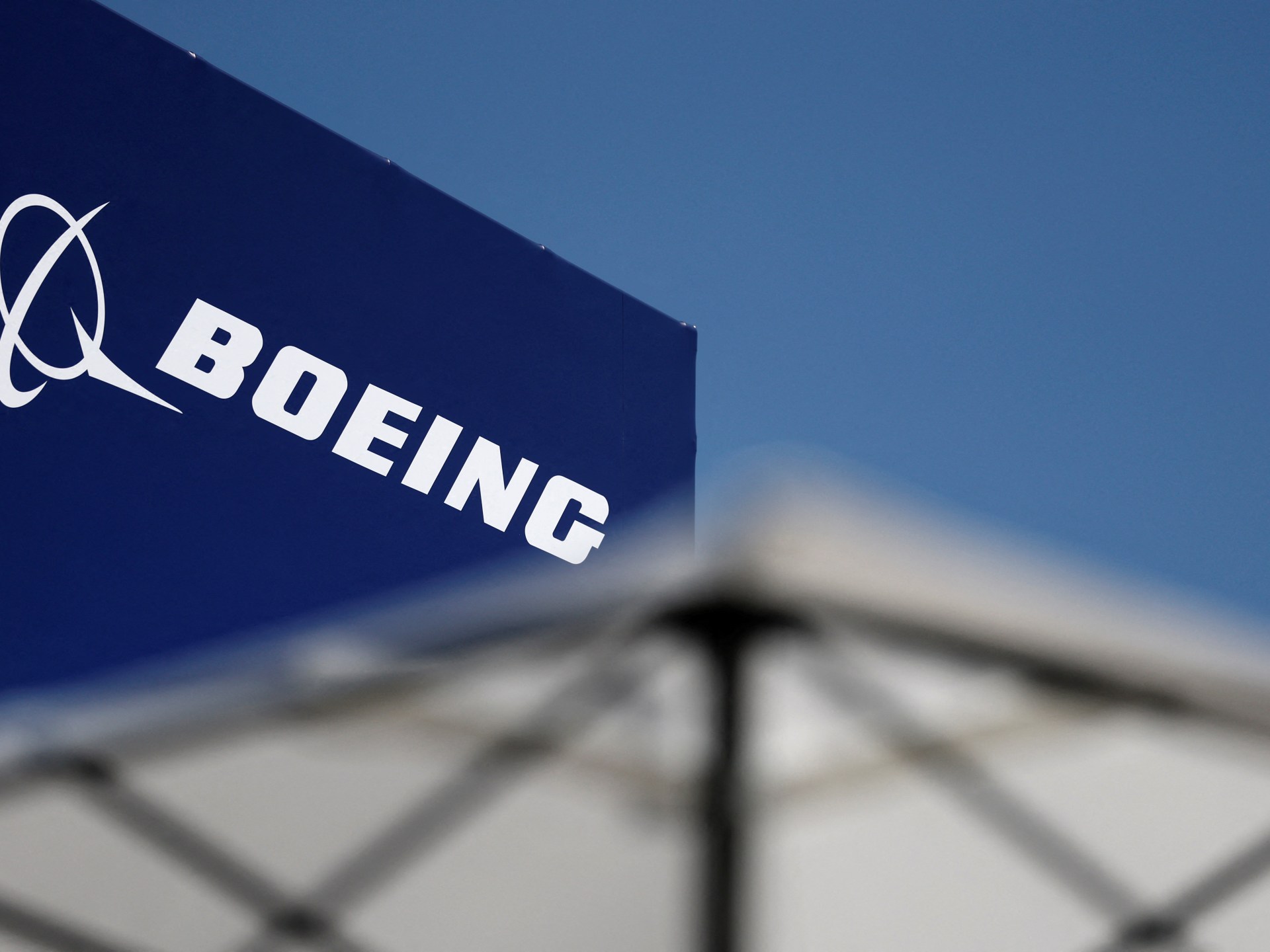
China has agreed to purchase 200 Boeing jets, with the potential for the order to rise to as many as 750 planes, President Donald Trump announced Friday, adding that the aircraft would be equipped with GE Aerospace engines.
“The deal includes approximately 200 planes and a promise of up to 750 if they do a good job,” Trump told reporters aboard Air Force One. Details on jet types and delivery timelines were not immediately disclosed.
Neither the Chinese government nor Boeing issued statements confirming the agreement, which would mark a significant breakthrough in a market central to Boeing’s long-term growth but largely closed to the US planemaker amid trade tensions. Planemakers typically publicize large orders only after formalization.
Boeing CEO Kelly Ortberg joined a large group of US corporate leaders accompanying Trump during his visit to Beijing, seeking to sell products and services to China.
It remained unclear how many of the 200 planes represented new business versus aircraft already in Boeing’s order backlog.
People familiar with China’s purchasing patterns said Beijing has previously bundled new orders with repeat announcements when unveiling trade packages tied to diplomatic visits by US and European leaders.
For China, such a large order would secure capacity to sustain growth in its aviation market, even as production of its homegrown COMAC C919 narrow-body jet falls short of ambitious targets.
The deal would also help Boeing narrow the gap with rival Airbus, which has pulled far ahead in China in recent years.
Aviation intelligence firm IBA estimated the value of the 200-aircraft order at roughly $17 billion to $19 billion, assuming 80% of the mix consists of MAX jets.
“This number, however, could increase to $25 billion if a larger proportion—about 40%—of the total order is for widebody aircraft,” IBA’s Samuel Kenekueyero said.
The deal would be a much-needed win for Trump, whose aggressive tariffs and trade policies have so far failed to significantly reduce the large US trade deficit.
An order exceeding 500 jets, if realized, would be the largest in aviation history, surpassing IndiGo’s 500-aircraft deal for Airbus narrowbodies, though China’s purchase would likely be split among its three major state-run carriers.
Shares of Boeing fell nearly 4% on Thursday after Trump told Fox News that China had agreed to buy 200 jets, well below analysts’ expectations. They were down about 2.6% on Friday, while GE Aerospace shares dropped 2%.
Industry sources said Boeing had originally been in negotiations for at least 500 narrowbody jets tied to the Beijing summit, with dozens of widebody jets and potentially up to 200 more to follow at a later date.
Trump said Chinese President Xi Jinping would pay a return visit to Washington in September, implying it may become the focal point for the next tranche of potential plane orders.
However, concerns about after-sales support have weighed on buying decisions, said Li Hanming, an independent expert on China’s aviation industry.
“The reason China isn’t buying is very simple: no one wants to buy something without guaranteed after-sales maintenance and support. Last May, the US was still threatening export restrictions on parts. If they impose parts embargoes like that, who would still dare to buy Boeing?”
Wendy Cutler, senior vice president of the Asia Society Policy Institute and former acting deputy US trade representative, told Al Jazeera in emailed comments: “What we expected and haven’t seen thus far is not only Chinese confirmation of the jet purchases, but other Chinese mega-purchases as well, particularly in the agricultural and energy sectors.”
Both sides also did not agree to extend the trade truce, which expires in five months, she noted.
“All of these matters appear to still be in the works, so we may see further announcements in the coming days. If further economic deliverable announcements are not forthcoming, it’s fair to conclude that this summit meeting was heavy on atmospherics, but light on substance,” Cutler said.
📝 This article was rewritten with AI assistance based on content from Al Jazeera English.
Related posts




Latest Post