TRENDING
Trump-Xi Summit: US, China Hail ‘Very Successful’ Talks, Few Deals Confirmed
7 minutes reading View : 41

Technology - 18 May 2026
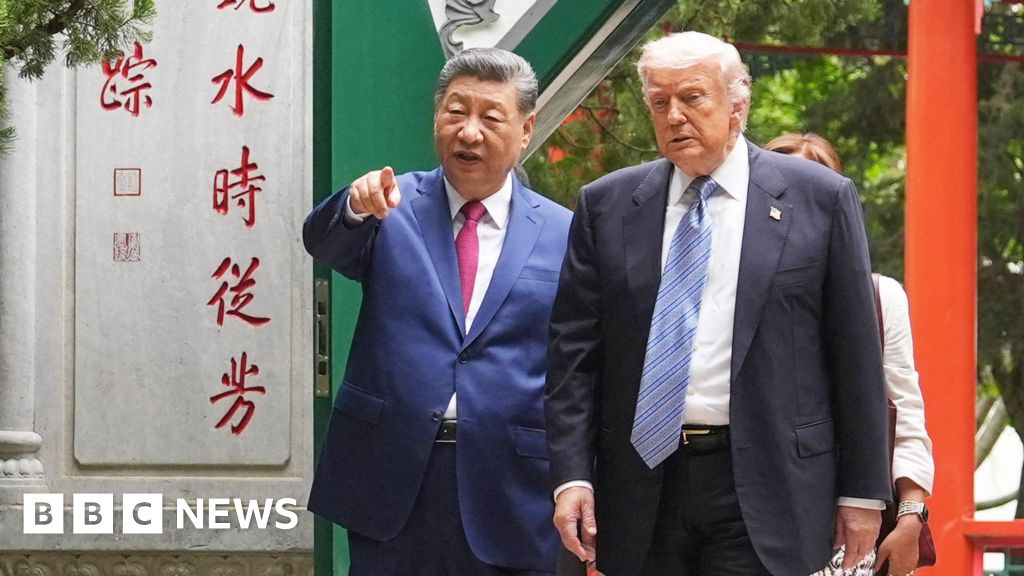
U.S. President Donald Trump departed Beijing after a two-day summit on Thursday, claiming he had secured “fantastic trade deals, great for both countries,” though few details emerged on specific agreements between the two superpowers.
Trump arrived for a high-stakes summit with Chinese leader Xi Jinping on Wednesday, accompanied by a high-profile business delegation spanning agriculture, aviation, electric vehicles and artificial intelligence chips.
Trade dominated the agenda despite recent tensions over the Iran war, and businesses sought both major deals and an extension of the tariff truce set to expire in November.
The visit was defined by warm rhetoric and symbolism. Trump was wooed with a packed itinerary including an honor guard, a state banquet, and an invitation to the exclusive compound where China’s Communist Party leaders live and work.
The U.S. president appeared impressed and invited Xi to the White House in September. He called the talks “very successful,” while Xi described it as a “historic and landmark” visit.
Chinese Foreign Minister Wang Yi confirmed on Friday that Xi would visit the White House in the autumn.
Neither side has announced trade breakthroughs or significant business deals.
President Trump, however, told reporters aboard Air Force One that China had agreed to buy 200 Boeing jets, with a potential commitment to purchase an additional 750 planes. The aerospace giant confirmed the deal.
Trump also said American farmers would be pleased with his trade deals because China would purchase “billions of dollars” of soybeans.
There has been no confirmation of any deals or purchases from the Chinese side.
If finalized, the Boeing orders would be the plane-maker’s first major Chinese deal in nearly a decade. The company was largely shut out of the world’s second-largest aviation market because of trade tensions between Beijing and Washington.
Asked about Trump’s earlier comments to Fox News in which he said deals had been made, Chinese Foreign Ministry spokesperson Guo Jiakun said only that the “essence of China-US economic and trade relations is mutual benefit and win-win co-operation.”
He added that both sides should work to implement the “important consensus” reached by the two leaders and bring greater stability to bilateral trade ties and the global economy.
Questions remain over the trade truce agreed in October, when Washington suspended steep tariff increases on Chinese goods while Beijing eased back on restrictions of rare earth exports critical for manufacturing.
Surprisingly, Trump told reporters on Air Force One that he and Xi did not discuss tariffs at all.
The White House said both leaders agreed to establish a “Board of Trade” to manage the relationship without reopening tariff negotiations.
U.S. Treasury Secretary Scott Bessent, who had been leading trade talks for Washington, said in a pre-recorded interview with CNBC that he expected progress on a mechanism to support future investment.
U.S. officials cautioned, however, that much work remains before these announcements can take effect.
One of the most closely watched moments came as Air Force One touched down in Beijing on Wednesday night.
Tesla CEO Elon Musk stepped off the plane ahead of senior officials including Pete Hegseth, Marco Rubio and Greer — a sign of the crucial economic agenda ahead.
Musk and U.S. chipmaker Nvidia’s boss Jensen Huang stayed close to Trump during the welcome ceremony and were prominent during the banquet.
Huang’s appearance was notable because he was not originally part of the delegation. His participation fueled speculation that AI and access to chips played a bigger role in talks than previously thought.
With electric vehicles, AI and semiconductors becoming key battlegrounds in the U.S.-China rivalry, both Tesla and Nvidia are heavily exposed to China.
Tesla relies heavily on its Shanghai gigafactory and Chinese consumers, while Nvidia wants to resume selling advanced chips to China, currently prohibited by U.S. export controls.
U.S. export controls aim to limit China’s access to frontier AI capabilities, but Greer said they were not a major talking point at the summit.
Beijing continues to push for greater access to advanced technology while criticizing what it sees as efforts to constrain its industrial development.
AI was expected to be a major topic. “We talked about possibly working together for guardrails,” Trump told reporters. When asked about what kind of guardrails, he added, “Standard guardrails that we talk about all the time.”
Last year’s tit-for-tat tariff war also hurt American farmers, who seek to export more soybeans, beef and poultry to China.
According to U.S. Trade Representative Jamieson Greer, deals on Chinese purchases of U.S. agricultural products have been finalized. But China’s foreign ministry did not confirm any such new deals, saying only that both sides had agreed to maintain stable trade ties and expand cooperation based on “equality, mutual respect and mutual benefit.”
The White House said the talks also touched on expanding Chinese market access for U.S. companies and increasing Chinese investment in U.S. industries.
While China is a major market for U.S. companies, it is also a difficult operating environment due to regulation, red tape and geopolitical uncertainty.
Beijing appeared to strike a positive note on this issue. Xi told U.S. business leaders that China’s “doors will open wider” and that American firms would have “broader prospects” in the Chinese market, according to news site Xinhua.
He also called for expanded cooperation in trade, agriculture, healthcare, tourism and law enforcement, describing bilateral ties as “mutually beneficial” and delivering “win-win results.”
Taiwan, the U.S. ally and self-governed island that Beijing claims, has largely been treated as one of several friction points between the U.S. and China during trade talks over the past year.
This time, however, Beijing linked Taiwan to the broader economic relationship with the United States.
According to Beijing’s readout, Xi said the two sides had agreed to a “new positioning” for relations based on “constructive strategic stability,” but issued the now-familiar warning that Taiwan remained the most sensitive issue.
“The Taiwan question is the most important issue in China-US relations,” Xi warned during the talks, according to Chinese state media.
“If mishandled, the two nations could collide or even come into conflict,” he said.
Taipei will watch closely, but it remains unclear how this will affect U.S. collaboration with semiconductor companies in Taiwan or its long-standing close relationship with the island.
The war against Iran and the resulting blockade of the Hormuz Strait were key parts of the agenda. Trump entered the talks hoping for Chinese cooperation on the Iran conflict and the oil market.
Trump has said China could use its influence to encourage Iran to stabilize flows through the Strait of Hormuz, a key global energy artery.
“[Xi would] like to see the Hormuz Strait open, and said ‘if I can be of any help whatsoever, I would like to help,’” Trump told Fox News.
The Chinese foreign ministry was more vague, releasing a statement on Friday calling for “a comprehensive and lasting ceasefire.”
“Shipping lanes should be reopened as soon as possible in response to the calls of the international community,” the statement added.
Chinese readouts indicated that while the Middle East was discussed, details were limited.
The conflict poses a challenge for the Chinese economy as well. Oil price volatility and repeated supply route disruptions have increased China’s import costs and pushed up prices worldwide.
Trump has already invited Xi to the White House in September for a second summit.
Discussions between the two sides are expected to continue ahead of that summit, with the hope that the world’s two largest economies can deliver a major trade breakthrough that proved elusive this time.
📝 This article was rewritten with AI assistance based on content from BBC News.
Related posts





Latest Post