TRENDING
Trump’s Shifting Taiwan Statements Create Opening for China
5 minutes reading View : 42

World - 19 May 2026
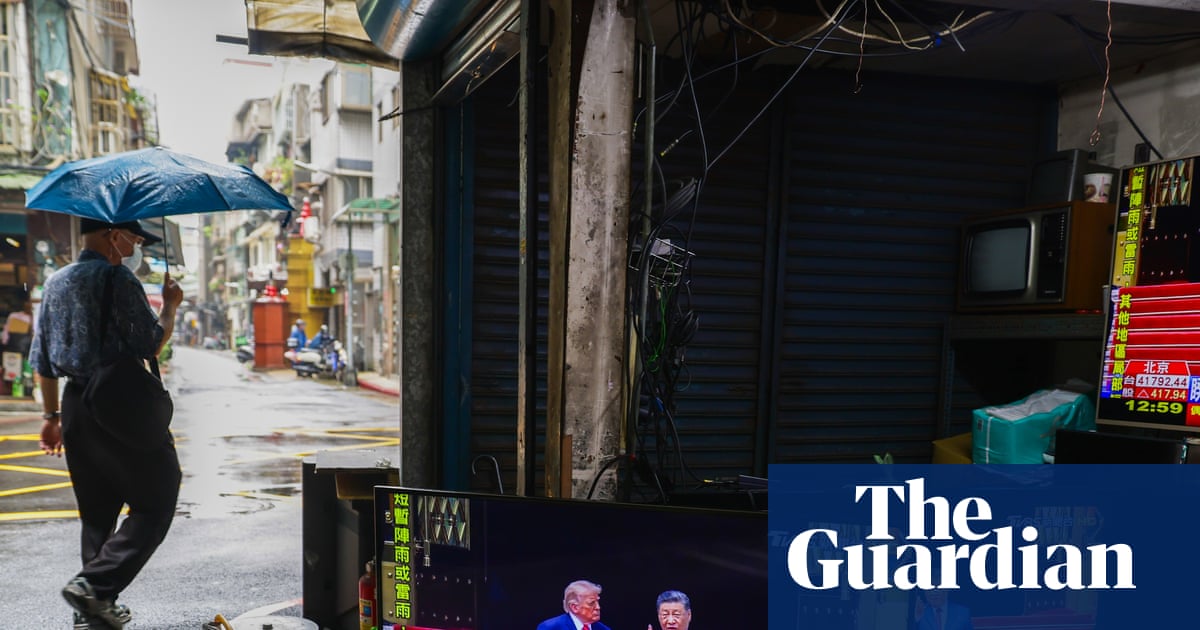
Taiwan’s government faced an unsettling few days as President Donald Trump met Chinese President Xi Jinping in Beijing on Thursday, raising fears the unpredictable U.S. leader could upend Washington’s longstanding support for Taipei.
Beyond a starkly worded statement from Xi stressing China’s claims over Taiwan, which Beijing claims as part of its territory despite never having ruled it, initial signs appeared favorable for Taipei.
An uncharacteristically sheepish Trump skirted reporters’ questions on Taiwan after he and Xi emerged from their first talks on Thursday evening.
A White House readout of the meeting made no mention of the issue, but that welcome silence began to unravel onboard Air Force One on Friday, when Trump told reporters he would soon make a determination on pending multibillion-dollar weapons packages to Taipei.
An interview with Fox News, aired later that day, provided further soundbites, as Trump declared he was not looking to travel 9,500 miles to fight a war in Taiwan’s defense.
He then described weapons sales to Taipei as a very good negotiating chip for Washington with Beijing, adding that he was not looking to have somebody go independent.
Washington has long maintained an ambiguous stance on whether it would defend Taiwan if China were to invade.
Trump’s comments have stoked concern among Taiwan’s ruling Democratic Progressive party (DPP), which supports a continuation of de facto independence.
On Sunday, Taiwan’s president, Lai Ching-te, issued a statement emphasizing that U.S. arms sales were the most important deterrent to regional conflict, describing Taiwan’s security as a core global interest.
But while Taipei may be unnerved, J Michael Cole, a senior fellow with the Global Taiwan Institute, cautioned against reading too much into Trump’s comments.
We need to keep in mind that he has a tendency to say many things – sometimes contradicting himself within 24 hours – in the moment, based on what he recently heard or whom he spoke with, Cole said.
My expectation is that, recent remarks notwithstanding, the Trump administration will hew to the U.S.’s longstanding policy, Cole added.
Cole pointed to remarks by the U.S. secretary of state, Marco Rubio, affirming Washington’s continued commitment to the status quo as a more reliable gauge, calling for observers to pay closer attention instead to what the U.S. does in the coming weeks and months.
This sentiment is shared by the DPP legislator Kuan-ting Chen, who said Taiwan should not over-interpret any single remark made during high-level U.S.-China interactions.
Chen added, however, that Taipei should not ignore the risk that China could amplify and exploit Trump’s comments.
Beijing has attempted to do just that, with state-run outlets suggesting that Trump’s independence comments had sent shock waves through Taiwan, dealt a severe blow to the DPP and issued a clear warning to Taiwan’s separatist forces.
While Beijing’s framing may veer into the hyperbolic, the U.S. leader’s remarks have exacerbated pre-existing fractures between the DPP and the opposition Kuomintang (KMT) – once combatants against the Chinese Communist party during the Chinese civil war, but who today advocate for warmer cross-strait relations.
Yang Kuang-shun, a cofounder of the Taipei-based thinktank U.S. Taiwan Watch, said any apparent sign that Washington did not fully support Taiwan’s independence was seized upon by the KMT to push its agenda for opposing Taiwan’s independence.
In the days since the Beijing summit, the KMT has called for the DPP to abandon what it views as the ruling party’s pro-independence platform and criticized the DPP’s handling of cross-strait relations, which have grown increasingly tense under Lai – whom Beijing has labeled a dangerous separatist.
Charles I-hsin Chen, a former KMT legislator and chair of the foreign affairs and national defense committee, said the DPP had placed a one-sided bet on its relationship with the U.S., with Trump’s statements showing that Taiwan cannot tie everything to Washington.
This highlights the need for Taiwan to move towards an equidistant approach between the U.S. and China – that is, to give equal weight to cross-strait relations and relations with the U.S. – in order to secure Taiwan’s greatest interests, he said.
Chen, however, also expressed concern over Trump’s framing of weapons packages as a negotiating chip, saying that Taiwan could be reduced to a pawn to be moved around with no initiative and no agency.
This concern that Taiwan may become a pawn between superpowers is one of the few points of agreement between the DPP and the KMT – though the parties disagree over the causes and solutions.
If arms sales to Taiwan are described as a bargaining chip, Beijing may use this to test the limits of Washington’s commitment to Taiwan, Chen said, adding that Taiwan must make clear to the international community that it cannot be traded away.
📝 This article was rewritten with AI assistance based on content from The Guardian.
Related posts




Latest Post