
TRENDING
UK to Lower Tariff-Free Steel Imports as Protectionism Rises
4 minutes reading View : 19

経済 - 19 May 2026
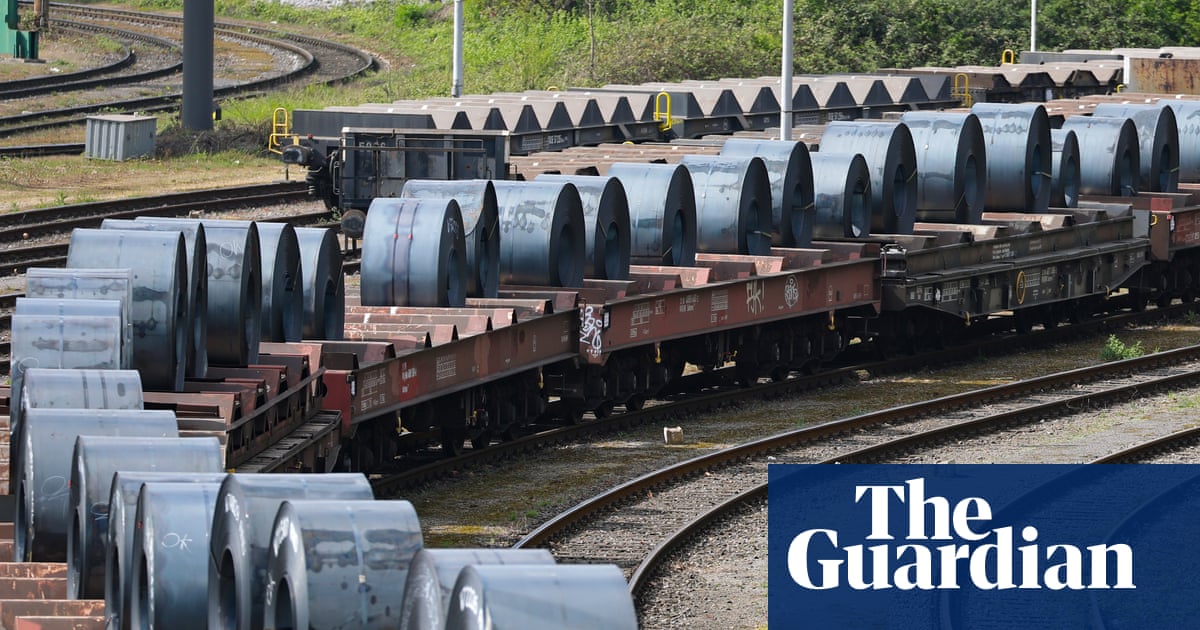
The United Kingdom is expected to lower the volume of foreign steel permitted tariff-free, as the government seeks to protect its domestic industry amid a global oversupply and rising protectionism.
Ministers are considering changes to the quota system, which allows a set amount of steel imports before a 25% tariff is applied to any excess.
Lower duty-free quotas could be announced in April and take effect from July 1, according to three people familiar with the discussions.
The development comes amid a global steel glut driven by supplies from China, the world’s largest producer. Chinese steel exports hit a record high in December, while producers in Vietnam, South Korea and Turkey also seek customers.
Donald Trump first responded to the glut in March 2018 during his first presidential term with 25% steel tariffs. He then doubled them to 50% in June last year. The levies effectively shut off much of the U.S. market to steel imports, triggering a wave of protectionism as producers sought new buyers at any price, prompting markets such as the EU and Canada to raise their own barriers.
Steel imports to the UK are governed by safeguard quotas, which are set to expire in June.
Britain is believed to support new quotas with lower import limits. The government controls British Steel and Speciality Steel steelworks, which would be vulnerable if safeguards are not replaced.
The steel safeguards were first imposed by the EU in 2018, when the UK was still a member, to prevent cheap steel diverted from the U.S. After Brexit, the UK adopted the same measures in 2021 and extended them until June 30, 2026. However, World Trade Organization rules prohibit further extension.
In October, the EU said it would replace its safeguards with 50% tariffs and smaller duty-free quotas. The UK has had to negotiate for a protected share of the EU’s quota, amid fears for the British industry’s future if excluded.
The UK steel industry has argued strongly that failing to replace safeguards with fresh quotas would leave the country exposed to a flood of cheap products.
Vlad Darahan, the head of international trade and compliance at Tata Steel UK, said: “Current UK quotas are too generous to overseas suppliers and in certain cases higher than the total UK demand of that product. This results in the UK being an unfairly priced dumping ground for cheap imports.”
“We are urging the government to move quickly to implement a clearer, stricter UK system that limits steel imports based on what the country actually needs while continuing to work constructively with the EU to agree fair limits that work for both sides.”
The steel industry has held detailed talks with the Department for Business and Trade, as well as with steel buyers, over appropriate quotas for specific categories of metal.
However, some steel-using companies have opposed lower quotas, arguing the measure would raise raw material prices and that UK steelmakers cannot meet demand in certain areas.
Gareth Stace, the director general of UK Steel, which represents the sector, said: “This is a fundamental issue. Much of the UK steel industry will no longer be viable unless the government puts in place robust trade measures.”
“Until China restrains its model of subsidising colossal production levels and exporting its overcapacity problem to the rest of the world, countries such as the UK will have to utilise trade measures or face deindustrialisation.”
A government spokesperson said: “This is speculation about a complex issue where no final decisions have been taken, but we are working at pace to ensure the best outcomes to protect UK industry.”
“This government has been crystal clear in committing to a bright and sustainable future for steelmaking and steel jobs in the UK. We’ll set out our long-term vision for the sector in our steel strategy which will be published this year.”
📝 This article was rewritten with AI assistance based on content from The Guardian.
Related posts






Latest Post