
TRENDING

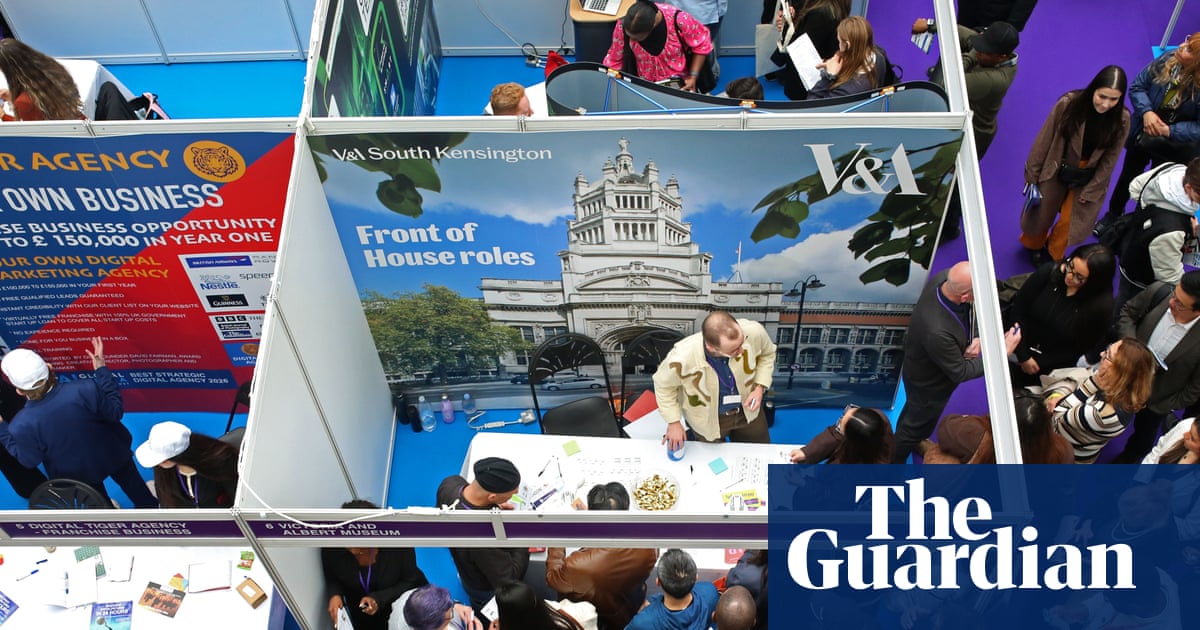
Westfield White City, the largest shopping mall in the United Kingdom, is accustomed to crowds of young people flowing through its corridors. But this weekend, the hundreds of attendees were not seeking the latest fashion exclusives; they were pursuing something even more coveted and scarce: a job.
The London Job Show, the capital’s biggest career event, is held annually and features employers ranging from the Metropolitan Police to car valet services. This year’s event holds particular significance as unemployment levels have surged, with young people bearing the brunt of the crisis.
Demi Trowsdale, 24, holds a degree in neuroscience and psychology. She has been unemployed for four months and estimates she has submitted 170 online applications. Aiming for a career in healthcare, she has broadened her search after repeated rejections in that sector.
“It makes me feel less hopeful by the day, quite dehumanised. Mainly because of the lack of individual feedback that you get, it’s usually a blanket statement saying: ‘You’ve been unsuccessful,’” Trowsdale said.
Figures show that 713,000 young people are unemployed. As of early 2026, the unemployment rate among 16- to 24-year-olds stands at 15.8%, higher than the overall national rate of 4.9%.
In London, youth unemployment is the highest in the country at 24.6%, followed by northeast England at 23.5%, according to data from the Office for National Statistics.
Though London is perceived as the nation’s employment hub, the competitive job market has sidelined young jobseekers with limited work experience.
“Our insight shows that young people are motivated to work, but too often they are locked out of opportunities by a lack of accessible entry routes and employer expectations for prior experience,” said Laura-Jane Rawlings, chief executive of Youth Employment UK, a nonprofit tackling youth unemployment.
This barrier resonates with young jobseekers. Angel Simpson, 18, said she has applied for hundreds of jobs and apprenticeships since leaving college. “Even though you have the qualifications for it, there’s always someone with more experience than us young people. Because we’re just fresh and have nothing, we’re just pushed out to nothing,” she said.
The use of AI screening by employers to process applications has left many young jobseekers feeling unfairly evaluated. Trowsdale said: “[I’m] not having a person look over the application and potentially see what I’ve got that might not come across through buzzwords over an application.”
Harvey Barns, 21, has been unemployed since graduating from university in September. He attended the job fair to impress potential recruiters, wearing a suit specifically for the occasion.
Out of hundreds of applications, Barns said he has received only three interviews. “They’re asking for a lot of experience and it’s only minimum wage. The cost of living is going up and with minimum wage you can’t afford anything.”
Barns added that the online job market is saturated with recruitment scams. “There’s a lot of ghost jobs. You’ll apply for a job you like the look of and you’ll hear back from a different recruiter and that’s not what you’re looking for,” he said. “It’s frustrating, the same routine, applying every day. It’s not a nice market.”
The UK government has pledged to invest £1 billion to help create 200,000 jobs for young people. Rawlings called the investment “welcome and long overdue” but stressed it must “reach young people quickly” to have a real impact.
“They can make a real difference if they provide high-quality support, paid work experience, apprenticeships and training linked to actual jobs. But funding alone will not solve this; delivery, local partnerships and employer engagement will be critical,” she said. “In London especially, transport costs, housing pressures and digital exclusion must be recognised as employment barriers.”
Kristoffer Demetris, 18, left college last year and wants to work in mechanical engineering. He previously worked for three months as a temporary sales assistant at John Lewis — his only job to date. “I apply to at least a job a day, I’ve probably sent off hundreds of applications. It does get very frustrating when you keep being rejected constantly,” he said.
“I was a bit nervous coming here because you have to present yourself and I’m not very good at that. But I think it’s a good thing coming here because you meet people, you see their face and you know that they’re not just a CV, they’re a person,” he added.
📝 This article was rewritten with AI assistance based on content from The Guardian.
Related posts






Latest Post