TRENDING
Threatened Raúl Castro indictment escalates US-Cuba tensions
4 minutes reading View : 29

World - 18 May 2026
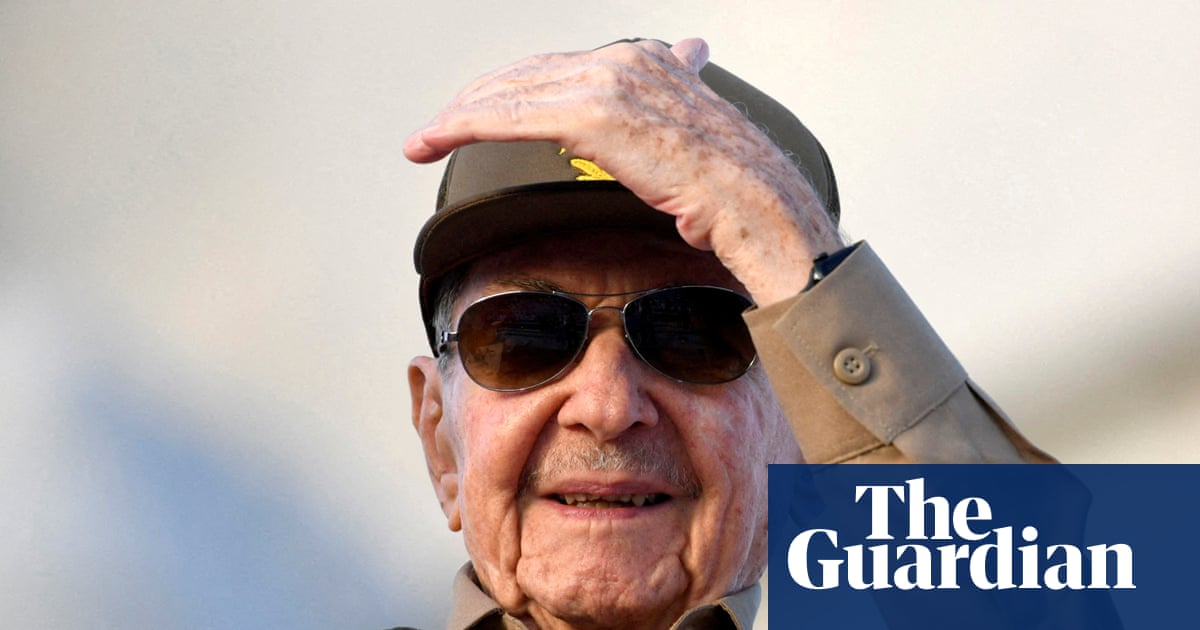
Tensions between Cuba and the United States appear poised to escalate further amid reports that Raúl Castro, the 94-year-old former Cuban president, may soon face an indictment similar to the one that led to the U.S. abduction of Venezuelan leader Nicolás Maduro in January.
Although Castro is officially retired, he remains the most influential figure in Cuban politics since the death of his brother Fidel in 2016. By targeting him, Washington appears to be intensifying pressure on Cuba’s communist leadership at the culmination of an already highly charged week.
The indictment, which has not been officially confirmed and would require grand jury approval, appears linked to the 1996 downing of two small planes belonging to the Cuban exile group Brothers to the Rescue. The aircraft had been searching for rafters crossing the Florida Straits and had flown over Havana to drop leaflets when a Cuban jet intercepted and shot them down.
“You can get a grand jury to indict a ham sandwich,” said Pedro Freyre, a prominent Cuban-American attorney in Miami.
Reports of the potential indictment emerged a day after CIA Director John Ratcliffe flew to Havana for a meeting with Raúl Castro’s grandson, Raúl Guillermo Rodríguez Castro, and senior government officials.
Ratcliffe’s visit followed a night of protests across Havana as residents endured 22-hour blackouts. Cuban Energy Minister Vicente de la O Levy earlier acknowledged the island had run out of fuel oil. “We have absolutely nothing,” he told state television.
Since the abduction of Maduro and Washington’s seizure of control over Venezuela’s oil industry, the U.S. has pushed for change in Havana: either the collapse of the current regime or, at minimum, economic liberalization favoring U.S. interests.
“I don’t think we’re going to be able to change the trajectory of Cuba as long as these people are in charge,” U.S. Secretary of State Marco Rubio, a Cuban American, said this week as he flew to China. Meanwhile, Donald Trump has made clear he wants to “take over” the country.
For the past four months, the U.S. has imposed a strict oil blockade on Cuba, allowing only one Russian crude carrier, the Anatoly Kolodkin, to dock for what Trump described as humanitarian reasons.
The U.S. has also held bilateral talks with Rodríguez Castro, a decision that has sparked widespread unease among many Cubans who note that Raúl’s grandson holds no official government role.
Amid speculation that the U.S. aims to drive a wedge within the Cuban government, President Miguel Díaz-Canel held a news conference to confirm the talks and Raúl Castro’s involvement, with Rodríguez Castro seated nearby.
Until this week, analysts had assumed the discussions were stalled as the Cuban government delayed, betting that Washington remained too preoccupied with challenges in Iran to press its case.
Trump’s growing impatience, however, has been evident. He told a Florida conference in early May that he might order the aircraft carrier USS Abraham Lincoln to “stop roughly 100 yards off the [Cuban] shore.” In recent weeks, U.S. surveillance aircraft, both drones and manned planes, have been tracked circling the island.
“I still can’t imagine the U.S. actually conducting a military operation with Iran still a mess,” said Michael Bustamante, chair of Cuban and Cuban American studies at the University of Miami. “But I also don’t think Cuba can afford that bet with no oil in the tank.”
The outcome of the meeting between senior Cuban officials and CIA Director Ratcliffe remains unclear. Each side restated its position: Cubans asserted the island “does not constitute a threat to U.S. national security,” while the U.S. said it was prepared to “seriously engage on economic and security issues, but only if Cuba makes fundamental changes.”
The U.S. State Department earlier said it would offer $100 million in aid, provided it was matched by “meaningful reforms.” In an unprecedented move, Cuban Foreign Minister Bruno Rodríguez said Cuba would accept the aid as long as no conditions were attached.
Meanwhile, Cuba’s 9.5 million people face an uncertain future. What is certain is that the fuel shortage is creating a dire present. Temperatures are rising into the 30s Celsius (high 80s Fahrenheit) as summer approaches, and residents struggle to sleep without fans or keep food refrigerated.
The Cuban economy has been collapsing for five years, leaving many destitute and struggling to find enough food. On Wednesday, as protests broke out, one demonstrator told Reuters it was not political: “We started banging pots to see if they would give us just three hours of electricity. That’s all we want.”
📝 This article was rewritten with AI assistance based on content from The Guardian.
Related posts


Latest Post