
TRENDING
Chris Rabb’s Victory in Pennsylvania Energizes Democratic Progressive Flank
6 minutes reading View : 52

World - 21 May 2026
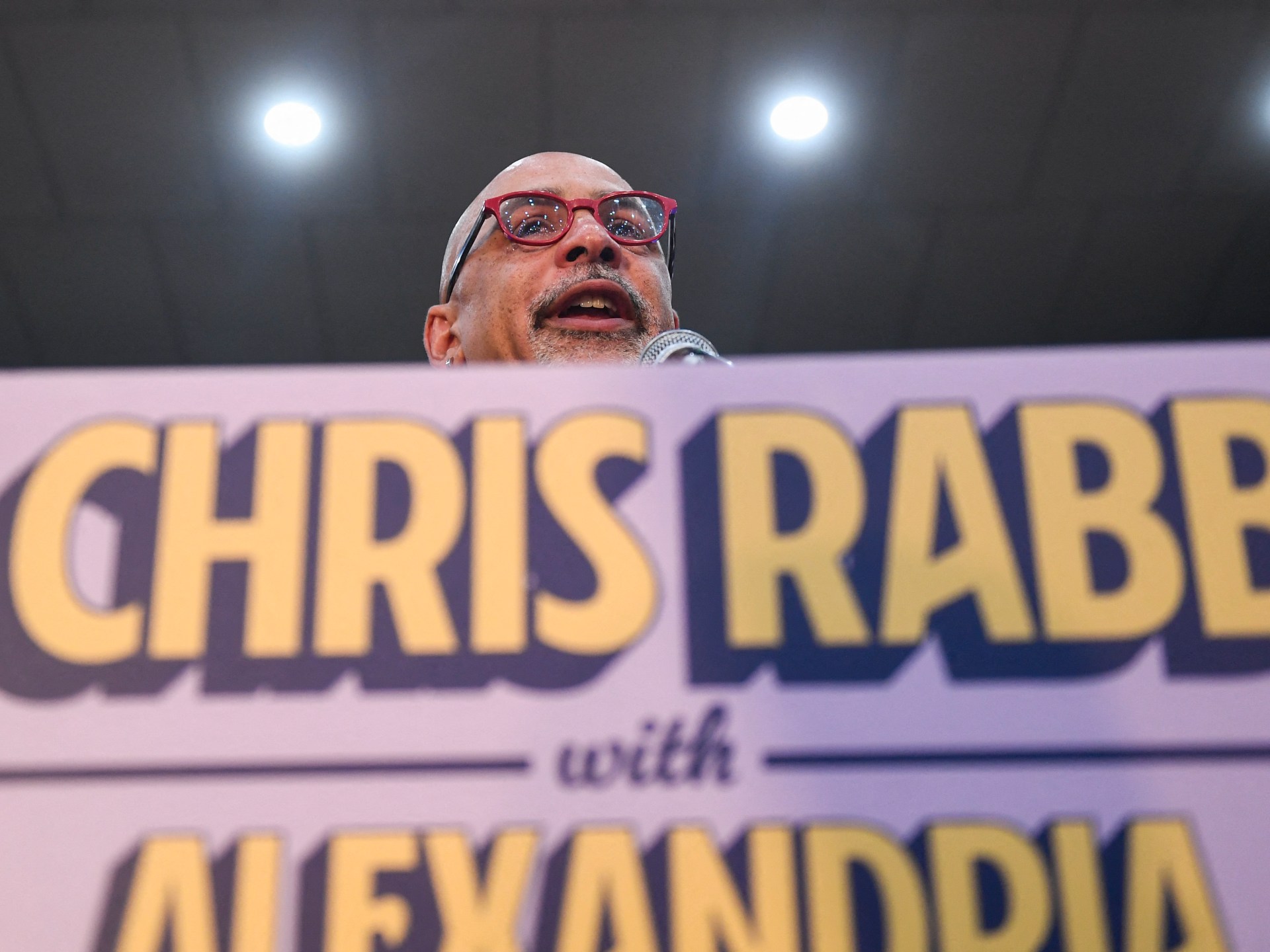
The victory of Chris Rabb in a Democratic primary for a U.S. House seat in Pennsylvania has bolstered the party’s progressive wing, which has faced intense pressure in recent years.
Running to represent a district that spans Philadelphia, widely regarded as the most Democratic-leaning district in the country, Rabb easily defeated his two main rivals. The state lawmaker secured about 44 percent of the vote, while state Senator Sharif Street received approximately 30 percent and pediatric surgeon Ala Stanford earned 24 percent.
With no Republican candidates on the primary ballot, Rabb is expected to win the general election in November.
Although all three candidates sought to emphasize their progressive credentials, Rabb positioned himself furthest to the left, criticizing the political establishment that has historically shaped local politics.
He also diverged from his opponents on U.S. policy toward Israel. He has pledged to join 12 current members of Congress in signing a resolution recognizing the Nakba and has urged his competitors to describe Israel’s military actions in Gaza as a “genocide” on the campaign trail.
In one exchange with voters, Stanford appeared to say that using the term “genocide” was “harmful.” Street, whose victory would have made him Philadelphia’s first Muslim member of Congress, has also faced criticism for lacking clarity on the issue.
In a statement, Kendra Brooks and Nicolas O’Rourke, co-chairs of the Pennsylvania Working Families Party, said the race served as a barometer for the Democratic Party.
“The question in this race was not whether we would elect a Democrat, but what kind of Democrat we would choose,” they said.
“The people of Philadelphia made their choice clear: bold, working-class leadership, and an end to the broken status quo.”
The race reflected internal divisions within the Democratic Party, which have intensified since the party’s defeat in the 2024 election.
Street, a former chair of the Pennsylvania Democratic Party, and Stanford, who was endorsed by retiring Representative Dwight Evans, have been widely seen as representing the party’s traditional establishment.
Underscoring that perception, Axios reported earlier this month that Pennsylvania Governor Josh Shapiro had urged building unions supporting Street not to run attack ads against Stanford, over concerns it could boost Rabb’s chances.
Rabb, meanwhile, received endorsements from several prominent progressives, including Representatives Alexandria Ocasio-Cortez and Ilhan Omar, Senator Chris Van Hollen, and groups such as Justice Democrats and the Sunrise Movement.
The Socialist Democrats of America, who endorsed Rabb early in the race, have been credited with mobilizing their ground operation ahead of the primary.
“We will be with Congressman Rabb every step of the way in the fight to abolish ICE, free Palestine and win Medicare for All,” the group said on Wednesday.
Rabb’s victory offers a sign of hope for progressives, who have been heavily targeted in primary races, particularly for their criticism of Washington’s long-standing support for Israel.
In 2024, both Representative Cori Bush of Missouri and Representative Jamaal Bowman of New York, members of the so-called progressive “squad,” lost their primary races amid a surge in spending by the American Israel Public Affairs Committee (AIPAC) and pro-Israel groups. AIPAC and its affiliates spent approximately $25 million to unseat the two lawmakers.
Progressives have seen mixed results this primary season. Analilia Mejia scored an early upset victory in February, defeating former Representative Tom Malinowski.
Malinowski, a centrist, was targeted by AIPAC in the 11-candidate race, a strategy that backfired for the pro-Israel lobby. Instead of boosting a pro-Israel candidate, AIPAC’s opposition indirectly helped Mejia, a vocal critic of Israel.
In Texas, pro-Palestine pastor and civil rights leader Frederick Haynes III also won his primary race. Haynes was endorsed by Justice Democrats, an organization founded in 2017 to support progressive candidates. The group has endorsed 15 candidates this year.
Three other progressive candidates — Junaid Ahmed and Kat Abughazaleh in Illinois, and Nida Allam in North Carolina — lost their primaries.
The losses came amid a massive wave of opposition spending from pro-Israel and artificial intelligence-aligned groups.
Still, Justice Democrats spokesperson Usamah Andrabi said Rabb’s victory was an energizing sign ahead of a series of competitive races in June.
Also in Pennsylvania, incumbent Representative Summer Lee easily won her Democratic primary race in Pittsburgh.
“The sky is the limit,” Andrabi told Al Jazeera, “and it is clear that the Democratic base is desperate for a new generation of leadership that not only takes on Republican extremism but takes on the Democratic establishment and their corporate backers all at once.”
Tuesday’s primaries across six states further defined the battle lines for the November midterm elections.
The outcome will determine control of the U.S. Senate and House of Representatives, setting the pace for President Donald Trump’s second term.
On the Republican side, Representative Thomas Massie of Kentucky lost his primary race to Trump-backed challenger Ed Gallrein, in the most expensive House primary in history.
Massie had broken with Trump on the investigation into billionaire Jeffrey Epstein, the war in Iran, and U.S. support for Israel. His defeat underscored Trump’s enduring influence over the party.
However, it remained unclear whether that influence would extend to the general election, as Trump’s approval ratings have fallen in recent months amid the war in Iran and its economic fallout. Polls show the president’s support has eroded particularly among independents, who typically do not vote in primaries.
In Georgia, two Republicans — Representative Mike Collins and former football coach Derek Dooley — will face a runoff on June 16 for the U.S. Senate nomination. The winner will challenge Democrat Jon Ossoff in one of the most closely watched races of the season.
Meanwhile, Democrat Keisha Lance Bottoms, the former mayor of Atlanta, won the party’s primary in the gubernatorial race. Two Republicans, Rich Jackson and Burt Jones, will proceed to a runoff. The race is consequential, as election administration and congressional redistricting in Georgia loom large, with potential implications for the 2028 election.
📝 This article was rewritten with AI assistance based on content from Al Jazeera English.
Related posts

22 May 2026


Latest Post




