
TRENDING
Pep Guardiola’s Tactical Shift Reshaped English Football More Than It Changed Him
4 minutes reading View : 2

Sports - 22 May 2026
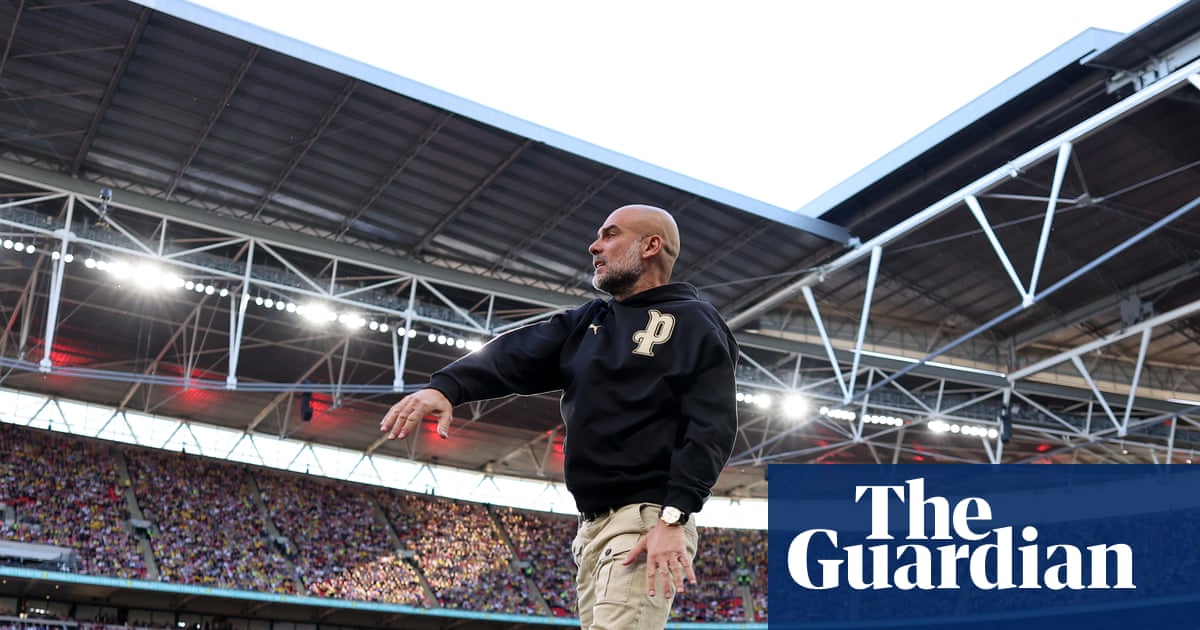
When Pep Guardiola arrived in English football in summer 2016, skepticism greeted him. His Barcelona had produced extraordinary football, but 18 years later, it is hard to recall the initial shock of their possession-based style and spatial manipulation.
His Bayern Munich failed to win the Champions League, raising reasonable doubts whether such precise, technical football could thrive in the rough-and-tumble of an English winter as it had in Spain and Germany.
A strong start faded in autumn, then at Leicester in early December, City trailed 3-0 within 20 minutes. Despite 78% possession, they were shredded on the counterattack and lost 4-2, with Jamie Vardy scoring a hat-trick.
Guardiola sounded almost baffled afterward. “The second balls is a concept that is typical here in England when they talk a lot about the tackles,” he said. “I am not a coach for the tackles so I don’t train the tackles.”
The prevailing view held that Guardiola had much to learn about English football and would need to adapt. While some evidence of that exists, Guardiola revolutionized the English game before it shaped him.
Look down to the ninth and 10th tiers: matches that once were raw, physical, direct, and played in thick mud now commonly feature short goal-kicks and passing out from the back.
Coaches at that level explain that children grow up playing that way, partly because television portrays football that way and partly because playing surfaces are vastly better than two or three decades ago.
Hybrid and 3G pitches have transformed the game, but pitch technology always underlay Guardiola’s vision. Not long ago, even skilled players had to watch the ball onto their foot to avoid a bobble.
Once pitches improved to make first touches reliable, receivers could focus less on control and more on deciding what to do with the ball. The game became more strategic, centered on shape and space creation or overloads.
That was Guardiola’s key insight, and while English football resisted more than La Liga or the Bundesliga, the model proved equally valid.
Money helped, of course; Manchester City would not have dominated without Abu Dhabi’s vast resources. Until the outstanding Premier League charges, which City denies, are resolved, questions will remain.
The widespread adoption of Guardiola’s style was also facilitated by youth coaching reforms under the Elite Player Performance Plan (2012) and the England DNA programme (2014). Yet none of those factors negate that Guardiola fundamentally changed global football, England included.
He himself kept evolving: from overlapping full-backs to inverted full-backs who tucked into midfield, to center-backs playing as full-backs, to John Stones stepping into midfield; from a false No. 9 to a classic No. 9; from absolute control through possession to a looser approach based on forwards beating their markers.
It would be simplistic to say other great tactical thinkers had one big idea and stopped. But Guardiola stands alone in his willingness to adapt, tweak, and change. That perpetual inventiveness may have led him to overcomplicate in the Champions League at times, but it explains why he has remained at the peak for 18 years.
Indicative of his perpetual revolution, Guardiola leaves the Premier League as his tactical hegemony appears to have ended—control through passing yielding to a more direct style emphasizing set plays and long throws—yet his side still competes for a domestic treble.
Other visionaries left with their created world collapsing; none, surely, has done so having ridden and even led the change. The fecundity, flexibility, and constant striving for something new should be his legacy. With consensus broken, a new wave of coaches awaits, and possibilities abound.
What is certain: English football is more tactically aware, more focused on possession and position, more convinced of technical excellence than when Guardiola arrived. For a decade, mutual influence has danced, but Guardiola changed English football far more than it changed him.
📝 This article was rewritten with AI assistance based on content from The Guardian.
Related posts





Latest Post