
TRENDING
Colony of firebugs spotted on old lime tree in UK farm
2 minutes reading View : 35

Science - 18 May 2026
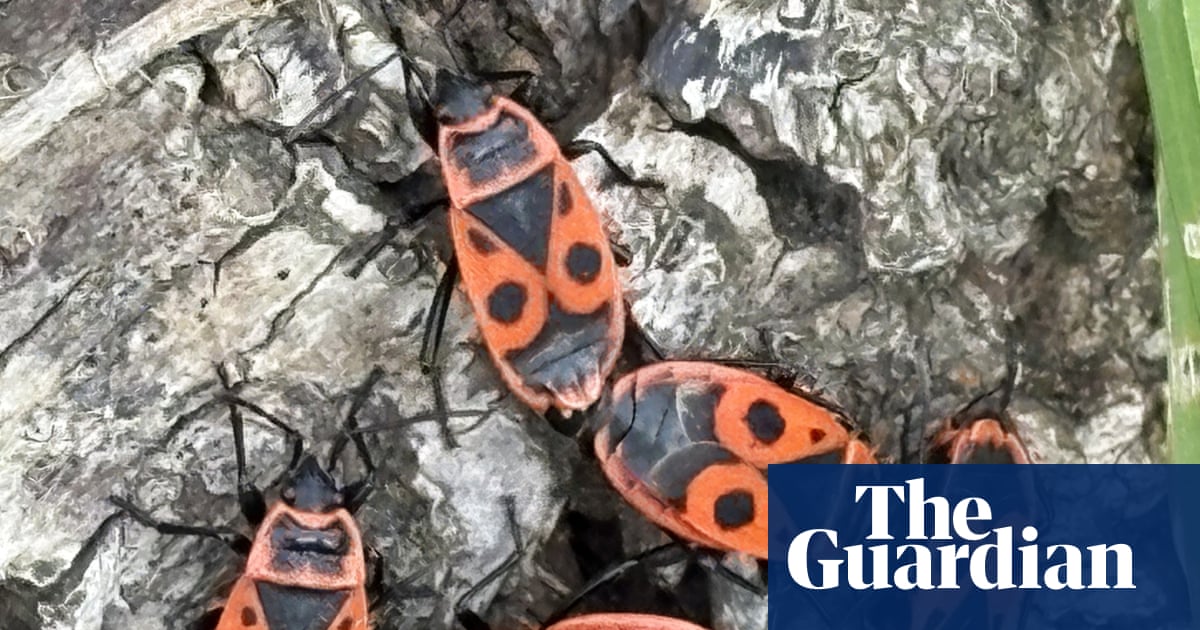
A colony of firebugs has been discovered on the sunny side of an old lime tree at a farm that opens its land for public access, a regular dog walker and keen photographer named Laura reported.
Approximately 50 firebugs, each about a centimeter long, clustered together like flames on the trunk, with bright red backs marked by bold, symmetrical black patterns. They aggregate for mating and feeding on seeds, aphids, or dead relatives, using a proboscis to suck moisture.
At first glance, firebugs can be mistaken for the unrelated cinnamon bug, but the firebug’s markings are block-printed with geometric precision, while the cinnamon bug’s patterns resemble soft, painterly brushstrokes.
Firebugs were once rare in the UK, with only one population in Devon. Now, they are found across most of southern England, their range pushing northward with rising temperatures. Despite their dramatic appearance, they are harmless to humans, trees, and gardens; birds and amphibians sometimes consume them despite the warning coloration.
Pairs of firebugs often remain connected end-to-end during mating, which can last for hours. Unlike many prolific insects, they produce only one generation per year, and nymphs frequently stay gathered at the hatching site as they mature.
The warmth of the sun draws them upward, while shade sends them down to the leaf litter. The spring afternoon featured swallow acrobatics over the meadows. The swifts have not arrived yet but are expected soon, and the observer noted that she probably would not be the first to notice.
The collection “Under the Changing Skies: The Best of the Guardian’s Country Diary, 2018-2024” is available at guardianbookshop.com.
📝 This article was rewritten with AI assistance based on content from The Guardian.
Related posts




Latest Post




