TRENDING
Ex-Wales Rugby Player Holds His Own Heart After Transplant
7 minutes reading View : 1

Sports - 22 May 2026
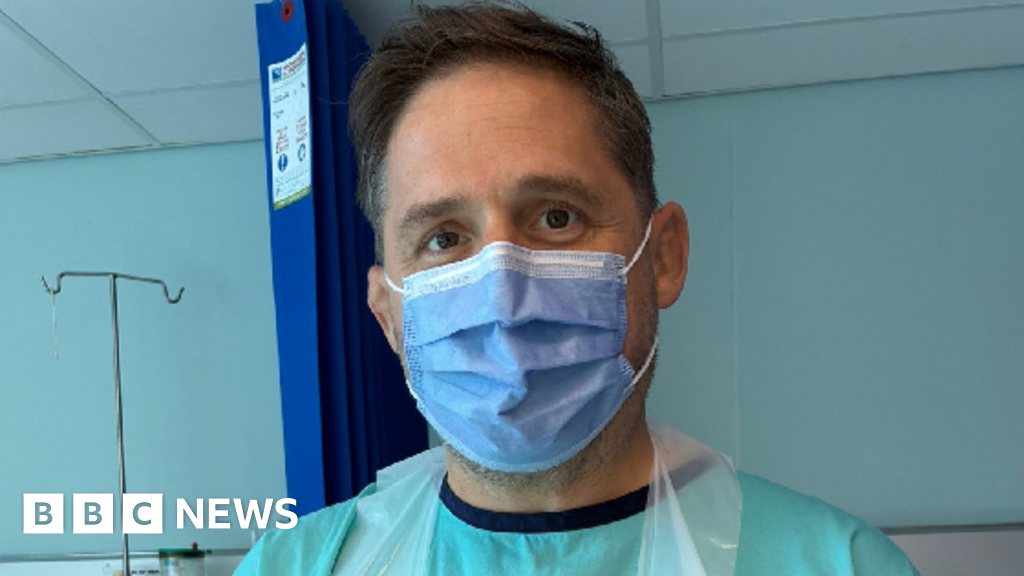
This story contains an image some people might find distressing
A former Wales rugby international described the “crazy” and “very special” moment he held his own heart after a life-saving transplant.
Rhys Thomas, 43, had suffered heart problems since experiencing a minor heart attack after playing for Dragons RFC in 2006.
A second, more serious attack in 2012 led to him receiving a battery-powered left ventricular assist device (LVAD).
After spending almost a decade on the UK transplant list as his health worsened, Thomas moved back to his hometown of Cape Town, South Africa, in 2024, saying the system “wasn’t working” for him.
Just 18 months later, he was offered three donor hearts in a single day in April, with doctors revealing after the surgery that without it, he might only have had two weeks left to live.
“It was quite a process in the last months, actually, for me to make peace with death because the call wasn’t coming and my health was deteriorating,” Thomas said.
“I was filled, at moments, with fear – fear of dying, what I was leaving behind, my children, my partner, my friends and family.
“So it’s just an absolute blessing, to be honest, that I’m still here – I feel very, very blessed.
“I can’t really explain how it feels to have a transplant, to be walking around without my machine and to be alive… it’s very special.”
Thomas said the major heart attack he had while playing for Scarlets in 2012 “changed everything”.
It led to his retirement and an emergency quadruple bypass surgery, which he said he was “very lucky to survive”.
“My health was really poor,” the seven-time capped prop said.
“I couldn’t even walk 40 metres without stopping four or five times. So it was a lot to take.”
By 2014, he had been fitted with an LVAD, a mechanical device that pumps blood around the body when the heart is too weak to do so.
The system includes a cable exiting through the abdomen that connects an internal pump to an external controller and batteries, which must be worn outside the body, with the exit site kept clean and dry to reduce infection risk.
“In that time, through those 12 years, I went through a huge process of transformation, through a tremendous amount of suffering, mentally, emotionally, physically,” he said.
“It was really challenging. I was also navigating the transition from rugby, so a lot of questions around my identity, my purpose. And I struggled.”
In November 2024, Thomas moved to Cape Town after being told he was not considered “sick enough” for a heart transplant unless his condition worsened significantly – a decision he did not agree with.
According to NHS Blood and Transplant, donor hearts in the UK are allocated based on urgency, blood type, donor–recipient compatibility, geography and waiting time.
Patients are placed on a three-tier system: super urgent, urgent, or routine; Thomas was in the routine tier.
However, his LVAD was nearing 11 years of use and he said his model was the longest anyone had lived with it, raising fears that if it failed, his condition would deteriorate rapidly before a donor heart could be found.
“It was a big move, a big, brave decision [to leave the UK],” he said. “But it was what I believed was right for me.”
Thomas moved with his partner, leaving his four adult children in Wales.
After joining the transplant list in Cape Town, his health declined rapidly.
Thomas said he had to learn to accept death, turning to meditation, self-improvement work and religion to cope.
Then came a long-awaited phone call.
Sitting in traffic, he was told three donor hearts had become available that day, all matching his blood type and size.
Thomas called his family, who immediately flew out to South Africa.
“We’d prepared for this moment… to mobilise the family, because I really wanted my children to be there upon my awakening,” he said.
“I had made peace with both ways, whether I were to die or to survive. But if I did survive, I would love to see my children upon waking.”
Thomas said he had three hours to get to the hospital, as doctors prefer a donated heart not to be outside the body for more than six hours.
“I was very nervous initially,” he admitted.
“I was able to pick my partner up and we went to the beach and sat there for about half an hour doing some prayer and meditation.
“I went to the hospital then, and I was just so ready. I was very peaceful.”
According to Thomas, surgeons struggled during the six-hour procedure to get through scar tissue from his third open-heart surgery.
But after the donor heart was implanted, it began beating straight away.
Two days later, Thomas woke to find his children at his bedside.
When he first woke, he said he experienced a sense of euphoria, which is reportedly common in heart transplant patients.
“I was just in tears most days, just with immense gratitude that I was alive.”
The former athlete spent four weeks in hospital and described struggling. By day 14 he “crashed” and felt “disconnected” from the outside world.
Doctors told him his heart had been in one of the worst conditions they had seen in a living patient and without surgery, he might have had only two weeks left.
One said it must have been like “breathing through a straw”.
During his stay, Thomas was able to hold his heart in his hand – a moment he said he will never forget.
“It was crazy. I mean, it carried me through my life for 43 years – it was a very special moment.”
He said it was “insane” to see it in such poor condition, with the pump and stitches still attached.
The day after, he said he couldn’t stop crying.
“I was so emotional. It was like a process, it wasn’t grieving, but it was gratitude, for the heart, and for how it had held me, what we had been through together.
“And the fact that I was still here,” explained Thomas.
“How many people get to hold their own hearts? I don’t know. Very few.”
Since going home, Thomas said he has been “sleeping a lot” and feels “very, very blessed” and deeply grateful.
“[My heart] very, very much feels like it’s mine, albeit I am aware that it’s not, and I’m very grateful for that.
However, Thomas has noticed changes in taste; takeaways now taste terrible to him.
“I literally can’t eat anything other than whole foods or fruit.”
For now, he said recovery remains his priority and in time, he hopes to write to his donor’s family to thank them.
Thomas is also preparing to become a father of five, as his partner Kez is expecting a baby in August.
“I literally am so excited,” he said.
“I can’t wait to experience it from where I am today – to parent from the space that I’m in now is gonna be spectacular.
“I’m just excited for the journey thereafter and wherever that life takes us.”
NHS Wales’ Joint Commissioning Committee (NWJCC) commissions heart transplants on behalf of health boards in Wales, while NHS Blood and Transplant manages donor matching and organ retrieval across the UK.
A spokesperson for the latter said the “sad reality” was there were not enough donated organs to meet demand.
“As more than one patient may be suitable for the same donated organ, offering schemes are designed to ensure each donation achieves the greatest possible benefit to those patients most in need,” it explained.
According to the Welsh government, efforts to improve donation and transplantation rates are set out in Wales’ Donation and Transplantation Action Plan.
📝 This article was rewritten with AI assistance based on content from BBC News.
Related posts




Latest Post