
TRENDING
Hope on horizon as Putin, Netanyahu, Trump powers wane
6 minutes reading View : 31

Politics - 18 May 2026

A pervasive pessimism about politics has become the new normal among Western populations, fueled by major conflicts in Europe and the Middle East and a range of harms including right-left extremism, stagnating economies, inequality, corruption, terrorism, racism, big tech, mass extinctions and the climate crisis.
A growing number of people avoid news media entirely, citing excessive anxiety. According to a Reuters Institute survey last year, 40% of respondents across about 50 countries said they sometimes or often avoid the news altogether, a 29% increase from 2017.
Intense negativity characterizes European and, to a lesser extent, North American political sentiment. In France, 90% of people questioned by Ipsos believed their country is on the wrong track, compared with 79% in Britain, 77% in Germany and 60% in the US. Europeans also feel glum about the global picture, unlike Chinese, Saudis and Nigerians who are broadly upbeat, according to a GlobeScan survey.
Pew Research Center polling in 25 countries last year found that the US, Russia and China are widely seen as the biggest international threats. However, perceptions vary: For Turks, Israel is the main menace; for Greeks, it is Turkey. Canada is one of several countries where majorities regard the US as both the main threat and main ally.
Disenchantment with democracy and dissatisfaction with political leaders is a widespread, polarizing Western phenomenon. Divisions are becoming entrenched. British Prime Minister Keir Starmer, with a 27% approval rating according to Statista, is struggling to survive. Yet German Chancellor Friedrich Merz and French President Emmanuel Macron are even less popular, at 19% and 18% respectively.
U.S. President Donald Trump’s approval rating has fallen to about 38%, trailing his nemesis, Canadian Prime Minister Mark Carney, at 54%. In Russia, Vladimir Putin’s historically inflated approval ratings are now badly punctured. Figures for Chinese leader Xi Jinping are unreliable, as freely expressing opinions in China is dangerous. India is an exception, with a majority adoring Prime Minister Narendra Modi.
A non-apathetic alternative to disengagement is supporting anti-status quo parties that seek to disrupt the system. These include radical leftists such as La France Insoumise and hard-right nationalist-populists such as Alternative für Deutschland, Reform UK and MAGA Republicans. However, they mostly offer anger, not answers.
How might this tsunami of gloom be reversed? Positive examples are needed. Encouraging shifts are discernible in Russia, Israel and the US, the three countries at the center of major global upheavals. Leadership changes sidelining Vladimir Putin, Benjamin Netanyahu and Donald Trump – “chief riders of the storm” – could go a long way toward changing the zeitgeist.
Consider Russia first. Putin’s presidency has never appeared so vulnerable since his full-scale invasion of Ukraine more than four years ago. His “special military operation,” which he expected to bring swift victory, has dragged on longer than the Soviet Union’s “great patriotic war” against the Nazis, to which he likens it. At least an estimated 350,000 Russian soldiers have died, according to reports.
The war is inflicting unsustainable economic costs on Russia, worsened by Western sanctions. Prices and taxes are rising, while official internet curbs try to stifle criticism. The conflict is also a national humiliation. Ukraine not only survives, using innovative drone technology, but is holding its own on the battlefield. Embarrassingly, the annual Victory Day parade on Red Square was reduced in size for fear of air attack.
Recent reports suggest Putin, who has limited his public appearances and faces dissent among rival clan bosses and “securocrats” who sustain his power, fears assassination or a coup. This may be Western disinformation intended to destabilize the regime. Regardless, Putin’s remark last week that the war “is coming to a close” was a response, albeit ambiguous, to mounting internal pressure.
Netanyahu, another central figure in recent geopolitical and military confrontations, is also in potentially terminal trouble. Israel’s longest-serving prime minister faces an electoral showdown as opposition parties unite to topple his hard-right coalition. A nationwide vote must be held by the end of October, and it is set to be all about “Bibi.”
Key issues include Netanyahu’s failure to prevent the October 7, 2023 terrorist massacres and his refusal to hold a fully independent inquiry; his broken pledge to “destroy” Hamas in Gaza, where he stands accused of war crimes; his alleged undermining of Israel’s judiciary and democratic processes; and his repeatedly delayed trial for corruption.
Currently, Netanyahu’s decision, alongside Trump, to embark on the disastrous war in Iran, the joint US-Israel failure so far to eliminate Tehran’s nuclear program and missiles, the global chaos from closure of the Strait of Hormuz, and his prosecution of another “forever war” and illegal occupation in Lebanon are shaping voters’ views. He may struggle to survive their verdict.
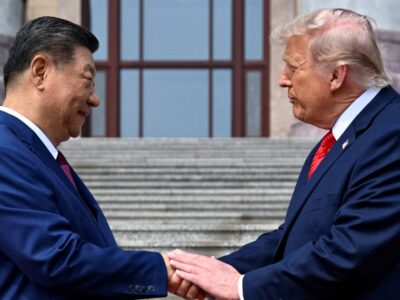
Trump barely needs opponents; he is his own worst enemy. By ignoring the economic hardships imposed on lower-income Americans by his Iran fiasco, he betrays those who elected him. Trump’s rogue foreign policy – trade wars, climate crisis denial, abuse of European and NATO allies, threats of imperial conquest, and sucking up to “strongman” dictators, seen again in Beijing – has greatly contributed to Western dismay, public pessimism and feelings of hopelessness.
But such issues do not decide U.S. elections; it is always the economy. And because Trump is mishandling it, Republicans are likely to lose control of the House of Representatives and possibly the Senate in November’s midterm elections. Democratic victories would curtail Trump’s power and may foreshadow his impeachment. Lame duckery looms.
Putin deposed, Netanyahu defeated, Trump defanged and distracted – if that came to pass, the world would feel very different. Even in a post-Putin Kremlin, the same corrupt, repressive, disruptive regime might remain. But any presidential successor would likely try to end Putin’s ruinous war, for Russia’s sake if not for Ukraine’s.
In Israel, Netanyahu’s departure would not change the post-2023 obsession with security. However, assuming far-right parties are excluded from the next government, the extreme attrition, persecution and dispossession of Palestinians in Gaza and the West Bank would hopefully abate. Isolated Israel, its reputation in tatters, is overdue a national reckoning about what sort of country it aspires to be. And Netanyahu, like Putin, is overdue a reckoning with the International Criminal Court.
What does the post-midterms future hold for Trump? He could be constitutionally removed from office. He may remain, ranting and raving, increasingly irrelevant. Trump might still threaten more overseas military “excursions.” But when the caravan moves on, even Alexanders and Napoleons get left behind.
One thing is certain: an end to Trump’s reign of error would help detoxify the world. Freed from him and his two poisonous comrades-in-arms, the demoralized, suffocating peoples of the West could breathe again. Hope and confidence would renew. There would, at last, be reasons to be cheerful.
Simon Tisdall is a Guardian foreign affairs commentator.
📝 This article was rewritten with AI assistance based on content from The Guardian.
Related posts


Latest Post