
TRENDING
HS2: Britain’s Costliest White Elephant Nears £103bn as Delays Mount
4 minutes reading View : 45

経済 - 22 May 2026
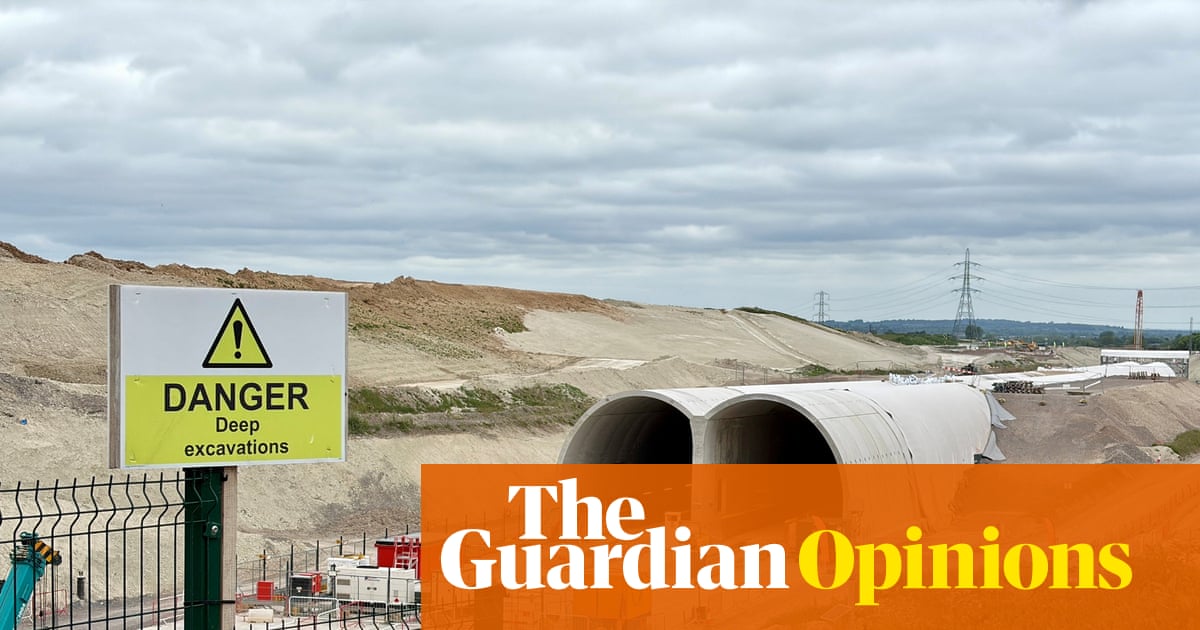
The cost of Britain’s High Speed 2 railway has ballooned to £102.7bn, and trains may not run until 2039, Transport Secretary Heidi Alexander confirmed Monday, concluding a 15-month review by the project’s new chief executive. Alexander called the original design a “massively over-specced folly” and described the cost and schedule overruns as “obscene.” The project, she said, “possibly ranks as the wildest white elephant in British history,” surpassing even Donald Trump’s White House ballroom and Dubai’s Burj Khalifa in scale of waste.
Alexander, the ninth transport secretary since HS2 was proposed, acknowledged that the project makes her angry. “As she dusted off her department’s latest defence of its appalling conduct of this fiasco, she tried to feign surprise,” noted Guardian columnist Simon Jenkins, adding that Alexander has been in office 18 months and cannot claim ignorance.
Jenkins criticized Alexander’s Commons statement as a “usual promise of a clear-out” and a “new page turned,” arguing she should deliver such reassurances outside every unmodernised hospital, unrepaired school, unbuilt care home and overcrowded prison in Britain rather than to Parliament.
“The HS2 project remains what it always was, a total dud,” Jenkins wrote. He called it a “superfluous railway” that has “simply run wild,” noting sufficient existing fast trains to Birmingham and alternative capacity solutions. The project, he argued, was always a “vanity project” of David Cameron’s coalition government.
Former Downing Street in-house HS2 expert Andrew Gilligan told the Sunday Times 18 months ago: “HS2 was certain to fail from the start,” citing the wrong route, wrong speed and wrong termini, and calling it “ludicrous” not to link with HS1.
The core problem, according to Jenkins, is that large-scale projects allow for “contractual cost escalation.” Consultants and accountants “outgun and outsmart those who must find them money,” exploiting the political cult where every brick laid is deemed “investment” and “pro-growth.”
Jenkins said blame rests with successive prime ministers who lacked courage to halt the project. “Cameron refused to take heed. Boris Johnson funked cancellation (which he favoured) and Rishi Sunak scrapped the Manchester leg, making it even worse value for money.”
Civil servants and advisers were overwhelmed by the “30,000-strong HS2 army,” Jenkins wrote, and the National Audit Office “pulled its punches.” Greater Manchester Mayor Andy Burnham supported HS2 when he should have lobbied to kill it in favour of local rail links; Pennine rail services are now “dire.”
The solution, Jenkins argued, is the one decision dodged for a decade: “stop HS2 now, instantly.” He urged treating the £44bn already spent as “sunk costs,” citing John Maynard Keynes’s observation that someone benefits from being paid to dig holes and fill them.
Jenkins dismissed Alexander’s contention that cancellation costs nearly as much as completion, a line “rehearsed gleefully by the HS2 company itself.” He called it “rubbish,” saying no compensation could equal the £60bn or more still to be spent, and that proceeding offers no better value than investing the money elsewhere.
HS2 has yet to lay a single metre of track; CEO Mark Wild admits none will be laid before 2029, if then. By comparison, Robert Stephenson completed his London-to-Birmingham railway in under five years. Only two of 52 viaducts and 11% of 169 bridges have been finished, Jenkins reported.
Cancellation would liberate multi-billion-pound sites for urban development around London Euston and Birmingham’s Curzon Street, which Jenkins described as looking “like a giant bomb has hit it.” It would free space for a new town on the site of the “vast shambles” that is HS2’s Coleshill interchange.
Jenkins concluded that the sole reason for not stopping is lack of political courage. Alexander could announce far more needed rail investments—re-signalling, electrification, urban transit. Britain has nine tram networks or metros, compared with France’s 30 and Germany’s 60. “At least let Leeds have one,” he wrote. Or Chancellor Rachel Reeves could redirect HS2’s annual £7bn budget to hospitals, schools, care centres, youth clubs and courtrooms.
“Yet this government really feels a higher priority lies in getting a few of the richer citizens of Birmingham to London a few minutes faster – perhaps one day,” Jenkins wrote, adding that Simon Jenkins is a Guardian columnist and readers may submit responses for the letters section.
📝 This article was rewritten with AI assistance based on content from The Guardian.
Related posts






Latest Post