
TRENDING
Premier League title is Arsenal’s to lose, but pressure can wreak havoc | Analysis
6 minutes reading View : 40

Sports - 19 May 2026
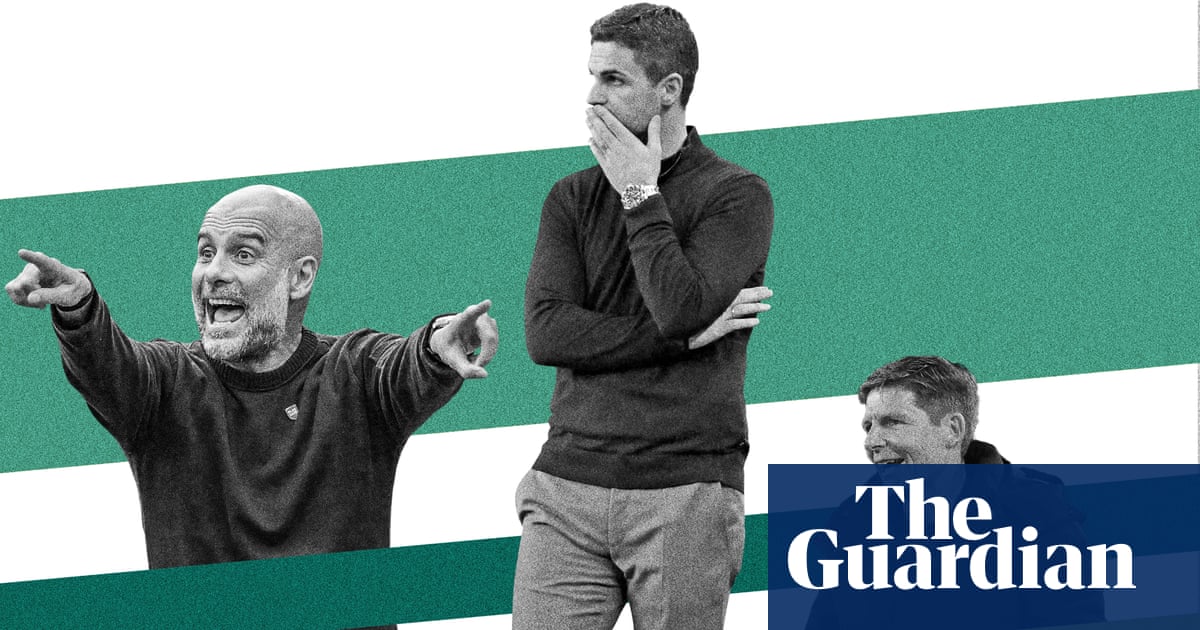
The Premier League title race should be over. By all logic, it is already decided. Arsenal leads Manchester City by two points, meaning two wins in their final two matches would secure the championship — and those games are against already-relegated Burnley on Tuesday and Crystal Palace on Sunday, with Palace preparing for the Europa Conference League final three days later. It is difficult to imagine a more favorable pair of fixtures for Mikel Arteta’s side at this stage of the season.
City’s remaining matches appear more challenging. They travel to Bournemouth on Tuesday, a team still fighting for Champions League qualification — either by finishing fifth above Liverpool or taking sixth and hoping Aston Villa wins the Europa League while finishing fifth. Under UEFA regulations, if Villa finishes fourth and wins the Europa League, there would be no sixth Champions League slot for Premier League clubs. City then finish at home against Aston Villa, who will have just returned from Istanbul and the Europa League final.
Various specious psychological theories are applied to these end-of-season contests. Do teams with little or nothing to play for exert the same effort? Or do they perhaps play with greater freedom? Palace manager Oliver Glasner, whose side lost 3-0 to City last week, was explicit: his first duty is to do what is right for his club; putting on a good title race is not his responsibility.
Villa’s Unai Emery, similarly, rested players earlier this month against Tottenham before his team’s Europa League semifinal second leg; Spurs won that match and climbed above West Ham in the relegation battle as a result. That is the right, even the privilege, of clubs that have achieved their principal goals. In that regard, Glasner is surely correct. It is a quirk of the calendar and inevitable in any league system — which is why random fixture generation within certain parameters, mainly concerning safety and police demands, is essential; why the Premier League was right to stick to its protocols on rearranging games in this crowded climax despite City’s frustration; and why rearranging fixtures to give sides free weekends before big European games, as the French league did for Paris Saint-Germain, undermines the competition’s integrity.
But if Glasner rests players before Palace’s game in Leipzig against Rayo Vallecano, perhaps the fresher reserves, desperate to claim a place in the side for the final, will overperform. Perhaps Villa, elevated by European glory or inspired by the fury of defeat, will reach new heights.
Could Burnley upset Arsenal? Unlikely. They have not won in 11 games and are without a league home win since October, but they played well enough last weekend in drawing with Villa. With Scott Parker gone and relegation confirmed, there could be a sense of release. Fans will have stopped fretting; all they have left this season is the thought of enjoying an uproarious farewell to the Premier League by having an unexpected impact on the title race. That is all City can now hope for, and their goal difference is one better than Arsenal’s, meaning that if Arsenal draw one of their two remaining games, City would likely win the title by winning both of their fixtures.
There is a history of teams with nothing to play for finding motivation in specific games, whether through professional pride or simply because soccer sometimes goes that way. In 1994-95, for instance, Blackburn won the league because Manchester United could only draw at West Ham, who had nothing to play for. Blackburn themselves lost at Liverpool, who were playing only for UEFA Cup qualification and whose fans clearly wanted Blackburn, managed by their former hero Kenny Dalglish, to pip their great rivals to the title. Or in 1971-72, Derby won the league after Leeds lost at Wolves, who had nothing riding on it, and Liverpool drew at Arsenal, who were marooned in upper mid-table with no targets left.
But perhaps the biggest single factor this season is Arsenal’s mentality, and the pressure any side challenging for the title must feel, especially after a 22-year wait. Arsenal, it is true, have seemed more robust in the weeks since the wobble that saw them win only one of six games, culminating in defeat at City, but the real test might come Tuesday if it is still 0-0 after an hour against Burnley. Certainly they did not play with any great fluency or conviction in their 1-0 win at West Ham last week.
That is the hope to which City must cling, but the reality is that this title now is Arsenal’s to lose. Yet the title race can do strange things to teams.
Eintracht Frankfurt were a very good side in the 1959-60 season. In the European Cup semifinal, they had beaten Rangers 12-4 on aggregate. But on 18 May 1960, in the final of that competition, they ran into Real Madrid at their absolute peak. Madrid had already won the first four European Cup finals, but this was probably their greatest side, constructed by sporting director Emil Östreicher, a Jewish Hungarian who had escaped a labor battalion in Ukraine and then, hiding in a synagogue in Budapest, fled through a window in just his underwear when it was raided by local fascists. After World War II, he set up a bar and restaurant that became a haunt of soccer players. Through that, he began working at Hungarian club Kispest and, when the uprising erupted in 1956, he helped keep the players safe outside Hungary, eventually finding a role at Madrid and signing the greatest Hungarian of them all, Ferenc Puskás.
In front of 127,000 at Hampden Park, Puskás scored four and Alfredo Di Stéfano three as Madrid, despite going behind, won 7-3 in one of the greatest exhibitions of soccer ever seen. An 18-year-old Alex Ferguson was enraptured, but raced out at the final whistle to get to the front of the queue for the bus home, only to find the streets deserted; almost everybody else had remained behind to salute the five-time champions.
This is an extract from Soccer with Jonathan Wilson, a weekly look from the Guardian US at the game in Europe and beyond. Subscribe for free here. Have a question for Jonathan? Email soccerwithjw@theguardian.com, and he’ll answer the best in a future edition.
📝 This article was rewritten with AI assistance based on content from The Guardian.
Related posts





Latest Post