
TRENDING
Supercentenarian Study Reveals Secrets of Healthy Aging to 117
3 minutes reading View : 17

Science - 20 May 2026
The nonagenarian actress Dame Joan Collins may have had a point when she declared “age is just a number”.
The most detailed biological analysis of a supercentenarian yet has shown that extreme old age does not necessarily bring mental decline or the accumulation of typical illnesses.
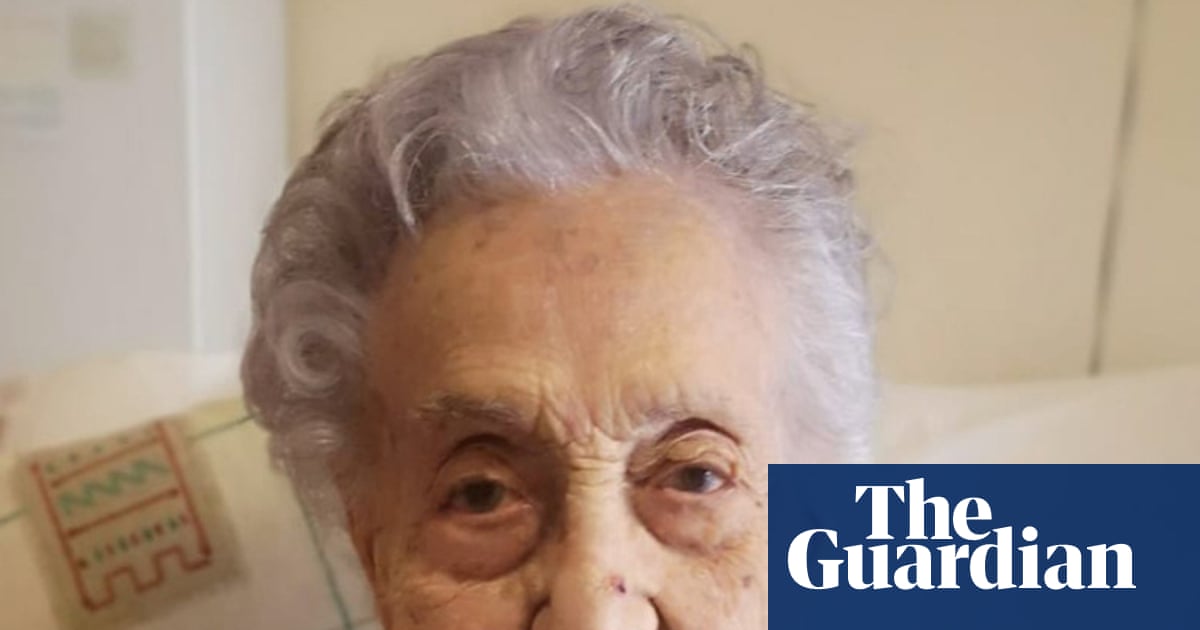
Doctors in Spain conducted a comprehensive suite of tests on Maria Branyas Morera, who was the world’s oldest person before her death at 117 last year.
While her body showed clear signs of extreme age, several biological factors protected her from the diseases that usually afflict people in their final years, the researchers found.
“The common rule is that as we age we become sicker, but she was an exception and we wanted to understand why,” said Dr Manel Esteller of the Josep Carreras Leukaemia Research Institute in Barcelona. “For the first time, we’ve been able to separate being old from being sick.”
In the years before she died, Branyas invited doctors to study her to learn why she had reached such an advanced age. Born in San Francisco in 1907, she moved to Catalonia in 1915 and survived two world wars, the Spanish civil war and the Covid pandemic, recovering from the virus at age 113.
Esteller and his colleagues used blood, saliva, urine and stool samples collected a year before her death to build a detailed biological profile. The tests examined her genetics, gene expression, protein levels, metabolic byproducts and gut microbiome diversity.
The researchers found that protective caps called telomeres on the ends of Branyas’s chromosomes were exceptionally short, a clear sign of cellular aging. Her immune system also showed age-related changes, was prone to inflammation, and she had acquired mutations that can lead to leukemia.
But Branyas appeared well-protected. Telomeres shorten with each cell division, and Esteller said her extremely short telomeres may have limited further cell division, potentially protecting her from cancer.
Her DNA revealed gene variants that shielded her heart and brain from disease and dementia. She had low levels of systemic inflammation, reducing her risk of cancer and diabetes, and efficient cholesterol and fat metabolism. “These are all critical because they’re linked to diseases that are typical in older people and they kill you at the end,” Esteller said.
The team then used epigenetic clocks, which analyze gene expression patterns, to determine Branyas’s biological age. “She was at least 10 to 15 years younger [than her chronological age],” Esteller said. Her gut microbiome was also unusually youthful, with high levels of Bifidobacterium, considered beneficial to health.
Her longevity was not solely genetic, however. Branyas was not overweight, ate plenty of yogurt, and did not smoke or drink. She maintained an active social life with friends and family nearby. All likely contributed, Esteller said.
He hopes the findings will help scientists develop treatments to keep people healthy into old age. “We can develop drugs to reproduce the effects of good genes,” he said. “Maria’s parents gave her very good genes, but we cannot choose our parents.”
Prof João Pedro de Magalhães of the University of Birmingham said: “These outliers in longevity could provide insights into how to age more gracefully. If we could figure out which specific genes are associated with extreme human longevity and healthy old age it could provide clues about mechanisms for ageing as well as drugable targets to develop interventions that allow everyone to live longer, healthier lives.”
📝 This article was rewritten with AI assistance based on content from The Guardian.
Related posts





Latest Post