
TRENDING
US Confirms American Ebola Case in Congo; CDC Tightens Screening
4 minutes reading View : 47

World - 19 May 2026
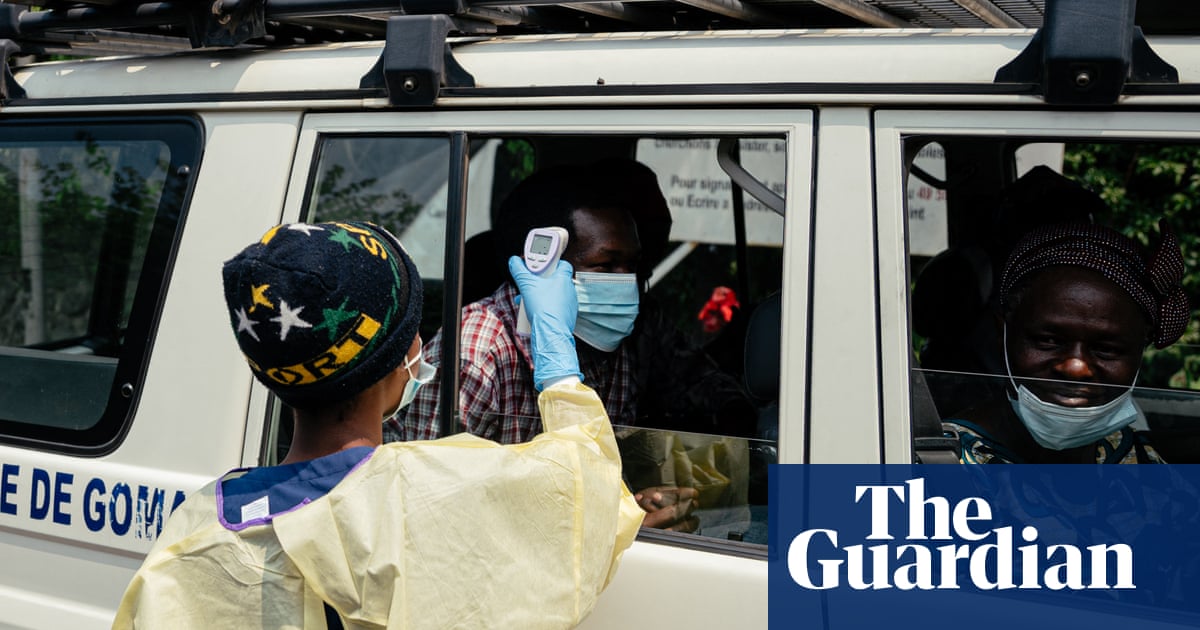
U.S. health authorities confirmed Monday that an American has contracted Ebola after occupational exposure in the Democratic Republic of the Congo (DRC), and the Centers for Disease Control and Prevention (CDC) announced new travel screening measures to protect U.S. citizens amid the ongoing outbreak in the DRC and Uganda.
Officials with the CDC confirmed the case Monday and said the individual is being evacuated to Germany. The person developed symptoms over the weekend and tested positive late Sunday, said Satish K. Pillai, an incident manager for the CDC’s Ebola response, in a press conference.
Six other people are being evacuated for treatment or monitoring, Pillai said. Approximately 25 people work in the U.S. office in the DRC, and the CDC is deploying an additional staff member from Atlanta, Georgia.
Based on “current epidemiological evidence, ongoing risk assessments, and the highly serious nature of EVD (Ebola virus disease),” the CDC and the Department of Homeland Security said earlier Monday they will introduce enhanced public health screening and monitoring for travelers arriving in the U.S. from the affected region.
Entry restrictions will apply to non-U.S. passport holders who have been in Uganda, the DRC or South Sudan within the past 21 days.
Airlines, international partners and port-of-entry officials have been directed to identify and manage potentially exposed travelers. The agency has enacted enhanced “port health protection response activities, contact tracing, laboratory testing capacity, and hospital readiness nationwide.”
There are 10 confirmed Ebola cases, 336 suspected cases, and 88 deaths in the DRC, including at least four health workers.
The CDC assessed the immediate risk to the general U.S. public as low, “but we will continue to evaluate the evolving situation and may adjust public health measures as additional information becomes available,” the agency said.
The agency advised anyone who has traveled through affected countries to monitor CDC travel health notices and seek medical attention immediately if they develop symptoms consistent with Ebola.
The measures will remain in effect for an initial 30 days, the CDC said.
The advisory follows the identification of a number of Americans in the DRC as “directly affected” by the Ebola outbreak, with at least one who may have developed symptoms.
The CDC said in a statement Sunday it is “supporting interagency partners who are actively coordinating the safe withdrawal of a small number of Americans who are directly affected by this outbreak.”
The advisory came a day after the World Health Organization declared a “public health emergency of international concern” caused by the Bundibugyo strain of the Ebola virus in the DRC and Uganda, and two days after Africa’s top public health authority first announced the epidemic.
The outbreak was first identified in the DRC’s northeastern Ituri province near the borders with Uganda, South Sudan and Rwanda. That area was the site of the second-largest Ebola outbreak in history, which ran from 2018 to 2020 and involved 3,470 cases and 2,287 deaths. That outbreak involved a different strain, the Zaire ebolavirus, which is considered treatable.
This outbreak marks only the third time the Bundibugyo strain has been detected. The two previous outbreaks occurred in 2007 and 2012. The strain has a mortality rate of 25% to 50% and no targeted vaccine or treatment.
Satish Pillai, the CDC’s incident manager, said Sunday it was a “highly dynamic situation” that the U.S. continues to assess.
The Ebola outbreak comes less than two weeks after an outbreak of the rat-borne hantavirus aboard the cruise ship MV Hondius required 16 Americans to be flown to a medical facility in Nebraska.
The WHO said Sunday that the first known suspected case, a health worker, developed symptoms on April 24. The worker likely contracted the virus from a patient brought in for care, indicating the outbreak had been circulating for some time.
The two infected individuals from the DRC traveled separately to the Ugandan capital of Kampala, where one died. The WHO said there is no indication of ongoing transmission within Uganda.
📝 This article was rewritten with AI assistance based on content from The Guardian.
Related posts





Latest Post




