
TRENDING
HS2: Why the full line could still be built despite failures
3 minutes reading View : 41

Economy - 20 May 2026
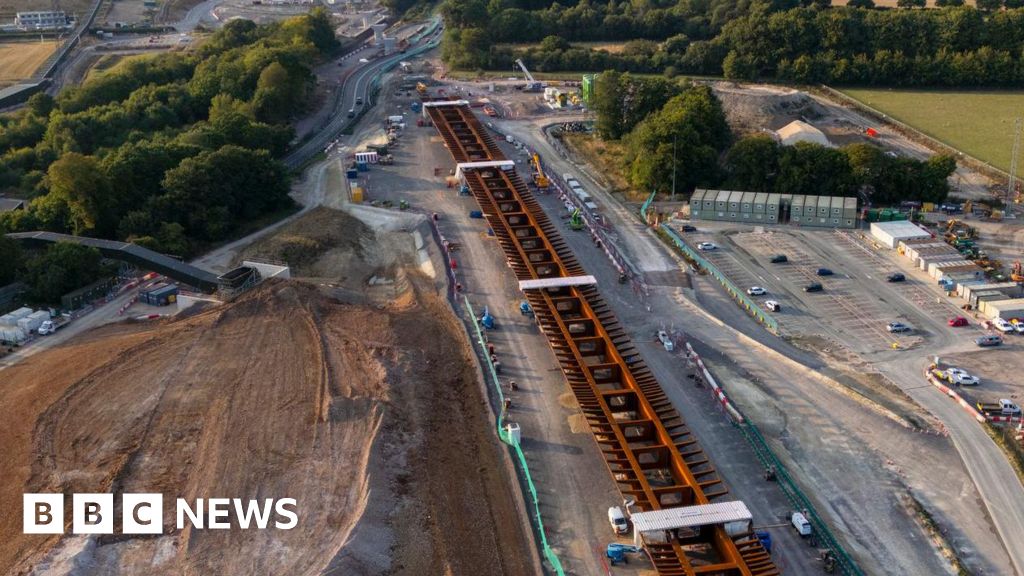
HS2 has reached a critical decision point, metaphorically at a Y-junction.
One path leads to complete cancellation of HS2, despite the existing construction of viaducts, tunnels, verges, bat protection facilities and floating platforms.
The alternative is to fund a slower, truncated line connecting west London with Birmingham, not expected until the late 2030s.
HS2 chief executive Mark Wild has calculated that cancellation and remediation costs would be comparable to completing the line from this stage — approximately £60 billion. That would bring total spending to £100 billion, making it the world’s most expensive railway.
The original plan envisioned a Y-shaped line from London to Birmingham branching to Manchester and Leeds. The purpose was practical — capacity and speed — but also strategic: connecting growth centers in the UK’s long, narrow service-oriented economy to attract investment and create agglomeration effects that could rebalance the country’s uneven regional development.
The project’s central rationale was to benefit regions outside London. After the Leeds and Manchester legs were scrapped, the top civil servant at the Department for Transport wrote: ‘The previously stated strategic case for HS2 — to generate transformational benefits and rebalance the economy by joining [northern England] and Midlands with London — no longer applies’.
What remains is a line strategically justified as helping northern England but now terminating in Birmingham. Its budget has been inflated south of Birmingham partly to conceal it from rural constituencies, and a connection to the West Coast Main Line (WCML) is not expected until 2040-2043.
To keep the project alive, it will be slower, later, and risks degrading services beyond Birmingham. HS2 trains were designed for straight high-speed tracks; when transitioning to the WCML, they cannot tilt around curves and will run at 110 mph, slower than existing Avanti Pendolinos at 125 mph.
This situation is a looming crisis. The WCML, built in the 1840s, operates at capacity with up to 15 trains per hour, making it the busiest mixed-use line in Europe.
The current arrangement will not work, and industry insiders acknowledge it. The UK is still relying on 19th-century infrastructure as a critical rail artery.
Paradoxically, the epic failure of HS2 might in fact mean the Western leg gets built in full.
The government is already committed to Northern Powerhouse Rail, using HS2 legal powers and the route through central Manchester.
Once the costs of the London-Birmingham segment and the Cheshire-to-Manchester connection are sunk, completing the line from Birmingham to Manchester Airport would offer maximum benefit for the least additional cost.
Lower land costs and reduced need for tunnels and berms in the Midlands and North could result in a much lower cost per mile of track.
This comes at a time when many other nations — from Japan to Spain, from Morocco to Uzbekistan — are demonstrating the ability to deliver high-speed rail lines cheaper and faster.
The UK government aims to demonstrate that lessons have been learned from HS2’s overspecification and hasty contract awards. Even if successful, it will have been an expensive lesson.
📝 This article was rewritten with AI assistance based on content from BBC News.
Related posts






Latest Post