TRENDING
Brewdog’s Rise and Fall: From Billion-Pound Dream to Administration
10 minutes reading View : 16

Economy - 18 May 2026
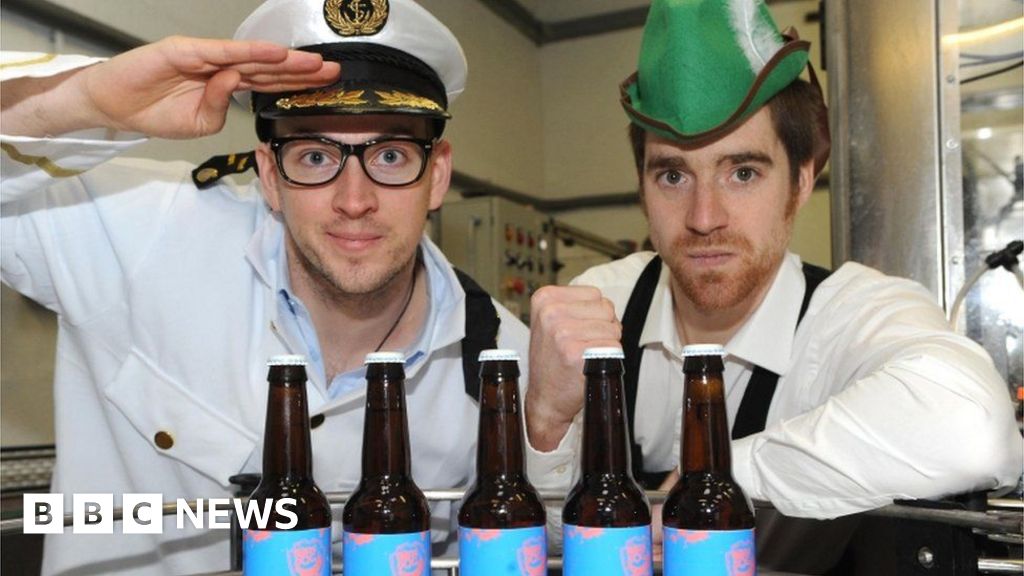
James Watt once wrote in his 2015 memoir, “Business for Punks,” that “all self-respecting captains go down with their ships.”
When the beer company he built from a garage into a billion-pound behemoth collapsed into administration last week, Watt was no longer at Brewdog’s helm.
He had left the company in 2024 after years of negative press and financial losses.
Co-founder Martin Dickie followed shortly after.
Their Brewdog dream was over, but they had cashed out roughly £100 million in 2017 and now move on to new ventures as wealthy men.
Left to survey the wreckage are hundreds of employees summarily laid off during an 11-minute Teams call from headquarters and more than 200,000 investors, known as Equity Punks, who will likely see no return on the over £100 million they invested.
For many observers, Brewdog’s trajectory has become a cautionary tale of unchecked ambition, rapid expansion, and hubris.
The story began in Fraserburgh, a fishing town in northeast Scotland, and grew into legend.
Watt and Dickie were childhood friends.
Watt, the son of a fisherman, was bombastic and entrepreneurial; Dickie was the more reserved beer enthusiast.
In the mid-2000s, they set out to revolutionize the craft beer industry.
They brewed early batches from cobbled-together equipment in Dickie’s mother’s garage and later a small industrial unit, undeterred by early rejections.
Watt said they often slept only a few hours a night on sacks of malt on the brewery floor and faced financial hardship.
He claimed he worked as a captain on a fishing boat to pay bills.
“We constantly missed our loan repayments… we could never sell enough beer to pay our rent,” he wrote.
They believed their flagship beer, Punk IPA, would succeed—and it did.
The brew won a craft beer competition in 2008 and secured a contract with Tesco.
They later boasted of lying to a bank to secure a loan for a major expansion.
That rags-to-riches narrative was undermined when it emerged that Watt was a millionaire’s son.
His father, James Watt Senior, was a powerful figure in the northeast fishing industry and supported the business early on.
Brewdog’s success relied on building a loyal following that appreciated its irreverent approach to a stale craft beer market.
“They shook up an industry that needed shaking up. There’s no doubt about that, and I will always give them credit for that,” said beer writer Melissa Cole.
Driven by Watt’s marketing genius, the company staged one attention-grabbing stunt after another, rarely leaving the news.
Watt regularly attacked “big beer” companies like Heineken as “bland and insipid.”
He and Dickie even filmed themselves launching Heineken bottles into the air with exploding rockets.
Note: This article contains language some readers may find offensive.
The stunts included driving a tank down Camden High Street, tossing stuffed “fat cats” from a helicopter over London’s financial district, and creating the world’s strongest beer inside a taxidermied squirrel.
But the revolution needed funding. In 2009, they launched Equity for Punks (EFP), inviting fans to invest in exchange for shares and perks like beer discounts.
Over the next 12 years, about 200,000 investors contributed more than £100 million through a series of EFP fundraisers.
Andrew Morgan, a beer entrepreneur, was one of the first investors.
“It was revolutionary in changing the nature of how people could support businesses,” he said.
“These guys were different. They were bringing something new to the industry and it was exciting.”
Each EFP round came with promises that Brewdog would never sell out to “big beer.”
The cash helped fund an £8 million custom brewery on a 5.5-acre site in Ellon.
Watt emphasized environmental goals, claiming Brewdog became the first carbon-negative brewer and even purchased a Highland forest for carbon offsets.
By 2017, turnover reached £111 million, with more than 50 bars and 600 employees.
The founders’ ambition seemed boundless: they wanted Brewdog to go global and become a unicorn—a billion-pound startup, of which there were only about 40 in the UK at the time.
“They’d started to believe their own hype. Hordes of people would cheer them on stage and it became a bit of a cult. A cult that James was happy to be the head of,” said Cole.
By 2017, cracks appeared: whispers of a toxic culture, summary dismissals, and rumors about the CEO’s behavior.
Observers see that year as pivotal for Brewdog.
Watt and Dickie sold nearly a fifth of their shares to US private equity firm TSG for £50 million each.
TSG pumped another £113 million into the company to accelerate growth, acquiring a 22% stake.
The founders became multimillionaires overnight.
Equity Punks could also sell shares to TSG, but only up to a maximum of £527—a limit many considered unfair.
“The TSG deal changed everything,” said Morgan.
“If he’d taken the £50 million, got some proper people in to run the business who knew what they were doing, rather than his ego letting him go off on a bender, we could have a different story.”
In his 2015 book, Watt wrote: “Why spend your own money when you can spunk someone else’s?” True to that mantra, within six months of the £100 million windfall, they launched another EFP raise.
This time, shares were priced at £23 each—£10 more than TSG had paid—but it still raised £26 million, the most successful round yet.
That placed Brewdog’s value at £1 billion, fulfilling Watt’s unicorn dream.
The company expanded rapidly, opening hotels and growing to 100 bars worldwide with 2,000 staff.
It also launched gin and vodka brands.
“It seems likely that TSG hadn’t the same confidence that Brewdog was worth as much as Watt believed, so they inserted an incredibly punishing rate of return to protect their investment,” said financial analyst Nick Hyett.
The 18% compound annual interest rate ensured TSG would be first in line for any payout if the company was sold or floated.
For Brewdog, that meant hitting at least 18% growth every year just to give Equity Punk investors a chance of a return.
The deal also gave TSG board seats and significant influence, which grew as interest accumulated.
But the growth target proved unrealistic; profits stalled.
New bars that had shown early promise began to flatline.
Rifts emerged between Watt and TSG.
Documents seen by the BBC revealed that in 2018, TSG believed Watt was “spending aggressively… desperately trying to create growth stories in order to reach an unattainable valuation,” and that his valuation goal was “not realistic.”
The pandemic deepened financial troubles, yet large flagship sites continued opening, including those in London Waterloo, Las Vegas, and a DogTap hotel in Manchester.
“James is a clever guy but he didn’t always make good decisions,” said Morgan.
“£50 million is going to change you. Pre-TSG he is fighting the good fight. He gets £50 million himself, and £100 million to grow the business, and he does stuff like Brewdog Airlines and the hotels.”
The last profitable year for Brewdog was 2019.
Despite that, the company claimed a valuation of £1.8 billion in 2020 with a final EFP round raising £30 million.
Brewdog had long prided itself on being a great workplace, guided by a “charter” that included principles like “without us we are nothing,” “we are geeks,” and “we blow shit up.”
By 2021, that image had faded for some.
A group of staff calling themselves Punks with Purpose published an open letter alleging a toxic culture, blaming Watt directly.
The BBC’s Disclosure team investigated and revealed claims that Watt engaged in inappropriate behavior toward female staff, that Brewdog violated import laws, and that many marketing stories were fabricated.
Tales of Watt and Dickie changing their names to Elvis, sending beer to President Putin, and brewing beer on a plane all turned out to be false.
The film also showed that despite his public stance against “big beer,” Watt had spent £500,000 on Heineken shares—surprising Equity Punks who had seen him criticize craft brewers selling to Heineken.
Watt later admitted that was one of his biggest mistakes.
He strenuously denied wrongdoing and threatened to sue the BBC, later saying he sometimes missed social cues due to autism.
After the program, Brewdog said it would implement measures to improve workplace culture.
Watt pledged 20% of his own shares to a scheme benefiting employees.
Brewdog also threatened legal action against a US-based contributor and sent private detectives to investigate at least one UK interviewee.
Brewdog complained to Ofcom, but the TV regulator dismissed the complaint in 2024 after an 18-month investigation.
TSG’s grip on the company tightened; by 2024, it was owed more than £700 million.
That meant for recent Equity Punks to see any return, the company’s valuation would need to exceed £2.2 billion.
Rising National Insurance and business rates hurt the hospitality sector, and Brewdog was particularly vulnerable.
The 2023/24 accounts made for grim reading.
Watt stepped down as CEO in May 2024 but remained on the board as “Captain and CoFounder.”
Dickie left 15 months later.
The childhood friends’ relationship had deteriorated; they were rarely seen together and often traveled separately to corporate events.
Brewdog closed its distilling arm, which had been Dickie’s focus.
More bar closures followed.
About 1,800 UK pubs stopped stocking Brewdog draught beers.
A £25 million pandemic loan, backed by the UK government, was due for repayment.
Even the company’s forest had failed to grow properly.
On Monday, Brewdog entered administration; the Ellon brewery and 11 bars were bought by US firm Tilray for £33 million.
Another 38 pubs closed, and 484 employees were made redundant.
In a LinkedIn statement, Watt called the news “heartbreaking.”
He reportedly tried to buy the business for £10 million, though that remains unconfirmed.
It is unclear how much TSG will lose on its £213 million investment.
Latest accounts show TSG had already provided £41 million in loans, with an additional £15 million issued in September. HSBC is also seeking repayment of up to £30 million in loans.
Remaining assets, such as US breweries and bars, are yet to be sold. Cash reserves at the time of collapse are unknown.
Whatever the final finances, TSG’s investment appears to have soured.
Watt and Dickie will lose their remaining shareholding, which at the 2020 valuation would have been worth hundreds of millions.
The Equity Punks will likely get nothing, though many invested to join a club with perks, not for profit.
On LinkedIn, Watt said he had made “many mistakes,” that the business “expanded too fast and diversified too broadly,” and that he “did not control spend well enough.”
“I would have loved to save every single job and every single equity punk investment. Ultimately, I couldn’t. That will stay with me,” he wrote.
That may offer cold comfort to the hundreds facing unemployment and the legion of investors.
“They are gutted,” said Morgan.
“People who have Brewdog tattoos on their arms committed in a way I don’t think James ever did.
“The reality of where we are right now is an absolute mess and if there’s one person you can look at – it’s James Watt. It has to stop with him.”
Brewdog’s meteoric rise from garage startup to unicorn was one of Scotland’s best business success stories.
Watt, brash and at times brilliant, was the driving force.
For many, he is Brewdog.
Others believe he drove the business to near destruction on the back of a deal that proved its undoing, then walked away with millions.
The Brewdog brand may survive under new owners, but its legacy will forever be tied to that of its former captain.
📝 This article was rewritten with AI assistance based on content from BBC News.
Related posts




Latest Post