
TRENDING
German billionaire behind Enhanced Games defends doping event
8 minutes reading View : 0 View

Sports - 22 May 2026
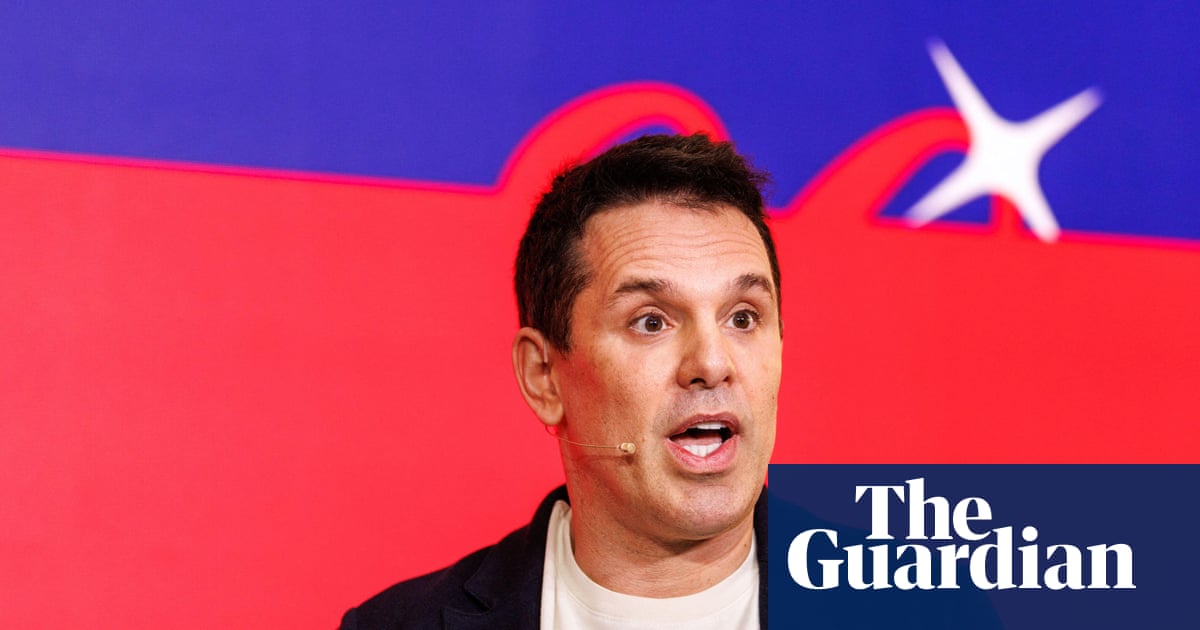
Before discussing doping and psychedelics, arguably the most controversial man in sport explains how he acquired the largest triceratops skull ever discovered and plans to install it in his London apartment.
Christian Angermayer, the German billionaire who made fortunes from biotech, bitcoin and psychedelics, now intends to repeat that success using sport — which many believe he is abusing.
Asked how much he paid for the skull, Angermayer replied: “Not a lot, because I find them.”
When pressed on the cost, he said: “I have bounty hunters who do that. I really don’t want to say what my costs are. But I also have a T-Rex. And I don’t know where to put it, so I am going to sell it for around $40m.”
Regarding the triceratops head, he added: “It’s in London. I’m actually getting it put in my apartment. You need to come by. It’s a complete nightmare to insure it, and it needs a crane to get in, but it’s so spectacular.”
Incredibly, this is not Angermayer’s most audacious plan. The dinosaur hunter believes he has unearthed fresh treasure with his next project: the Enhanced Games, which critics have dubbed the Steroid Olympics.
According to an Enhanced Games study based on 36 of the 42 athletes competing this weekend, all but two will have taken performance-enhancing drugs banned by anti-doping authorities. Enhanced says 91% are using testosterone, 79% human growth hormone, 41% EPO and 29% anabolic steroids.
The concept continues to shock and appall the sporting world, but Angermayer is convinced it represents the future.
He bets that Sunday’s inaugural event — featuring the 100m sprint, various swimming races and weightlifting — will be watched by millions of people, young and old, male and female, Republican and Democrat.
He believes many will, for the first time, consider spending $209 on testosterone cream to feel younger, or $119 on GHK-Cu Copper peptide for skin quality, or other performance-enhancing drugs banned in elite sport but available on the Enhanced website.
“I don’t understand why people limit medicine only for treating an illness,” Angermayer said. “Should we, as a society, think about how not to get sick in the first place? Why not use medically approved drugs, with a doctor, to help you to achieve your goal?”
Some of this reasoning is reasonable. Angermayer noted that GLP-1s, synthetic peptides, have been a game changer for treating obesity. He also knows that health and anti-aging treatments once lurking in the shadows are becoming mainstream. But he repeatedly downplays or disputes the dangers anti-doping authorities cite.
Most interviews begin with niceties; this one did not. Angermayer knew I had written a column expressing skepticism about the Enhanced Games. The Guardian’s application for accreditation was initially rejected, though organizers later relented. We got straight into it.
“I know I’m right,” Angermayer told me. “I was looking forward to this. Only people who have not understood what we’re doing, or are profiting from the gravy train of the IOC don’t. We’re the good ones. I really believe that. I have a very strong conviction.”
I replied that the World Anti-Doping Agency calls the Enhanced Games “a dangerous and irresponsible concept,” while Travis Tygart, CEO of the U.S. Anti-Doping Agency, calls it a “clown show.”
Angermayer’s eyes lit up. “I want that quote everywhere,” he said. “I’m sending a heartfelt thank you because they saved us billions in marketing. Liv golf invested $5bn and couldn’t get this popularity. We had a survey in November where we asked more than a thousand Americans have you heard about Enhanced Games? And 61% had already, while only 42% had heard about Liv after they spent $5bn.”
Angermayer is clearly bright. The evidence of the past 25 years suggests he usually gets it right. But given his various bio-tech businesses and conversations with scientists and leading doctors, he must be aware of the risks of performance-enhancing drugs.
“These are medically good things, if done properly,” he insisted. “You can abuse everything. You abuse people, you can abuse substances. But if it’s done properly with a doctor, it is good for people.”
“If these substances had anywhere near the risk all these goons are saying, we would see athletes drop dead.”
I pointed out that many young cyclists died in the 1990s and early 2000s, and many suspect EPO abuse was to blame. Angermayer pushed back, saying he is not sure that was the primary cause.
What about East German athletes during the Cold War, some of whom sued a pharmaceutical company in 2005? “East Germany gave it to children, without their consent, without the knowledge, and it was not FDA-approved drugs,” he replied. “You can’t compare that.”
Angermayer’s argument essentially boils down to this: any substance approved for human use by the U.S. Food and Drug Administration should be allowed in elite sport, with close medical supervision.
However, WADA warns that FDA-approved drugs — including steroids and EPO — are often meant for medical settings. Taken outside that context, they can cause serious harm, immediately or years later.
In fairness, Angermayer makes several points that hit home. When I suggested he is cynically using athletes as a Trojan horse to sell performance-enhancing drugs, he shrugged and said that is what sport has always done.
“What about the IOC, who is selling burgers, sugar drinks, and alcohol?” he added. “That is the business model of sports. I didn’t invent it, I’d be proud if I did. But the business model of sports is using athletes to sell products. Some sell shitty scarves, some sell very dangerous drugs.”
By that, Angermayer is not referring to testosterone, HGH, EPO or any drugs athletes will take in the Enhanced Games.
“Alcohol is, by the way, by far the number one riskiest drug. It’s worse than heroin. It’s worse than crack cocaine, it’s surely worse than any enhancement. And we allow it as a society.”
He does not drink. “It’s the devil,” he replied. “I think a lot of people believe alcohol is good because it’s socially accepted and freely sold.”
Angermayer also points out, not unreasonably, that far more athletes cheat than the 1% who are caught. Where we disagree is on the numbers.
He cited a 2011 WADA study suggesting that close to half of elite track and field athletes had used banned drugs in the preceding 12 months. I pointed out that WADA says there were “a number of flaws and limitations in the methodology” and it has “little or no value when assessing today’s prevalence numbers.” He stopped me.
“Only from the UK, there were seven athletes in the Summer Games in Paris, who cheated to the gills,” Angermayer claimed, without offering supporting evidence. “Maybe it’s 30%. Maybe it’s 20%. But it’s not 1%.”
Angermayer practices what he preaches about enhancement. He said he has been taking testosterone replacement therapy since age 30, currently 250mg per week. Enhanced Games athletes, he says, take about 80-200mg because they are younger and need less.
More recently, Angermayer started taking tesamorelin, a peptide that stimulates the pituitary gland to produce natural growth hormone, approved only for treating HIV-associated lipodystrophy.
“We have decade-long studies,” he said of testosterone. “I am the biggest hypochondriac of all. It would be crazy if I injected myself with stuff which had a risk.”
“There is an urban legend that an increased amount of human growth hormones could cause cancer. But the great thing is I have maybe one of the best scientific departments at my disposal and I couldn’t find anything. There’s not a single study in the world. It’s in fact the opposite. A moderate increase in human growth hormones in older people than 30, is actually very healthy because your immune system goes up.”
This is not WADA’s view. The agency says human growth hormone can trigger diabetes, heart problems, and abnormal growth in organs and bones.
Part of Angermayer’s conviction comes from his long-time advocacy for using psychedelics to help mental health and depression — once a fringe position, now mainstream.
Our time was nearly up. I told him some people will think he is a super villain, others a pioneer. How does he see himself?
“You need to make a judgment,” Angermayer replied. “But I can tell you one thing, I’m definitely not a super villain, for one reason: I brought back psychedelics after they were banned and marginalised. Their whole message is it’s all about love and being not a dick? So I don’t think I’m a super villain.”
Angermayer also wants to make clear: the Enhanced Games is here to stay. The next edition, he suggests, might involve beloved sports stars in their 40s and 50s competing to see if they could approach old personal bests while enhanced.
It sounds preposterous to me. Sensing my skepticism, we ended with a sporting bet. I said the Enhanced Games won’t last five years. He insisted it will thrive.
History suggests the man who pays bounty hunters to find dinosaurs will collect. Either way, try picking the bones out of that.
📝 This article was rewritten with AI assistance based on content from The Guardian.
Related posts






Latest Post