
TRENDING
Ebola Outbreak DR Congo: Protesters Burn Hospital Tents in Bunia
4 minutes reading View : 37

World - 22 May 2026
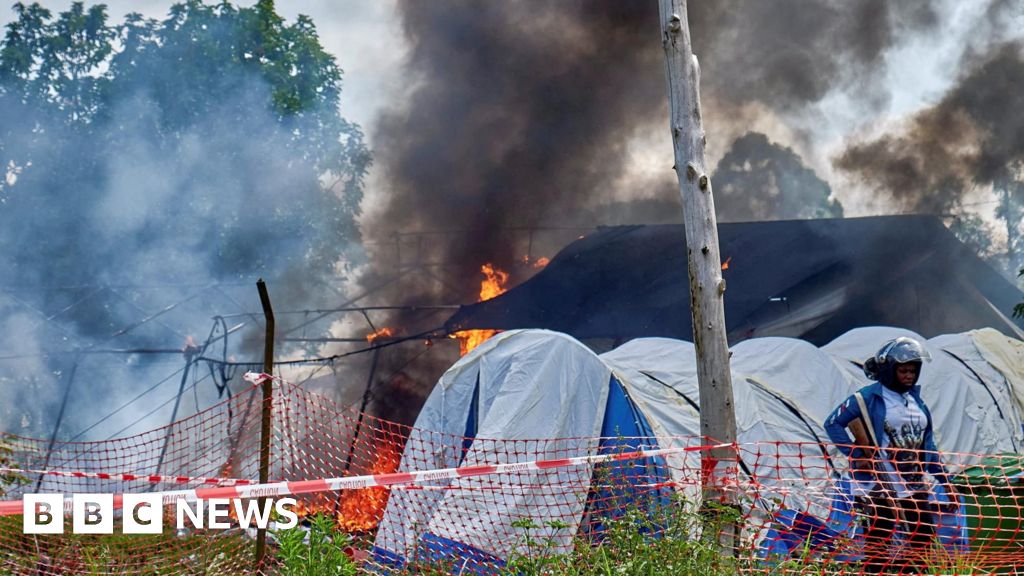
An angry crowd set fire to part of a hospital at the center of the Ebola outbreak in eastern Democratic Republic of Congo after family and friends prevented from taking away the body of a young man believed to have died from the virus.
They threw projectiles at the hospital and set fire to tents used as isolation wards, local politician Luc Malembe Malembe told the BBC about the scene at Rwampara General Hospital.
Police fired warning shots to disperse the crowd amid the chaos.
The body of a dead Ebola victim is highly infectious, requiring safe burial to stop the virus from spreading.
Medical workers at Rwampara hospital, near Bunia in Ituri province where almost all cases have been reported, were placed under military protection as police restored order.
A healthcare worker was injured by stone-throwing protesters before law enforcement intervened, a hospital worker told AFP.
The man who died was a popular local figure and those upset by his death did not grasp the reality of the disease, Jean Claude Mukendi, coordinating the security response to Ebola in Ituri, told the Associated Press.
Witnesses told Reuters the young man was a footballer who had played with several local teams. His mother told the news agency she believed her son died of typhoid fever, not Ebola.
Malembe said the crowd did not believe the virus, which has killed more than 130 people in eastern DR Congo, was real.
People are not properly informed or sensitized about what is happening, Malembe said. For a certain segment of the population, especially in remote areas, Ebola is an invention by outsiders and does not exist.
They believe NGOs and hospitals are creating this to make money, and this is tragic, he said.
He said two tents had been burned down, along with a body that was due to be buried.
The World Health Organization recommends safe and dignified burials for Ebola victims, with trained teams using protective equipment to handle bodies.
Six patients had been receiving treatment in the tents and may have escaped in the mayhem, but the medical charity Alima, which ran the tents, said all are accounted for and currently being cared for at the hospital.
The unrest came as DR Congo’s national football team canceled its pre-World Cup training camp in Kinshasa because of the outbreak.
WHO has called it a public health emergency of international concern but said it was not at pandemic level.
On Wednesday, WHO said 139 people in DR Congo were thought to have died from Ebola out of 600 suspected cases.
However, Congolese Health Minister Samuel Roger Kamba told state broadcaster RTNC TV that authorities had registered 159 deaths.
Two cases of the virus have been detected in neighboring Uganda.
Ugandan authorities have temporarily suspended flights, buses, and all other public transport crossing the border. Passenger ferries are also not permitted on the Semliki River, which forms part of the border.
The outbreak has been caused by a rare species of Ebola known as Bundibugyo. There is currently no vaccine for this species, and WHO said it could take up to nine months for a jab to be ready.
On Thursday, the M23 rebel group, which controls parts of eastern DR Congo, said it had confirmed the first case of Ebola in South Kivu province, hundreds of kilometers from the epicenter in Ituri.
The 28-year-old man, who had traveled from Kisangani, died before the diagnosis was confirmed, according to a rebel statement.
Kisangani is a large city in north-central Tshopo province where no Ebola infections have been recorded.
There are growing concerns about access to areas under M23 control.
The group has never managed a crisis like Ebola but said it will work with international partners to contain the virus.
For more news from the African continent, visit BBCAfrica.com.
Follow us on Twitter @BBCAfrica, on Facebook at BBC Africa, or on Instagram at bbcafrica.
The source article has approximately 29 paragraphs. We rewrote with the same number of paragraphs.
📝 This article was rewritten with AI assistance based on content from BBC News.
Related posts


Latest Post