TRENDING
Clare Wright Wins NSW Literary Award for Book on Yirrkala Bark Petitions
4 minutes reading View : 23

World - 18 May 2026

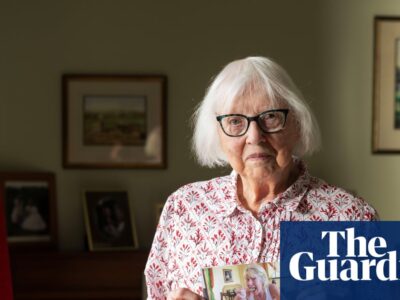
Clare Wright, a Melbourne historian, won the book of the year award at the NSW Literary Awards for her “highly original” nonfiction work on the Yirrkala Bark Petitions, a landmark moment in Australia’s land rights history.
The petitions were presented by Yolŋu elders to the Australian Parliament in 1963 on painted bark frames, seeking government intervention after part of the Arnhem Land Reserve was licensed to a French mining company. Although the petitions did not halt mining, they led to the Aboriginal Land Rights (Northern Territory) Act 1976, the first land rights legislation in Australia.
Written more like a novel than historical nonfiction, “Näku Dhäruk: The Bark Petitions” treats its subjects as characters, immersing readers in their political aspirations and acts of resilience without the sense of inevitability typical of historical works.
At a ceremony at the NSW State Library on Monday night, the book won the $10,000 top prize and the $40,000 Douglas Stewart Prize for nonfiction. Judges called it “a work of national significance,” saying the personal accounts felt “vividly alive” with “an extraordinary depth of research and sophisticated scholarship.”
“It is a book that should be read by all Australians,” the judges said.
“Näku Dhäruk” is the third in Wright’s “democracy trilogy” about defining moments in Australian political history. The first, “The Forgotten Rebels of Eureka,” won the 2014 Stella Prize, and the second, “You Daughters of Freedom,” covers white Australian women winning the vote.
Wright, awarded the Medal of the Order of Australia in 2020, has won multiple awards for “Näku Dhäruk,” including the 2025 Australian Political Book of the Year. Before learning of her NSW win, she joked that the book cover now has “more stickers than cover,” adding, “If it was a bottle of wine, you would be buying a case.”
Wright spent a decade writing the 640-page work, which she calls “collaborative,” describing her time living and working with the Yirrkala community.
“The Yolŋu people wanted me to tell it because they wanted Australia to know their story,” she said. “Readers who have spent time in north-east Arnhem Land with Yolŋu people tell me that [reading the book] felt like going home, it felt like being … in that very special remarkable part of the world.”
The La Trobe University professor is considered a culturally adopted member of the Yunupiŋu family. Galarrwuy Yunupiŋu, 1978 Australian of the Year, gave Wright the language title in 2020. “Näku” means “bark” and “Dhäruk” means “the word” or “message” in Yolŋu matha (tongue).
“There was a lot of nervousness as to whether the Australian public would be able to cope with a book that had a language title,” Wright said. The book’s fourth printing in just over a year proves “there is a hunger and a desire to read stories that enrich our sense of the nation’s past.”
Other winners included Moreno Giovannoni, who won the $40,000 Christina Stead Prize for fiction for “The Immigrants,” described by judges as “an absolute gem of a novel” blending fiction and family memoir.
The Multicultural NSW Award went to playwright S. Shakthidharan for “Gather Up Your World in One Long Breath,” a “lyrical” book judges said expands the genre of memoir.
In children’s categories, “Gone” by Michel Streich won the Patricia Wrightson Prize for children’s literature, and Marly Wells and Linda Wells shared the Ethel Turner Prize for young people’s literature for “Desert Tracks.”
“The Black Woman of Gippsland” by Andrea James took the Nick Enright Prize for playwriting, and the Betty Roland Prize for scriptwriting went to Shaun Grant for episode four of the drama miniseries “The Narrow Road to the Deep North.”
The Kenneth Slessor Prize for poetry was awarded to Jill Jones for “How to Emerge,” which judges said shows “a mastery of catalogue and repetition.”
The Indigenous Writers’ Prize went to Natalie Harkin for “Apron-Sorrow / Sovereign-Tea,” praised for covering “a brutal chapter in our history” about First Nations women used as indentured servants in South Australia.
Micaela Sahhar won the UTS Glenda Adams Award for new writing for “Find Me at the Jaffa Gate,” a “deeply moving, confronting and life-affirming book.” The University of Sydney’s People’s Choice Award went to Emily Maguire for her “rapturous” prose in historical novel “Rapture.”
📝 This article was rewritten with AI assistance based on content from The Guardian.
Related posts





Latest Post