
TRENDING
Electric trucks challenge diesel dominance in Australia amid fuel crisis
7 minutes reading View : 72

Science - 18 May 2026
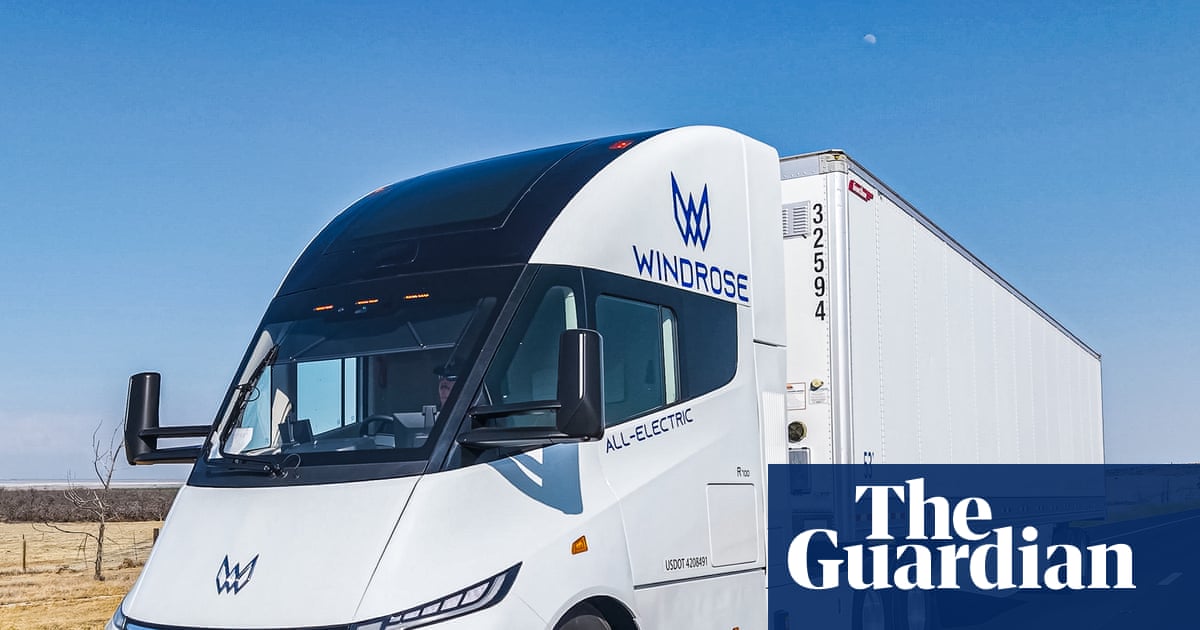
An electric truck pulling 68 tonnes of steel up the steep Mount Ousley escarpment from Port Kembla to Sydney overtook most diesel trucks during a trial last year, highlighting the potential of battery-powered heavy vehicles in Australia.
“It’s a very tough run, but we were overtaking pretty much all the trucks going up the hill,” said Bo Christensen, a fleet electrification specialist who followed the Windrose prime mover during the test. “We did it pretty comfortably.”
The ongoing US-Israel war on Iran and the conflict over the critical Strait of Hormuz oil shipping route sent diesel prices soaring and brought Australia’s reliance on mostly imported fuel into sharp relief.
In response, conservative politicians have been calling for more oil drilling and more refineries. The Australian government this week announced a $10bn fuel security package, including $3.2bn to store a billion more litres of diesel and jet fuel.
There has been little talk from political leaders of the other way to lower the country’s risk from future fuel shocks — powering trucks with electricity.
“Unfortunately what’s happening in Iran is reminding people that hoping for cheaper diesel is not a strategy,” said Wen Han, founder of Chinese electric-truck maker Windrose.
Han said his company expects to sell “hundreds” of its trucks in Australia this year. He has already sold 10 — at $450,000 each.
By 2030, Han aims to have sold 100,000 trucks globally, “and I expect 20,000 of those to be in Australia,” he said. “We will be the dominant truck.”
The Mount Ousley test, loaded with metal from the BlueScope steelworks in Port Kembla, was one of several conducted by Windrose while the vehicle awaits final certification for Australian roads.
Han said there has been skepticism from potential customers who “don’t believe in the performance.”
“We just have to go and prove it,” he said. “Then we see this whiplash from ‘I don’t believe you’ to, ‘can I get this truck yesterday?'”
The Windrose truck claims a range of almost 700 kilometres — it did the 102km Port Kembla to Sydney run twice on one charge — and Han said it can be recharged from zero to 60% in about 35 minutes. Planned upgrades in the next two years will see the range increased and charging times fall, he said.
But Windrose is just one of an increasing lineup of heavy-duty all-electric trucks competing in the Australian market.
Research from Mov3ment — an Australian advisory group on fleet electrification — finds Volvo, Sany, Daimler, Foton and Deepway are all selling in Australia.
Among vans and lighter trucks, the choice is even greater. A Mov3ment report said 332 electric trucks and vans were sold in Australia last year, including 79 heavy-duty models — triple the previous year.
Companies including Ikea, Woolworths, Australia Post, Coles, Coca-Cola and Temple & Webster have all introduced electric trucks, partnering with companies like Linfox, Toll and ANC.
Next week, electric transport company Zenobē will see the first in a new fleet of 30 trucks on the road in Melbourne and Sydney delivering appliances for Winnings.
The executive director of the Energy Futures Foundation, Bruce Hardy, said despite this flurry of new projects, Australia has “radically fallen behind.”
Greenhouse gas emissions from transport remain stubbornly high and are projected to be the biggest source of emissions in Australia by 2030. Heavy vehicles currently make up about a quarter of all transport emissions.
Research commissioned by EFF says only 0.7% of new truck sales in Australia last year were electric, compared with 20% in China, 7% in Germany and 2% in the UK.
“We haven’t learned the lessons of the energy security and fuel crises that we’ve been through before — we had Covid, the Ukraine war, and now [Iran],” said Hardy.
“The potential for the Australian truck fleet is somewhere close to 80% that could be electrified with models that are available in the world today.”
Hardy said more than half of Australia’s diesel trucks will hit their usual replacement age in the next five years. “If we don’t offer a meaningful pathway [to electric] then we lock-in diesel trucks for another 15 years,” he said.
According to data from the Electric Vehicle Council, there are 1,000 electric trucks and vans on Australian roads — a tiny percentage of the more than 600,000 rigid and articulated trucks.
Senior policy officer for heavy vehicles at the council, Cameron Rimington, said: “More and more truckies are considering going electric, as their diesel bills soar — but we are still starting from a very low base.
“The EV transition for freight vehicles is still in its infancy and it’s been remarkable how little government support has been directed towards this critical sector.”
“This has been a missing piece in the fuel crisis response so far: freight vehicles that run on Australian energy.”
Most current electric truck models are significantly more expensive than their diesel counterparts.
Making an electric switch looks too risky for the 98% of trucking companies that are run by small operators already working with tight profit margins, said Todd Hacking, chief executive at trucking association Heavy Vehicle Industry Australia.
“These companies have 130 years of history with internal combustion engines,” he said.
“Battery electric trucks are more expensive and they change how you have to think about your operations, but we are saying don’t bury your head in the sand. We need to tell people this [move to electric] is coming. But without government assistance, it is a hard sell.”
Hacking said prices of battery electric trucks are likely to fall quickly and operators love driving them. With charging times also falling, he said in practical terms electric trucks could have a strong future.
Hacking said about 80% of the greenhouse gas emissions from road freight come from the 20% of vehicles doing long-haul trips. So if decarbonisation is a goal, a focus should be on those heavier trucks.
As well as battery electric trucks, Hacking said existing diesel trucks could also replace fossil fuels with biodiesel that can work with existing internal combustion engines.
For an industry so rooted in easy access to a liquid fuel, one major challenge for electric trucking will be access to chargers.
For so-called “last mile” and metro deliveries, trucks often return to depots where vehicles can be charged overnight. But for long-haul freight, more trucks will need access to chargers.
Daniel Bleakley, co-founder of New Energy Transport, said when it comes to rolling out charging infrastructure and getting chargers connected to the grid, “we should be on a war footing for this, right now.”
“This is exclusively a fossil fuel crisis — there’s no crisis in wind or solar production,” he said.
“If we don’t move, we are going to be shackled to this insanely volatile system until it collapses. Do we keep going, or do we pivot?”
Christensen, now head of fleet electrification at NewVolt — a company building three open-access charging hubs for electric trucks around Melbourne, helped by a $25.3m grant from the Australian Renewable Energy Agency — said he believes in the shift.
NewVolt is developing plans for a network of up to 60 renewables-powered charging hubs that would allow electric trucks to make long-haul trips between Adelaide, Melbourne, Sydney and Brisbane.
Christensen said while the technology may seem new to Australians, Chinese companies have been developing them for more than a decade.
“It’s new to us. But it’s not new,” he said.
📝 This article was rewritten with AI assistance based on content from The Guardian.
Related posts





Latest Post