
TRENDING
US travel restrictions on virus-exposed travelers raise rights concerns
6 minutes reading View : 28

World - 21 May 2026
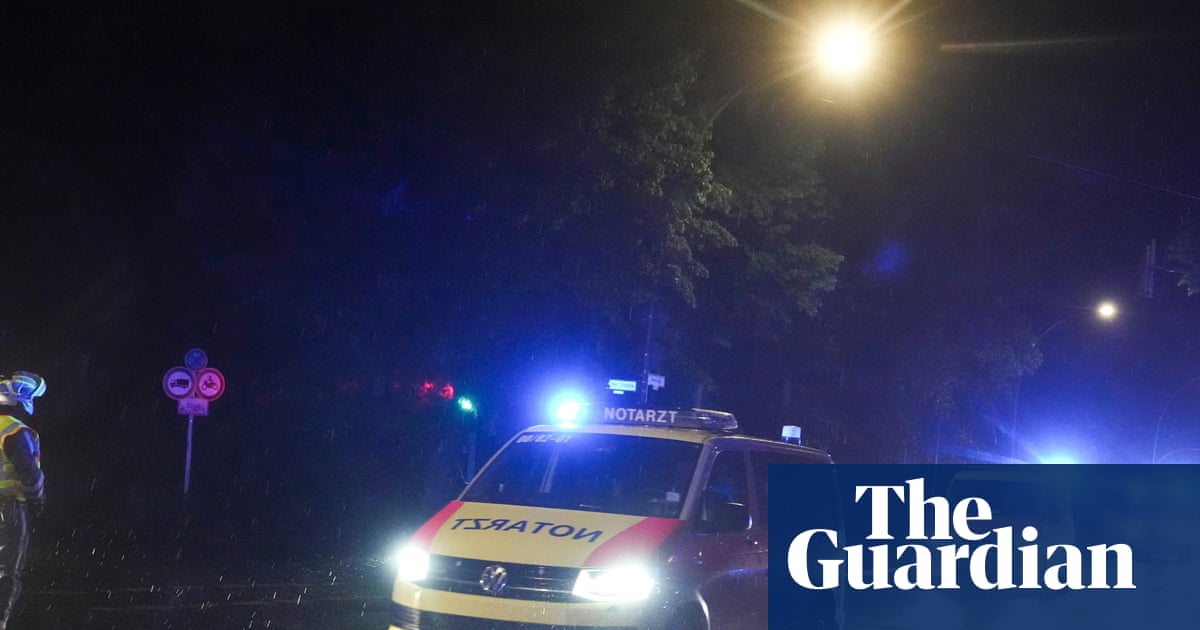
The United States is imposing strict restrictions on American travelers exposed to dual Ebola and hantavirus outbreaks, a move experts say could violate legal rights and discourage future volunteers in global health crises.
The latest restrictions highlight a shift from previous official rhetoric on public health measures and efforts to contain current outbreaks, including reported White House opposition to allowing Americans to return home.
Officials said Wednesday the US is not repatriating an American doctor infected with Ebola and six others exposed to the virus. Instead, they are being transferred to Germany and the Czech Republic.
Alexandra Phelan, an associate professor at Johns Hopkins Bloomberg School of Public Health, said it is “unlikely” that more US citizens and residents will not seek to return from Ebola-affected areas, and “it would be very concerning if Americans weren’t able to.” She warned the unofficial policy “could substantially dampen the response from volunteers” providing critical assistance.
“There is a very real likelihood that this outbreak may get much more serious, and the need for international support is going to be quite significant,” Phelan said.
The move follows mandatory quarantine measures in Nebraska for passengers from the MV Hondius who were exposed to Andes virus, a hantavirus, despite some passengers requesting home quarantine.
Satish Pillai, Ebola response lead at the US Centers for Disease Control and Prevention (CDC), told journalists Wednesday the American Ebola patient is hospitalized in Germany in stable condition, while other US citizens were en route to Germany or Czechia. “These people, who remain asymptomatic, are being moved to ensure that they have access to the specialized care if needed,” he said.
When asked why those locations were chosen instead of evacuating Americans home as in past outbreaks, Pillai said they were the “most expeditious” options in a fast-changing situation with “the need to move quickly,” adding that “these locations were chosen based on the needs that were present at that time.” He noted Czechia had an existing relationship with the US State Department and the Administration for Strategic Preparedness and Response, despite not being known for treating viral hemorrhagic fevers.
During the 2014-15 outbreak, Trump was outspoken about Ebola, posting frequent calls on social media for Americans with Ebola or exposure to be turned away. He said in August 2014 that people who volunteer to help in Ebola outbreaks “must suffer the consequences.”
In this outbreak, the White House opposed bringing at-risk Americans home, according to reporting by the Washington Post. Pillai would not confirm that decision in Wednesday’s press conference, instead citing “the conditions on the ground” and “the need to rapidly mobilize.”
But Phelan said the law on returning home is “really simple.” US citizens and green card holders have a legal right to return to the United States. The travel restrictions order issued Monday explicitly does not apply to US citizens. She added the US has some of the world’s best biocontainment facilities, medical care, and treatment options, with “millions of dollars poured into these facilities for exactly this situation.”
Uncertainty about whether health workers and outbreak responders can return to the US could mean fewer Americans volunteer to help contain the outbreak, Phelan said.
“Any other indications that Americans are being prevented from returning home in some way, shape, or form, would serve as disincentives to support that may be absolutely vital to the international response to this growing crisis,” Phelan added.
Craig Spencer, a doctor who developed Ebola after volunteering in Guinea in 2014 and was attacked online by Trump, said in an interview four years later that it was already difficult to find nurses and doctors who could volunteer. The possibility of not returning home would mean fewer people would help, the epidemic would continue, and risks would increase with a less-controlled outbreak, calling it “a pure disaster.”
When asked if this policy would deter volunteers, Pillai pointed to existing organizations in the Democratic Republic of the Congo and Uganda that “have been integral in providing healthcare support” already.
When passengers on the hantavirus-stricken cruise ship were flown back to the US, officials first ruled out mandatory quarantine.
But now they are requiring certain passengers to remain in the Nebraska biocontainment facility until the end of the month, even though some passengers have tried to leave and quarantine at home.
“The decision was made across the leadership in the US government to have the passengers stay in Nebraska until 31 May, which marks the 21st day of their monitoring period,” David Fitter, the CDC’s hantavirus lead, told journalists Tuesday. “We’re constantly regarding the situation and evaluating where things are.”
The decision reportedly came from Jay Bhattacharya, who is performing some duties of CDC director until the nominee is confirmed by the Senate. Angela Perryman, a 47-year-old woman who had conversations with a passenger who later died from Andes virus, told the New York Times she had tested negative and had no symptoms, and would like to quarantine in an Airbnb in south Florida. Another passenger, a 30-year-old man, said he would like to quarantine in New York state.
Bhattacharya rose to prominence by pushing back against public health measures, which he loosely terms “lockdowns,” during the Covid pandemic. In 2023, he criticized the US Air Force Academy for quarantining cadets; two students later killed themselves. Bhattacharya highlighted the “harms of social isolation” and called the situation “tragic.”
“Any public health measure that is imposed has to be based on reasonable scientific evidence or principles, and has to be proportionate and necessary to achieve the public health outcome,” Phelan said.
The guiding concept in global health law is implementing “the least restrictive measure necessary to achieve the public health outcome,” she added. If a measure is more restrictive than necessary, it infringes on personal rights.
Most people want to follow quarantine directions, but may be more comfortable in their own home, where the long quarantine time may be more bearable. In public health, “the preference is to use voluntary home quarantine as the least restrictive option available,” Phelan said.
In the case of passengers testing negative with no symptoms and a safe way to return home, “I could see a reasonable judge making that conclusion,” she said.
There is a previous case for comparison, dating back to the 2014 Ebola outbreak. When Kaci Hickox, a nurse who treated patients in West Africa, returned to the United States, the CDC did not require facility quarantine. But then-New Jersey Governor Chris Christie attempted to mandate quarantine, a move the courts eventually rejected.
📝 This article was rewritten with AI assistance based on content from The Guardian.
Related posts



Latest Post