TRENDING
Leinster face scorching test against Bordeaux in Champions Cup final
5 minutes reading View : 3

Sports - 23 May 2026
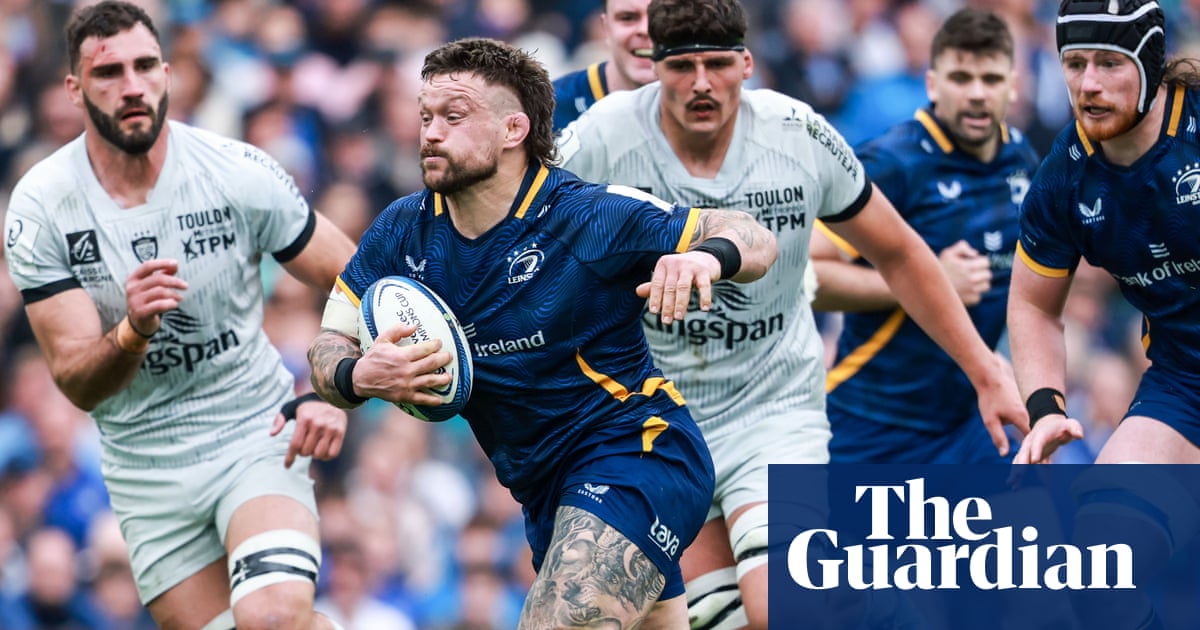
BILBAO, Spain — Leinster face a vastly different climate for Saturday’s Champions Cup final against Bordeaux-Bègles compared to their last visit to this city in 2018, when cool, gray weather resembled Dublin in March. Temperatures are forecast to reach the mid-30s Celsius for the match at San Mamés stadium, adding an energy-sapping dimension to the contest.
Leinster head coach Leo Cullen, a fair-skinned Irishman, emerged for the captain’s run on Friday under blazing sun, evoking a documentary image of a polar bear on a melting iceberg. The afternoon kickoff leaves no respite for heavy forwards, a factor compounded by the fact an evening slot was impossible for French television due to a clash with the Cannes film festival closing ceremony.
The playing surface at San Mamés is shorter and narrower than standard rugby fields, which typically measure 100 meters long and at least 70 meters wide. To claim an elusive fifth Champions Cup title — their first since 2018 — Leinster must overcome both the heat and a compact pitch that could favor Bordeaux’s explosive style.
French sides have won the last five editions of the tournament. Since their narrow 2018 victory over Racing 92, Leinster have lost four finals, the last three to French opposition in 2022, 2023 and 2024. The margins were tiny: two losses to La Rochelle by a combined four points, and last year’s defeat to Toulouse at Tottenham Hotspur Stadium in extra time. The trend remains hard to ignore.
Bordeaux attack coach Noel McNamara knows Leinster’s leading players intimately. He coached Caelan Doris at age-group level and taught Dan Sheehan mathematics at Clongowes Wood College. The opposition ranks also include the world’s deadliest finisher, Louis Bielle-Biarrey, who has scored 32 tries in 30 games for club and country this season.
The final pits contrasting styles: Leinster’s organization and work rate against Bordeaux’s lightning-quick attacking game and ability to strike from distance. As Bath discovered in the semifinal, applying pressure on Bordeaux is one thing; keeping them at arm’s length with ball in hand is another. UBB also boast Europe’s most fleet-footed fly-half, Matthieu Jalibert, and the combined brain and boot of Maxime Lucu, a proud Basque who orchestrates everything.
“He is the king of the Basque region,” Bordeaux head coach Yannick Bru said after the Bath semifinal. “I know it means a lot for him to play in the final in Bilbao near his home.” If the success of Basque football managers Mikel Arteta, Unai Emery and Andoni Iraola in recent days is any guide, it may require something extraordinary to deny Lucu his heart’s desire. His opposite number, Leinster scrum-half Jamison Gibson-Park, must be at his sharpest.
Key tactical influencer Jacques Nienaber, hired by Leinster to strengthen their defensive unit in big games, knows what it takes to win on the biggest stage, having guided South Africa to World Cup glory. A strong defensive performance would silence those who feel Leinster’s all-round game has stagnated during his tenure in Dublin.
Shutting down Europe’s best attacking unit would alter perceptions and erase the bitter aftertaste of Leinster’s semifinal win against Toulon, when Cullen criticized the media for overly negative coverage. “It was an interesting way to celebrate reaching a final,” Cullen said, almost certainly a premeditated strategy to foster a siege mentality among his players.
This season, France’s top players have consistently found answers to even the most searching questions. Damian Penaud, dropped from France’s Six Nations squad, remains an irresistible force. Bordeaux’s forwards, aside from the gargantuan Ben Tameifuna, are often overlooked, but Cameron Woki, Marko Gazzotti and impact substitute Temo Matiu possess considerable talents.
Bielle-Biarrey, 22, scored twice in France’s Six Nations victory over Ireland in February, propelling Les Bleus to the title. While Leinster have packed their backline with experience — including Rieko Ioane on the left wing — Lucu’s remarkable goal-kicking looms as another significant threat.
“It’s going to be a serious challenge but it’s what we want, isn’t it?” Cullen said. “It’s about trying to deliver our best performance, because that’s what it’ll take.” Win or lose, he hopes the final will serve as a timely advertisement for the tournament amid increased criticism of its structure and the ongoing participation of South African teams.
“Hopefully the organisers protect it, because it’s an incredibly special tournament,” Cullen added. “If it’s just the URC or just the Top 14 or just the Premiership … I don’t think that’s good for rugby in general. The South African teams have added hugely to our domestic competition. They’re still trying to figure out how they manage the Champions Cup with the travel and all the rest but they’ll get better at it. They’re quality teams.”
Temperature may drop a few degrees by kickoff, but regardless, Ireland captain Caelan Doris believes the most energetic side in the final 20 minutes will be champions. “Taking it to another level in the last quarter is going to be important,” he stressed. Certain elements of the modern game never change, come rain or shine.
📝 This article was rewritten with AI assistance based on content from The Guardian.
Related posts




Latest Post