
TRENDING
Tommy Robinson detained at Heathrow under counter-terrorism laws
4 minutes reading View : 5

World - 14 Jun 2026
⚡ Quick Summary
- Far-right activist Tommy Robinson (Stephen Yaxley-Lennon) detained at Heathrow under counter-terrorism laws.
- His phones seized under Section 3 of the Counter-Terrorism Border Security Act 2019.
- Detention follows a week of heightened social media prominence and protests in the UK.
- Robinson calls it an attack on free speech; police declined to comment.
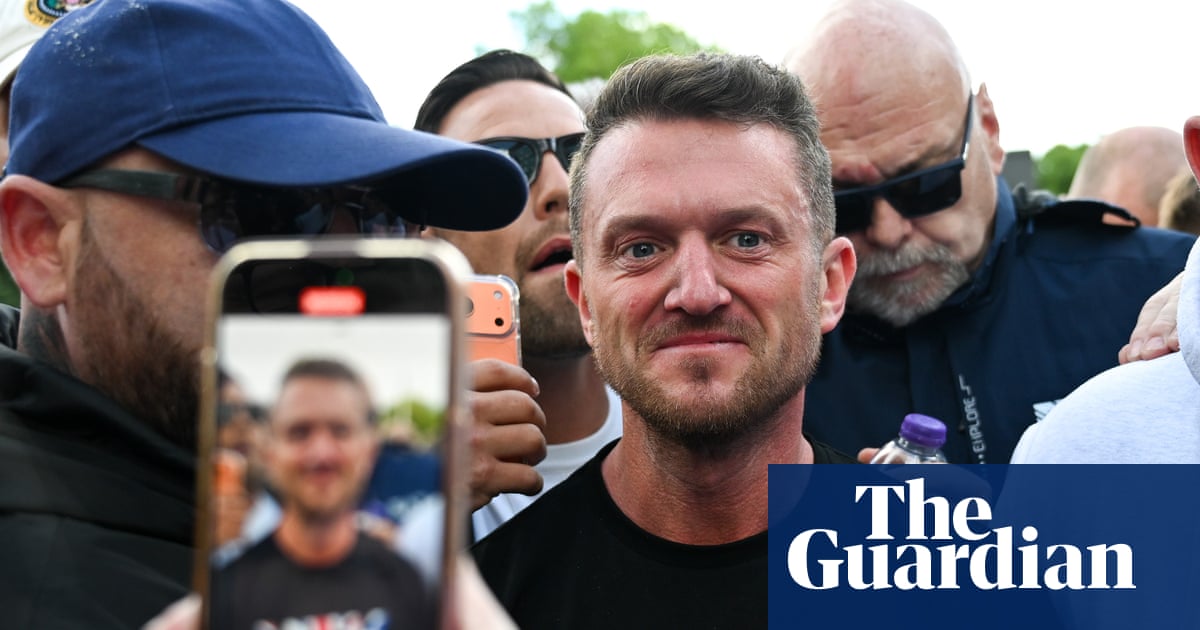
Tommy Robinson, the far-right activist whose real name is Stephen Yaxley-Lennon, was detained by police at Heathrow Airport on Saturday under counter-terrorism laws, following a week in which he gained further prominence on social media.
It was understood that Robinson was stopped and had his phones seized under Section 3 of the Counter-Terrorism Border Security Act 2019.
Robinson used social media to claim he was detained for nearly three hours and that his iPhone and Samsung Galaxy phones were taken. He also asked supporters to donate money to fund his legal defense.
A spokesperson for Robinson posted on X: “They likely want to see who he is talking to, and maybe find out who his sources are, sources who will expose politicians for their part in the rape of a generation of British girls.”
The spokesperson added: “This is an attack on free speech, this is an attack on investigative journalism, nothing more nothing less.”
The 2019 law grants police officers at ports the authority to stop, question, search and detain individuals suspected of traveling to plan, prepare or carry out hostile acts.
It remained unclear what the stop of Robinson was related to, and the Metropolitan Police declined to comment when approached.
Robinson, 43, has recently risen to prominence amid racial tensions across Britain, following the release of police body-worn footage showing the death of 18-year-old Henry Nowak while in police custody in Southampton.
The former English Defence League leader spearheaded protests in the Hampshire city, during which clashes between rioters and police left 13 officers and a police dog injured.
He also amplified footage of a moment when a man, believed to be a Sudanese refugee, wielded a knife over another man he had pinned to the ground in Belfast in a suspected attempted murder on Monday.
Robinson posted details of planned demonstrations across Britain and Northern Ireland on X. Elon Musk shared the post to his 240 million followers.
Robinson was cleared of a terror charge in July 2024 after refusing to give police access to his phone when he was stopped by officers at the Channel Tunnel in Folkestone while driving a friend’s silver Bentley to Benidorm, Spain.
During that stop, Robinson refused to provide the PIN to his phone, arguing that the device contained confidential journalistic material. A district judge concluded that he could not be sure the police stop was lawful.
💡 Why This Matters
This detention underscores the UK government’s use of border security powers to counter far-right activism, especially amid rising racial tensions. The application of the 2019 act — originally aimed at intercepting terrorists — to a controversial figure like Robinson raises questions about the balance between national security and free expression. Supporters frame it as a crackdown on investigative journalism, while critics see it as a legitimate step against incitement. The incident also highlights how social media amplification, including by influential figures like Elon Musk, can drive real-world protests and police responses, creating a volatile mix of legal, political, and digital dynamics.
🧭 Background
Tommy Robinson, born Stephen Yaxley-Lennon, is a former leader of the far-right English Defence League (EDL). He has been a polarizing figure in the UK for years, with multiple convictions for fraud, harassment, and contempt of court. Recently, he resurfaced amid tensions over a police custody death in Southampton and a knife incident in Belfast, using social media to organize protests. In July 2024, he was cleared of a terror charge after refusing to give police his phone PIN during a stop at the Channel Tunnel.
🔭 What’s Next
The police may analyze seized phones to investigate potential links to hostile acts or incitement. Robinson could challenge the detention in court, citing journalistic privilege, as he did in the 2024 case. Further protests may occur, and the government may face political pressure to clarify how counter-terrorism laws are applied to non-jihadist actors. The case could become a flashpoint in broader debates about free speech and policing of the far right.
📘 Key Terms
- Section 3 of the Counter-Terrorism Border Security Act 2019
- UK law allowing police to stop, question, search, and detain individuals at ports if suspected of planning hostile acts.
- English Defence League (EDL)
- Far-right organization founded in 2009 known for anti-Islam protests; Tommy Robinson was a former leader.
📝 This article was rewritten with AI assistance based on content from The Guardian.
Related posts





Latest Post